Stop Targeting Keywords And Start Targeting Intent
Most PPC practitioners built their careers on keywords. The job was to find the right terms, organize them precisely, manage match types, and use negative lists to keep targeting clean. It was methodical work, and when done well, it worked, but now that model is breaking down.
Google no longer uses keywords as the primary trigger for ad serving – they’re one signal among many, frequently overridden by machine learning that thinks it knows your searcher better than your keyword list does. Broad match serves queries you’d never have chosen. Exact match isn’t exact anymore. Phrase match is synonymous with broad match. And Performance Max doesn’t use keywords at all.
The question for practitioners isn’t whether this shift is happening – it already has. The question is whether your accounts are built to work with the new model or against it.
Keywords Were Always a Workaround
It helps to understand what keywords were actually doing before examining why they’re losing relevance. Keywords were never the point. They were just the closest thing advertisers had to reading a searcher’s mind. And for a long time, they were close enough. Someone searching “project management software” was almost certainly shopping for it. The word matched the want. The system worked.
But searchers have never been perfectly consistent. The same intent – “I want to buy project management software” – can surface as dozens of different queries: “best tools for team task tracking,” “how do I manage multiple projects at once,” “alternatives to spreadsheets for project planning.” A keyword list can only capture what it anticipates. It structurally cannot capture demand it didn’t know to include.
Google figured out that what a searcher means matters more than what they type. Its language models can now find the same intent across completely different phrasing, something no keyword list could ever do. Keywords didn’t just lose accuracy. They got replaced by something better.
What Google’s AI Is Actually Doing to Match Types
The clearest sign that keywords are losing relevance isn’t a product announcement, it’s what has quietly happened to match types.
Broad Match No Longer Means What It Used To
Broad match was always the loosest match type, but its historical behavior was still fundamentally keyword-anchored: it matched variants, synonyms, and related terms. The keyword still drove the match.
That’s no longer true. Broad match now looks at what someone means, not what they typed. Google’s systems identify what intent a keyword represents and serves ads against any query they believe shares that intent, regardless of whether a single word overlaps. An advertiser bidding on “CRM software” in broad match may serve against “how do I keep track of my sales pipeline” because the machine has determined these expressions of intent are equivalent.
When paired with smart bidding, broad match isn’t a reach expansion tool to be managed carefully. It’s Google’s preferred mechanism for letting the algorithm find conversion-ready traffic that the keyword list didn’t know to target. Most accounts are still using it the old way – adding negatives to contain the drift – when the more productive use is to let it surface intent and use conversion data to train the system on what good traffic looks like.
Exact Match Is No Longer Exact
Exact match has been quietly changing for years. Most accounts are still built as if it hasn’t. Exact match now includes close variants: misspellings, abbreviations, reordered words, implied words, and paraphrases that Google’s algorithm determines carry the same meaning.
In practice, an exact match keyword list built for precision is not delivering the control it appears to provide. The keyword list looks exact. The actual query pool it’s drawing from is fuzzier and broader than any keyword audit will reveal. What looks like a tightly controlled campaign may be serving on dozens of query variants the advertiser never explicitly approved.
This isn’t necessarily a performance problem. But it is a conceptual one: if exact match doesn’t mean exact, the foundational premise of keyword-as-control-mechanism has already been dismantled by the platform itself.
Phrase Match Is No Longer a Middle Ground
Phrase match now functions much closer to broad match than most advertisers realize. Google’s algorithm determines whether a query shares the intent of your keyword, not just whether it contains the words. Word order, once the defining constraint of phrase match, carries far less weight than it used to. Queries that would have fallen outside phrase match boundaries a few years ago are now regularly served on.
In practice, phrase match and broad match are converging, to the point where running both on the same keyword often produces significant overlap without meaningful differentiation in the query pools they’re reaching. Many advertisers maintain phrase match keywords out of habit, believing they’re drawing a meaningful line between reach and control. In most cases, that line no longer exists where they think it does.
This matters less as a performance concern than as a structural one. If phrase match is no longer doing the filtering job it was designed to do, accounts built around it as a control layer are operating on an assumption the platform has already invalidated.
Performance Max Opts Out of Keywords Entirely
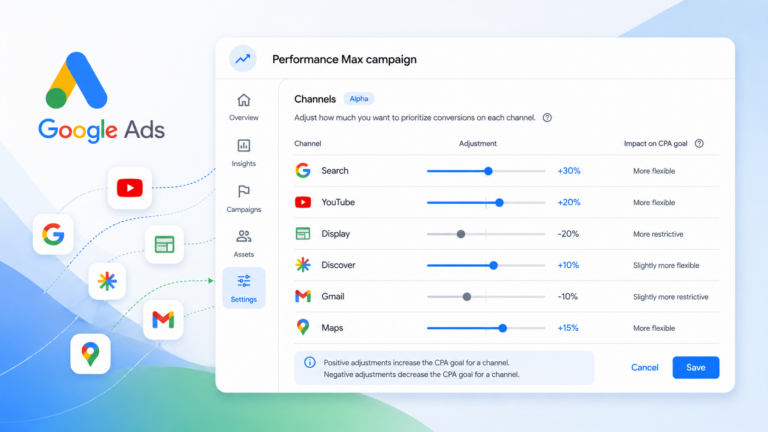
Performance Max is the clearest statement Google has made about the direction of search advertising. It uses no keyword lists. It uses audience signals, creative assets, and conversion data to identify and reach users across all Google inventory — including Search — based on predicted intent rather than matched text.
When PMax serves a search ad, it isn’t matching to a keyword. It’s matching to a user and a predicted need, built from signals collected across Google’s entire ecosystem. There’s no keyword involved.
For accounts running PMax alongside standard Search campaigns, this creates a reality that keyword-first thinking doesn’t account for: a growing share of search traffic is being won or lost without a keyword ever being involved. How that traffic performs, and whether your broader account is capturing or missing it, cannot be understood through a keyword reporting lens at all.
The Hidden Cost of Staying Keyword-First
Practitioners who recognize the shift intellectually but haven’t structurally adapted their accounts are paying a cost that rarely shows up as a single obvious problem. It accumulates across several dimensions simultaneously.
Negative Lists Are Fighting a Losing Battle
When match types are driven by AI rather than literal keyword matching, a negative list is always playing catch-up. You’re manually drawing boundaries around a system that keeps finding ways around them. The list grows, the irrelevant traffic keeps appearing, and the real problem isn’t the keywords you haven’t excluded yet, it’s that the control model no longer works the way it used to.
Fragmented Campaigns Starve Smart Bidding
Keyword-first accounts lean toward heavy segmentation: separate campaigns or ad groups for every keyword theme, match type, or product variation. Each segment looks organized. The result is conversion data spread so thin that smart bidding can’t learn from it. The algorithm needs volume to make accurate predictions. Keyword-granular structures deny it that volume, and then the bidding underperforms in ways that get attributed to the wrong cause.
Your Keyword List Can’t Find Demand It Doesn’t Know Exists
A keyword list only captures the intent you anticipated when you built it. Users searching in ways you didn’t include are invisible to it — not because they don’t exist, but because the keyword structure has no way of finding them. Intent-based systems don’t have that ceiling. They can find and convert demand that a keyword list would never have reached, because they’re responding to what someone wants, not the words they used.
Keyword Reporting Has a Blind Spot
Search term reports only show matched queries. The demand you didn’t reach never appears in the data. This blind spot makes it structurally impossible to diagnose the gap between current performance and potential performance, because the reporting framework is built around what the keyword-matching system sees, not what it misses.
How to Transition to Intent-Based Targeting
Moving from keyword-first to intent-first is a structural shift, not a settings change. It requires rethinking what campaigns are organized around, what match types are for, and what success looks like at the measurement level.
Start With an Intent Audit, Not a Keyword Audit
The first step is replacing the keyword-centric view of your audience with an intent-centric one. Instead of asking “what terms are people searching for?” ask “what problems are people trying to solve, and at what stage of awareness?”
Start by mapping the intent stages your audience moves through: awareness, consideration, purchase, retention. For each stage, identify how someone might naturally express that need. Group similar expressions together and use those groups as the foundation for your campaign structure. One intent group can replace many keyword-based campaigns. The result is a structure that reflects how Google actually interprets queries, not how a keyword list categorizes them.
Organize Campaigns Around Intent Stages, Not Keyword Themes
With intent groups defined, restructure campaigns so each one maps to a clear intent category rather than a keyword theme or product line. Ad groups within those campaigns should reflect intent sub-themes, not keyword variants of the same term.
A practical starting point: build each ad group around a small set of related keyword seeds. 5 to 15 terms that represent the intent theme, not every possible variation. Those seeds tell Google what kind of intent you’re targeting. The AI handles the query matching. Conversion data tells it what good traffic looks like.
This structure also makes budget decisions easier. When campaigns map to intent stages, you can make clear choices about where in the purchase journey you’re investing, rather than letting budget spread itself across keyword-based campaigns in ways that are hard to track or justify.
Reassign the Role of Match Types
In an intent-based account, match types serve a different purpose than they do in a keyword-first account. Broad match becomes the primary vehicle for surfacing intent signals, not a reach tool to be managed with negatives. Pair it with Smart Bidding and invest in conversion tracking robust enough to give the algorithm clear feedback on what traffic is actually valuable.
Exact and phrase match still have a place, particularly for branded terms, high-value bottom-funnel queries where precision matters, and as controlled baselines for performance measurement. But they should function as guardrails for specific high-intent segments, not as the primary architecture of the account.
Negative keywords shift from being a containment strategy to being an intent boundary tool: use them to protect the structure you’ve built, preventing a prospecting campaign from cannibalizing branded search, or a high-volume intent groups from bleeding into a low-volume one, rather than trying to exclude every irrelevant query the match types might surface.
Align Creative to Intent, Not to Keywords
In a keyword-first account, ad copy is written to include the keyword. In an intent-based account, ad copy is a signal to Google’s systems about what kind of user you’re trying to reach, and it needs to match the intent theme, not a keyword string.
For each intent cluster, develop responsive search ad assets that reflect the specific concerns, language, and decision of that audience. Early-stage research intent requires different messaging than bottom of funnel purchase consideration, even when both groups ultimately convert on the same product. The creative needs to be specific enough to signal clearly to the algorithm and resonate with the user not generic enough to fit every keyword variation.
For Performance Max, this principle is even more important. Asset groups built around clear intent themes with reinforcing audience signals give the machine meaningful context to work with. Vague or mixed assets produce vague or mixed targeting.
Measure Intent Progress, Not Keyword Performance
The final and most important shift is in measurement. Keyword-level metrics – CPC, impression share, Quality Score by keyword – don’t tell you whether your intent-based approach is working. They tell you how specific text strings are performing in auction, which is an increasingly incomplete picture.
Intent-based measurement asks different questions: Which stages of the purchase journey are converting efficiently? Where is traffic entering and exiting the funnel? What micro-conversions – engaged sessions, tool interactions, partial form completions – indicate that someone is progressing through genuine intent stages rather than bouncing?
This requires conversion tracking that goes beyond final conversion events. It requires micro-conversion signals that reflect intent progression. And it makes value-based bidding more powerful: when you can assign meaningful values to different intent stages, smart bidding can optimize toward the full value of the customer journey rather than treating every conversion as equivalent.
What This Means For Practitioners
The concern that comes up most often when this conversation happens: if Google’s machine is handling intent matching, what exactly is the practitioner’s job? The work doesn’t disappear, it becomes more strategic and harder to delegate.
Understanding audience intent deeply enough to define meaningful segments, structuring accounts so that machine learning has the data consolidation it needs to perform, building creative that sends unambiguous signals, and constructing measurement infrastructure that captures real business value rather than platform metrics, none of that happens automatically. All of it requires human judgment that a machine can’t supply.
The shift is from precision management of keyword lists to precision thinking about audiences and intent. The practitioners who adapt are the ones who see keywords as what they always were: a tool for approximating something more valuable. The machine is now a better tool for the same job. The job itself – understanding what your audience wants and getting in front of them at the right moment – hasn’t changed.
The Bottom Line
Keywords were never the point. They were the best available mechanism for intercepting search intent when the only signal available was the text someone typed. That signal still matters. But Google now interprets it within a far richer context – semantic, behavioral, historical – that no keyword list can fully represent.
The practitioners and accounts that continue to treat keyword management as the primary lever for performance are working against the direction the platform has moved. The algorithms reward intent clarity, consolidated structure, and accurate conversion signals. They are indifferent to the elegance of a keyword list.
Letting go of keyword-first thinking doesn’t mean losing control.
It means trading the illusion of control for the real levers: how clearly you’ve defined the intent you want to reach, how well your structure lets smart bidding learn from it, and how accurately your measurement reflects actual business value.