Adaptive eCommerce Personalization | VWO
Today’s online shoppers expect more than recognition. They expect relevance.
They want experiences that reflect what they need in the moment, not just who they are, what segment they belong to, or what they bought six months ago. When brands get that right, personalization can increase trust, improve conversion, and encourage customers to come back. But many traditional personalization strategies still rely too heavily on historical data, predefined rules, and broad audience segments, which means they often miss what matters most: live visitor intent.
With predictive AI, brands can now move beyond static personalization and adapt digital experiences in real time, even for visitors they know nothing about yet.
Why personalization has become essential in eCommerce
For decades, digital brands have tried to bring the feeling of an in-store shopping experience online. In a physical store, a great sales associate can read the customer, understand what they may be looking for, and guide them toward the right product or offer. Online personalization has traditionally aimed to recreate that same sense of individual attention by tailoring content, recommendations, messaging, and offers to each visitor.
Historically, this has depended on collecting customer data
- Browsing behavior
- Purchase history
- Preferences
- Past interactions
- Loyalty status
- And more.
The logic was simple: the more a brand knows about someone, the more relevant the experience can become.
And personalization matters. Consumers increasingly expect online experiences to feel tailored to them. Research cited by McKinsey notes that 71% of consumers expect personalized shopping experiences, while 76% feel frustrated when they do not receive them.
The business impact is just as clear. Personalization strategies can help brands increase marketing ROI by 10% to 30%, and companies that perform well at personalization can generate 40% more revenue from those activities than companies that do not. Highly personalized campaigns may also drive conversion-rate lifts of up to 60% compared with generic campaigns.
But personalization does more than influence a single transaction. It can also strengthen customer relationships. According to the source article, 44% of shoppers are likely to become repeat buyers after a personalized buying experience, and personalized experiences can significantly improve brand satisfaction for 68% of consumers.
Where traditional personalization reaches its limits
Traditional personalization has helped many brands improve digital performance, but it was built for a different era of eCommerce.
Most conventional approaches are based on static rules, predefined audience groups, and past behavior. A visitor is placed into a segment, an experience is assigned, and the brand hopes that the message, product, or incentive is still relevant by the time that visitor returns.
The problem is that intent changes quickly.
A shopper may browse casually one moment and become purchase-ready the next. They may arrive from a campaign, compare products, hesitate over price, search for alternatives, or abandon a product because it is unavailable. Each action can signal a different need, but rules-based personalization often reacts too late.
Traditional personalization is also limited when there is no history to work with. For many eCommerce brands, the majority of visitors are anonymous: first-time visitors, users browsing without logging in, people using private browsing, or shoppers who decline cookies. It’s worth noting that 90% or more of visitors for many eCommerce brands may be anonymous, leaving brands unable to personalize effectively if their strategy depends on identity-based data.
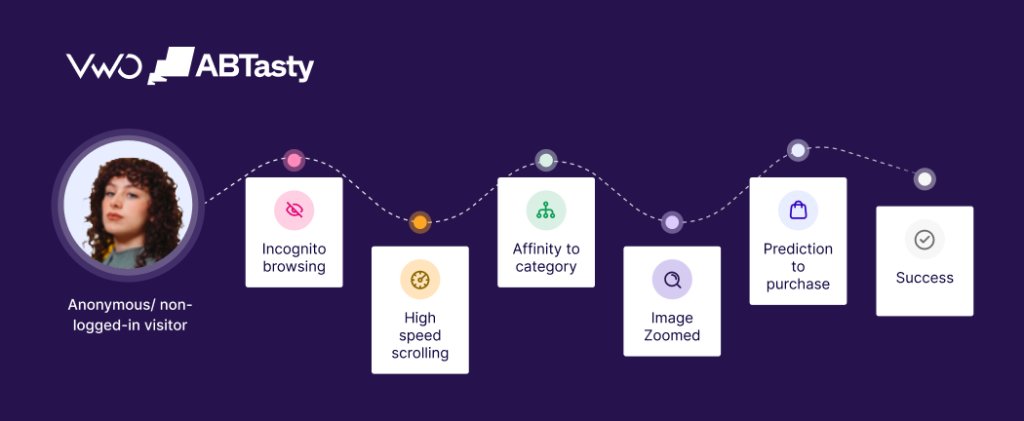
That creates a major gap. If a brand cannot recognize the visitor, it often defaults to a generic experience, even when that visitor is showing valuable intent signals during the session.
Moving from identity-based targeting to intent-based prediction
This is where real-time, intent-led personalization changes the model.
AdaptiveCX from VWO AB Tasty is a real-time personalization platform that analyzes behavioral signals during a visitor’s session to understand and predict intent. Instead of waiting for a visitor to log in, return, or match a predefined segment, AdaptiveCX uses live behavior to adapt the experience as it happens.
That represents a shift from identity-based targeting to intent-based prediction. Rather than only asking, “Who is this visitor?” brands can also ask, “What is this visitor trying to do right now?”
AdaptiveCX is designed to be both reactive and proactive. It responds to a visitor’s current context and actions, while also predicting what the visitor is likely to do next based on perceived intent. This enables experiences that continuously adjust to the visitor’s needs throughout the journey.
How AdaptiveCX uses real-time intent
Every visitor arrives with a different level of readiness, motivation, and need. Some are close to purchasing. Others are researching, comparing, hesitating, or looking for guidance. Understanding that intent in real time helps brands deliver more relevant experiences without wasting margin or missing revenue opportunities.
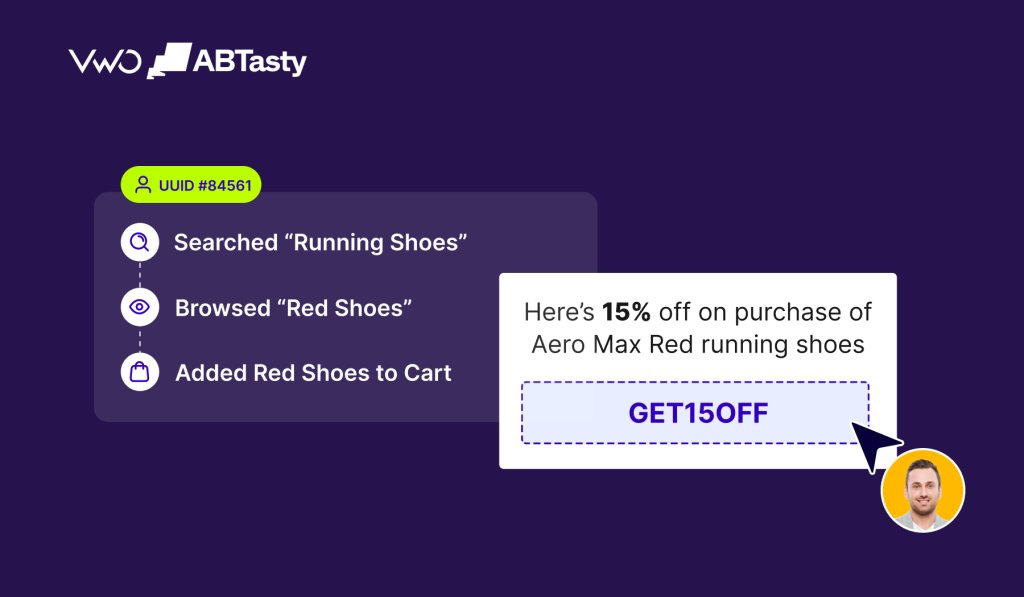
AdaptiveCX analyzes live behavioral signals such as clicks, scroll depth, mouse movement, and browser behavior to infer visitor affinities, needs, and intent. The platform can then anticipate outcomes such as likelihood to purchase, churn, or return.

This makes it possible to deliver adaptive experiences across multiple use cases, including:
- Smarter incentives: AdaptiveCX can predict purchase intent and adjust promotional pressure accordingly. Visitors who are unlikely to convert without a discount can receive an incentive, while visitors who are likely to buy anyway do not need to be shown one, helping protect margins.
- Personalized search and discovery: Intent signals can be used to improve search suggestions and reorder product carousels, helping visitors find relevant products faster.
- Better out-of-stock journeys: If a product is unavailable, AdaptiveCX can show alternatives that align with the visitor’s intent, turning a potential dead end into a new path to purchase.
- Luxury and high-consideration experiences: For high-intent visitors who may be less likely to complete a purchase online, brands can highlight assisted buying journeys, such as booking an in-store appointment.
- More relevant mid-funnel messaging: Visitors who land directly on product or category pages can receive adapted homepage-style messaging that provides context, reassurance, or guidance based on their current intent.
By focusing on live intent instead of static assumptions, AdaptiveCX helps brands create digital experiences that evolve automatically with each visitor.
AdaptiveCX in action
AdaptiveCX is already being used by leading global brands to make personalization more responsive to visitor behavior. The platform has been used across more than a billion visitors, according to the original article.
Kurt Geiger: Turning product discovery into a more relevant journey
Kurt Geiger, a global fashion and accessories brand with a presence in the UK, US, and Mexico, wanted to improve how it surfaced the right products to each shopper. Despite having a strong product catalog, the brand found that visitors were not always being connected with the most relevant items. This created missed revenue opportunities and reduced the efficiency of marketing spend.
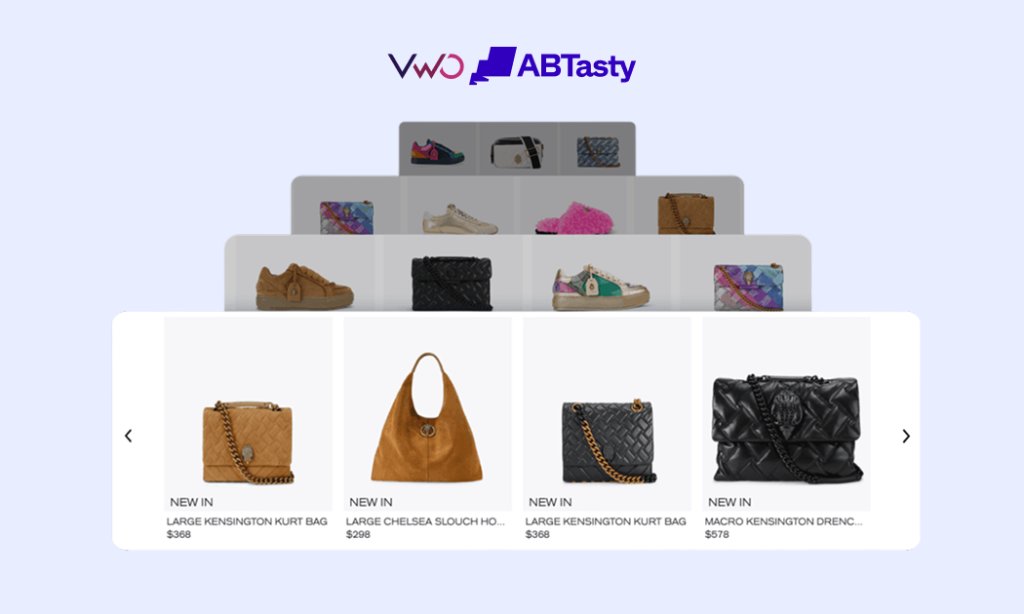
To solve this, Kurt Geiger launched an AdaptiveCX homepage carousel that delivered targeted product recommendations based on each visitor’s affinities, such as interest in bags, shoes, or other categories.
The results included:
- 23.28% uplift in homepage-to-product-page conversion rate.
- 3.37 additional clicks to product pages for users who engaged with the carousel.
- 0.32 absolute increase in overall click-through rate.
Gareth Rees-John, Chief Digital Officer at Kurt Geiger, described AdaptiveCX as helping the brand predict user intent and connect people with the right products instantly, with a clear impact on revenue.
AttractionTickets.com: Making search more adaptive
AttractionTickets.com was founded in 2002 to make it easier for travelers to buy tickets to leading attractions and has sold more than 15 million tickets. The company wanted to improve its homepage search experience, particularly for first-time visitors who had no previous browsing or purchase history.
The challenge was that search suggestions were not always aligned with what anonymous visitors needed. Without historical data, the experience could not reliably surface the most relevant options.
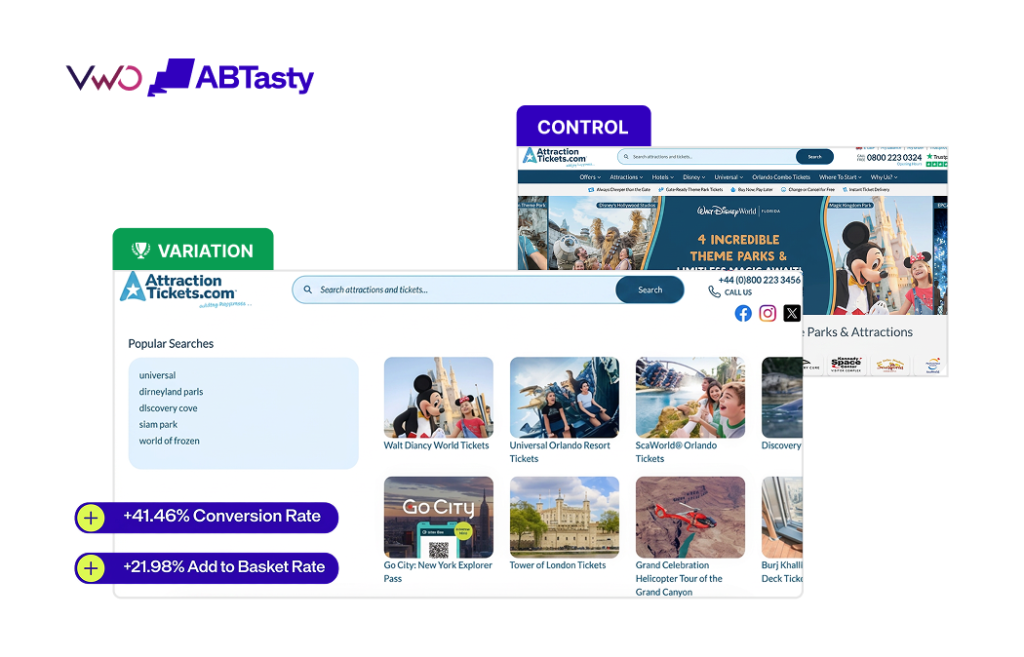
The brand implemented an adaptive search experience that proposed search terms based on real-time, in-session user affinities. These suggestions were also supported with images to capture attention more effectively.
The results included:
- 1.77% uplift in average page views versus the control.
- 0.69% uplift in add-to-basket rate.
- 0.65% uplift in conversion rate.
The future of personalization is adaptive
eCommerce journeys are no longer linear, predictable, or easy to map with static rules. Shoppers move quickly, intent changes constantly, and many visitors remain anonymous throughout their journey. Traditional personalization still has a role to play, but it is no longer enough on its own.
AdaptiveCX enables brands to personalize based on what visitors are doing right now, not just who they are or what they have done before. By using real-time behavioral signals to predict intent and adapt the experience instantly, brands can increase relevance, improve product discovery, protect margins, and capture more opportunities from every visit.
The result is a more responsive customer experience: one that understands visitors in the moment and helps brands turn intent into action.
Request a demo to see how AdaptiveCX helps you deliver real-time, intent-driven personalization.
FAQs
Static personalization uses fixed rules that are usually created manually by marketing, eCommerce, or product teams. For example, a brand might show one homepage banner to visitors from a specific country, display a different message to returning customers, or target users based on a predefined audience segment. These experiences only change when someone updates the rules behind them.
Adaptive personalization works differently. Instead of relying only on fixed segments or historical assumptions, it adjusts
the experience in real time based on each visitor’s behavior, context, and intent. As users click, scroll, search, browse, or move through the site, the experience can adapt dynamically to show more relevant content, recommendations, offers, or messaging.
Adaptive personalization is often also called AI-driven personalization, dynamic personalization, or real-time personalization, because it uses data, machine learning, and decisioning algorithms to continuously optimize the customer experience.
To implement adaptive personalization effectively, businesses need software that can analyze visitor behavior in real time, identify patterns of intent, test different experiences, and automatically optimize what each user sees.
One solution is AdaptiveCX, part of the VWO AB Tasty platform. AdaptiveCX is designed to help brands move beyond traditional rule-based personalization by using adaptive decisioning and experimentation to tailor digital experiences as visitors interact with a site.
With the right adaptive personalization software, teams can:
– Understand visitor behavior as it happens
– Personalize experiences for anonymous and known users
– Test and optimize content, messaging, recommendations, and offers
– Reduce reliance on manually managed audience rules
– Improve engagement, conversions, and long-term customer loyalty
AdaptiveCX is a real-time personalization solution within the VWO AB Tasty platform that helps brands deliver more relevant, data-driven digital experiences.
It works by continuously analyzing visitor behavior and in-session signals to understand what each user is likely to need or do next. Instead of depending only on fixed segments, predefined journeys, or past behavior, AdaptiveCX adapts content, layouts, recommendations, search experiences, incentives, and messaging based on live intent.
This helps teams:
– Automatically optimize customer journeys
– Deliver more relevant experiences in real time
– Personalize for both known and anonymous visitors
– Reduce manual rule creation and maintenance
– Use experimentation and performance data to keep improving results
By responding to real-time user behavior, AdaptiveCX helps brands create more personalized experiences that can support stronger engagement, higher conversion rates, and better long-term customer relationships.