Franchise SEO Services: How to Rank Hundreds of Locations Without Thin Content
Franchise SEO Services
Franchise SEO sounds simple until you try to scale it.
One location is manageable. Ten locations are still under control. But when a franchise brand has 50, 200, or 800 locations, the SEO problem changes completely. Now you’re not just optimizing a website. You’re managing a local search ecosystem with brand pages, city pages, individual location pages, Google Business Profiles, reviews, citations, internal links, tracking, duplicate content risks, franchisee expectations, and corporate brand rules.
That’s where franchise SEO services become very different from regular local SEO.
A single-location business can often rank with one strong service page, a well-managed Google Business Profile, reviews, and local citations. A franchise needs a repeatable system that can scale without creating hundreds of weak pages that say almost the same thing.
And that’s the trap.
Many franchise websites create location pages like this:
“Looking for [service] in [city]? Visit our [city] location today.”
Then they repeat the same paragraph 300 times with a different city name.
That may look efficient. It may even feel like SEO coverage. But it creates a major quality problem. Google’s guidance consistently emphasizes helpful, reliable, people-first content rather than content made primarily to manipulate rankings. (Google for Developers)
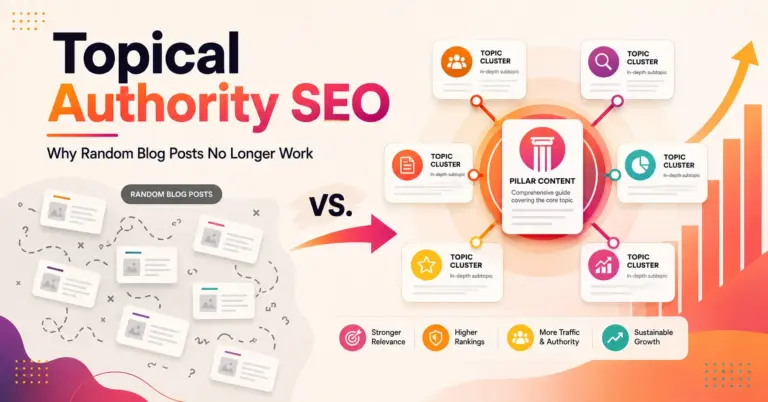
For franchise SEO, the goal is not simply to publish more pages. The goal is to make every important location page useful enough to deserve visibility.
This guide explains how franchise operators and multi-location businesses can rank hundreds of locations without falling into thin content, duplicated templates, poor Google Business Profile management, or weak local landing page SEO. It follows the supplied content brief for a commercial-investigation audience looking for franchise and multi-location SEO buying guidance.
What Franchise SEO Really Means
Franchise SEO is the process of improving organic and local search visibility for a franchise brand across corporate, regional, and individual location pages.
It usually includes:
- Corporate website SEO
- Location page SEO
- Google Business Profile optimization
- Local landing page SEO
- Review strategy
- Citation management
- Franchisee content governance
- Technical SEO
- Local link building
- Conversion tracking
- Brand consistency controls
The difference between franchise SEO and standard SEO is scale.
A franchise brand may need to rank for searches like:
- “plumber near me”
- “urgent care in Dallas”
- “fitness studio Chicago”
- “tax preparation office near me”
- “best cleaning service in Phoenix”
- “HVAC franchise location in Tampa”
- “children’s tutoring center near me”
These searches have local intent, commercial intent, and often high conversion value. The person searching is usually close to making a decision.
That’s why franchise digital marketing has to treat search as both a traffic channel and a location-level revenue system.
A franchise SEO strategy must answer three questions at once:
- Can Google understand the brand and each location clearly?
- Can users quickly find the right local branch, service, phone number, hours, and booking path?
- Can every location page justify its existence with useful local information?
If the answer to any of those questions is weak, rankings usually become unstable.
Why Franchise SEO Is Harder Than Standard Local SEO
Franchise SEO has more moving parts because every location creates another SEO surface.
Each location may have:
- A Google Business Profile
- A location landing page
- Reviews
- Local citations
- Local backlinks
- NAP details
- Hours
- Service area rules
- Photos
- Staff or owner details
- Local promotions
- Regional competitors
- Local search behavior
- Franchisee-managed content
That creates operational complexity.
A corporate marketing team wants consistency. Franchisees want local visibility. Google wants accurate business information. Users want a fast answer. The SEO team has to satisfy all four.
Brand Control vs. Local Relevance
Franchise brands often rely on strict templates. This protects the brand voice and reduces mistakes. But search engines don’t reward pages simply because they match the brand guide.
A location page in Miami and a location page in Minneapolis may offer the same core service, but the local market can be very different.
The page should reflect:
- Local service demand
- Regional regulations where relevant
- Local customer questions
- Neighborhoods served
- Nearby landmarks
- Local team details
- Actual photos
- Location-specific reviews
- Parking or access details
- Local offers or booking information
The template can be consistent. The substance should not be identical.
Centralized vs. Franchisee-Led SEO
Another challenge is ownership.
Corporate may control the website, but franchisees may control customer service, reviews, photos, local sponsorships, and sometimes even Google Business Profile details.
That can lead to problems like:
- Outdated hours
- Duplicate Google Business Profiles
- Wrong phone numbers
- Inconsistent naming
- Unapproved categories
- Poor review responses
- Broken appointment links
- Local pages with no unique content
- Franchisees creating their own unoptimized microsites
Google’s Business Profile guidelines are clear that profiles should accurately represent real-world businesses, and duplicate profiles can mislead customers and violate policy. (Google Help)
For franchise SEO, governance is not optional. It is part of the ranking system.
The Thin Content Problem on Franchise Location Pages
Thin content is one of the biggest risks in multi location SEO.
It happens when a page exists mainly to target a keyword or city but does not provide enough unique value for the user.
A weak franchise location page often has:
- The same generic service copy as every other location
- A swapped city name
- No local details
- No staff information
- No unique photos
- No local FAQs
- No neighborhood coverage
- No proof of local operation
- No helpful directions
- No reviews or trust signals
- No clear conversion path
At scale, this becomes a quality problem.
Publishing 300 near-identical pages may increase indexed URLs, but it does not automatically increase qualified traffic. In many cases, it creates crawl waste, weakens internal signals, and makes the site look less useful.
Google’s canonicalization documentation explains that Google may choose a representative canonical URL from similar or duplicate pages. When hundreds of pages are too similar, you risk Google treating them as redundant rather than valuable local assets. (Google for Developers)
Thin Content Is Not About Word Count Alone
A 900-word page can still be thin.
A 300-word page can sometimes be useful.
The question is not only, “How long is the page?” The better question is:
Does this page help a person choose, contact, visit, or evaluate this specific location?
For franchise SEO, a strong location page should help users answer:
- Is this the closest branch?
- Does this location offer the service I need?
- What are the hours?
- Can I call or book online?
- Is parking available?
- What neighborhoods does it serve?
- Who runs this location?
- What do customers say about it?
- Are there local restrictions or service differences?
- Is this page actually about this location?
That’s where good local landing page SEO starts.
How to Build Strong Location Pages at Scale
The best franchise SEO services do not manually reinvent every location page from scratch. That would be expensive and slow.
But they also do not publish a lazy template with city-name swapping.
The right approach is a structured uniqueness system.
That means you use a consistent page framework, but each location has unique fields, assets, proof points, and local context.
A Strong Franchise Location Page Framework
A scalable location page can include:
| Page Element | Purpose |
|---|---|
| Location-specific H1 | Clarifies city, brand, and service |
| Local intro | Explains the branch’s role in that area |
| NAP details | Shows name, address, phone accuracy |
| Hours | Helps conversion and GBP consistency |
| Primary services | Confirms what this location actually offers |
| Local service area | Adds geographic relevance |
| Directions and parking | Helps users visit |
| Team/franchisee info | Builds local trust |
| Reviews/testimonials | Shows proof |
| Photos | Confirms real-world presence |
| FAQs | Answers location-specific questions |
| Appointment CTA | Converts traffic |
| Internal links | Connects city, service, and brand pages |
| LocalBusiness schema | Helps structured understanding |
Schema.org defines LocalBusiness as a particular physical business or branch of an organization, which makes it relevant for individual franchise location pages when the page represents a real location. (Schema.org)
The Page Should Not Feel Like a Doorway
A franchise location page should not exist only to funnel users somewhere else.
It should provide enough direct information that the user could make a decision on the page.
That means a page should not say:
“Contact us to learn more.”
It should say:
- What services are available at that branch
- How appointments work
- What areas are served
- Whether walk-ins are accepted
- What documents or preparation users need
- What makes this location convenient
- How to contact the local team
This is especially important in high-value verticals such as healthcare, home services, legal-adjacent services, financial services, insurance, education, senior care, automotive repair, and B2B services.
In these sectors, users compare providers carefully. Advertisers also value this traffic because the audience has clear commercial intent.
Google Business Profile Optimization for Franchise Brands
Google Business Profile optimization is a core part of franchise SEO services.
For many location-based searches, users interact with the map pack before they ever visit the website. That means your Google Business Profiles can influence calls, directions, bookings, reviews, and local visibility.
The Foundation: Accurate NAP Data
NAP means:
- Name
- Address
- Phone number
For franchise brands, NAP consistency matters because every location must be clearly identifiable.
Each Google Business Profile should match real-world business information. Google’s guidelines say Business Profiles should represent the business as it is known in the real world, including accurate name, address, and other details. (Google Help)
Common franchise GBP mistakes include:
- Adding keywords to business names
- Using inconsistent naming across locations
- Creating duplicate profiles
- Listing virtual offices as real locations
- Using call tracking numbers incorrectly
- Selecting inaccurate categories
- Forgetting holiday hours
- Using the corporate website homepage instead of the specific location page
- Letting franchisees create unmanaged profiles
GBP Categories Matter
The primary category is one of the most important Google Business Profile fields.
A fitness franchise, for example, should not randomly choose “Wellness Center” if the more accurate category is “Gym,” “Personal Trainer,” or “Fitness Center.”
A franchise SEO team should create category rules by vertical:
- Primary category
- Secondary categories
- Disallowed categories
- Location-specific exceptions
- Seasonal category changes if appropriate
This prevents franchisees from making random choices that dilute local relevance.
GBP Landing Page Alignment
Each Google Business Profile should usually link to the matching location page, not the corporate homepage.
For example:
/locations/dallas-tx//locations/miami-fl//locations/phoenix-az/
This improves continuity between the local listing and the website.
The user clicks a Google Business Profile for a specific branch. The page should continue that local experience.
A homepage link forces the user to search again. That creates friction.
Photos and Real-World Proof
Franchise brands often underestimate photos.
Real location photos help users confirm that a branch is active and legitimate.
Useful GBP photos include:
- Exterior storefront
- Interior waiting area
- Team photos
- Service photos
- Parking or entrance
- Branded signage
- Local event photos
Avoid using only generic corporate stock images across every location. That weakens local trust.
Review Management at Scale
Reviews influence user trust and conversion.
For franchise SEO, the goal is not only “get more reviews.” The goal is to build a review system that is compliant, consistent, and location-specific.
A good system includes:
- Post-service review requests
- SMS or email review flows
- Staff training
- Negative review escalation
- Response templates with local customization
- Review monitoring by location
- Reporting by region
- Franchisee accountability
Review responses should not sound copied and pasted. A simple, human response with local context is better than a polished corporate paragraph that appears 500 times.
Multi-Location SEO Site Architecture
Site architecture decides whether Google and users can understand your franchise footprint.
A messy structure makes local SEO harder.
A clean structure helps search engines understand:
- The parent brand
- Service categories
- State or region pages
- City pages
- Individual branches
- Relationships between locations and services
Recommended URL Structure
For many franchise brands, this structure works well:
/
 /services/
 /services/service-name/
 /locations/
 /locations/state/
 /locations/state/city/
 /locations/city-state-location-name/
Example:
/locations/texas/
/locations/texas/dallas/
/locations/dallas-tx-main-street/
There is no single perfect structure for every franchise. But the logic should be clear.
A user should understand where they are. A crawler should understand page relationships.
Should You Create State Pages?
State pages can be useful when the franchise has enough locations or enough unique statewide context.
A state page should not be just a list of cities.
It can include:
- Brand presence in the state
- Major metro areas served
- State-specific service notes
- Regulatory or climate factors where relevant
- Regional testimonials
- Internal links to city and location pages
- FAQs about service availability in that state
For example, a pest control franchise may discuss state-specific pest patterns. A tax franchise may discuss state tax considerations. A healthcare franchise may mention state licensing or appointment rules where appropriate.
Should You Create City Pages?
City pages can work when there are multiple locations in one city or when the city has enough demand to justify a hub page.
A city page should help users compare local branches.
It may include:
- Map of nearby locations
- Neighborhoods served
- Service availability
- Local reviews
- Directions to each branch
- Parking/transport notes
- City-specific FAQs
- Links to individual location pages
Do not create city pages for every possible suburb if there is no useful content.
That becomes scaled thin content.
Location Pages Are the Core
For most franchise brands, individual location pages carry the highest local conversion value.
These pages should be treated like revenue pages, not directory entries.
A weak location page says:
“We serve Orlando. Call us.”
A strong page says:
“Our Orlando franchise location serves families and businesses across Lake Nona, Winter Park, College Park, and nearby communities. This branch offers same-week appointments, free parking behind the office, Spanish-speaking support on weekdays, and online booking for first-time consultations.”
That is more useful. It is also more locally relevant.
Content Strategy for Franchise SEO
Franchise SEO needs more than location pages.
A strong strategy combines brand authority, service intent, and local relevance.
Core Content Types
A complete franchise SEO content system may include:
- Corporate service pages
- Location pages
- City or metro pages
- State or regional pages
- Comparison pages
- Cost guides
- How-it-works pages
- Industry education pages
- FAQ pages
- Franchisee spotlight pages
- Case studies
- Local event or community pages
Each content type serves a different role.
Service pages rank for broader commercial searches. Location pages rank for local intent. Cost guides capture research-stage buyers. Case studies build trust. FAQ pages reduce friction.
Avoiding Duplicate Service Copy
A common mistake is copying the same service descriptions onto every location page.
That creates repetition.
Instead, build service content in layers:
- Corporate service page: full explanation of the service
- Location page: short local summary of the service
- City page: service availability across the city
- FAQ: practical questions from local customers
For example, a restoration franchise may have a corporate page about water damage repair. The Phoenix location page can discuss monsoon season, emergency response areas, and local service availability. The Chicago page can discuss basement flooding and winter pipe bursts.
Same service. Different local relevance.
Use Local Data Carefully
Local data can improve usefulness, but it must be accurate.
Good local data sources may include:
- City government pages
- Census data
- Local climate patterns
- State regulations
- Public transportation information
- Local licensing boards
- Official industry associations
Avoid fake statistics.
Do not claim “most trusted in Dallas” unless you can support it.
Do not invent “local trends” just to make a page longer.
Helpful local context should make the page more useful, not more decorative.
Local Landing Page SEO: What Each Page Should Include
A location landing page should serve both SEO and conversion.
It should rank, but it also needs to turn visitors into calls, bookings, visits, or quote requests.
1. Clear Local H1
The H1 should identify the location and primary service clearly.
Examples:
- “HVAC Services in Tampa, FL”
- “Math Tutoring Center in Plano”
- “Urgent Care Clinic in Scottsdale”
- “Pest Control in Raleigh”
Avoid overstuffed H1s like:
“Best Affordable Top-Rated HVAC Repair Tampa FL Near Me”
That looks spammy and weakens trust.
2. Local Introduction
The opening paragraph should immediately confirm that the page is about a real branch or service area.
Good example:
Our Tampa HVAC team serves homeowners across South Tampa, Westchase, Carrollwood, and nearby communities. This location handles AC repair, seasonal maintenance, duct inspections, and emergency service requests during normal business hours.
That tells the user where, what, and who.
3. NAP Block
Include:
- Business name
- Street address
- Phone number
- Hours
- Appointment link
- Map embed or map link
- Directions
NAP should match the Google Business Profile and major citations.
4. Services Available at This Location
Do not list every corporate service if the location does not offer all of them.
This is a common franchise SEO mistake.
The page should say:
- Available services
- Limited services
- Online-only services if applicable
- Services that require appointment
- Emergency or same-day availability if true
5. Service Area
List neighborhoods or nearby areas naturally.
Do not add 100 city names in a keyword block.
Better:
This branch commonly serves customers in Downtown Austin, Zilker, Hyde Park, Barton Hills, and nearby Travis County communities.
Weak:
Austin SEO, Austin service, Austin local service, Round Rock service, Pflugerville service, Cedar Park service, Georgetown service, Texas service.
6. Unique Local Details
Useful local details may include:
- Parking information
- Entrance instructions
- Accessibility notes
- Nearby landmarks
- Local staff information
- Languages spoken
- Local certifications
- Area-specific service notes
- Franchisee ownership story
- Community involvement
- Local promotions
This is where location page SEO becomes genuinely useful.
7. Reviews and Testimonials
Use reviews carefully.
Do not fake reviews. Do not create testimonials that are not real.
A strong page can include:
- Location-specific review snippets
- Average rating if accurate
- Review platform links
- Recent customer themes
- Response examples
8. FAQs
Each location page should include a small FAQ section.
Good local FAQs:
- “Do I need an appointment at the Plano location?”
- “Does this branch offer weekend appointments?”
- “What areas does the Tampa office serve?”
- “Is parking available at this location?”
- “Does this location provide emergency service?”
Avoid repeating the same generic FAQs on every location page.
9. Conversion Path
Every location page should have obvious next steps:
- Call
- Book online
- Request quote
- Get directions
- Start application
- Schedule consultation
- Send message
The call to action should match the business model.
A restaurant needs directions and reservations. A home services brand needs calls and quote requests. A healthcare franchise needs appointments, insurance details, and patient forms.
Technical SEO for Hundreds of Franchise Locations
Technical SEO matters more as the site grows.
A 20-page website can survive minor technical issues. A 5,000-page franchise site cannot.
Crawlable Location Pages
Location pages should be discoverable through normal links.
Avoid hiding locations behind:
- JavaScript-only search tools
- Map widgets with no crawlable links
- Internal search pages only
- Infinite scroll directories
- Unlinked landing pages
- Orphaned URLs
A search engine should be able to crawl from the homepage to the location directory, then to state/city pages, then to individual locations.
XML Sitemaps
Franchise websites should have clean XML sitemaps.
Large sites may need sitemap segmentation:
- Service pages sitemap
- Location pages sitemap
- Blog sitemap
- City pages sitemap
- State pages sitemap
Only canonical, indexable pages should appear in the sitemap.
Do not include old test pages, redirecting URLs, parameter URLs, duplicate city pages, or inactive locations.
Canonicals
Each unique location page should usually canonicalize to itself.
Do not canonicalize all location pages to the main locations directory. That tells Google the individual pages are not the preferred versions.
Use canonical tags carefully when:
- Locations move
- Pages are merged
- Duplicate service area pages exist
- Tracking parameters create duplicate URLs
- Old franchisee microsites are consolidated
Google’s canonicalization guidance explains that canonical signals help identify the preferred URL among duplicate or similar pages. (Google for Developers)
Indexation Control
Not every page deserves indexing.
A franchise site may have pages for:
- Active locations
- Coming soon locations
- Closed locations
- Moved locations
- Temporary pop-ups
- Service-area-only regions
- Franchise sales pages
- Internal search pages
Each type needs a policy.
For example:
| Page Type | Recommended SEO Handling |
|---|---|
| Active location | Indexable |
| Coming soon location | Indexable only if useful and accurate |
| Permanently closed location | Redirect or helpful closure page |
| Moved location | 301 redirect to new page |
| Internal search results | Usually noindex |
| Parameter/filter pages | Usually canonical or noindex |
| Duplicate service area pages | Consolidate or rewrite |
Page Speed and UX
Franchise location pages should load quickly.
Local search users are often on mobile. They may be standing in a parking lot, comparing providers, or trying to call immediately.
Common speed problems include:
- Heavy map embeds
- Too many third-party scripts
- Review widgets
- Large uncompressed photos
- Chat widgets
- Call tracking scripts
- Tag manager overload
- Unused JavaScript
- Poor mobile layout
The solution is not to remove every feature. The solution is to load what matters first.
Above the fold, users need:
- Location name
- Service/category
- Phone
- Address
- Hours
- CTA
- Trust signal
Everything else can load after the primary experience is stable.
Reviews, Reputation, and Local Trust Signals
Reviews are not just a reputation asset. They are a local conversion asset.
A franchise with 200 locations needs review management at the location level.
Corporate Reputation Is Not Enough
A user searching for a dentist in Denver does not only care that the national brand is known.
They care whether the Denver branch is good.
That means location-level trust matters.
Useful trust signals include:
- Local reviews
- Local photos
- Staff names
- Franchisee story
- Professional licenses
- Community involvement
- Years serving that area
- Response to negative reviews
- Local awards if real
- Service guarantees if accurate
Review Velocity and Quality
A location with 300 reviews from five years ago may not look as active as a location with steady recent reviews.
Franchise SEO services should monitor:
- Average rating
- Review count
- Review velocity
- Response rate
- Negative review themes
- Location-level issues
- Regional patterns
- Competitor review benchmarks
If one region consistently receives complaints about scheduling, SEO alone won’t fix the problem.
Search visibility can expose operational weaknesses.
Review Responses Should Be Human
A bad review response system can damage trust.
Weak response:
Thank you for your feedback. We value your business.
Better response:
Thanks for sharing this. We’re sorry the appointment timing didn’t meet expectations. Our Tampa team has flagged this with the scheduling manager and would like to review the visit details directly.
The second response feels local, specific, and accountable.
Franchise Digital Marketing Beyond Organic Search
Franchise SEO works best when connected to the broader marketing system.
Search does not operate in isolation.
A strong franchise digital marketing strategy may include:
- Local SEO
- Paid search
- Google Business Profile management
- Local services ads
- Retargeting
- Social ads
- Email marketing
- Review generation
- Call tracking
- CRM integration
- Landing page testing
- Franchisee reporting
- Conversion rate optimization
SEO and Paid Search Should Share Data
Paid search can reveal high-converting queries quickly.
SEO can reveal durable organic opportunities.
Together, they help answer:
- Which services drive the best leads?
- Which cities have high demand?
- Which keywords convert poorly?
- Which landing pages need improvement?
- Which locations underperform despite strong demand?
- Which services deserve new content?
For example, if paid search data shows strong conversion for “emergency AC repair in Mesa,” that may justify a stronger Mesa location section or service page.
Call Tracking Must Be Handled Carefully
Call tracking is useful, but it can create NAP confusion if implemented poorly.
For franchise brands, call tracking should preserve consistency across:
- Website
- Google Business Profile
- Citations
- Ads
- CRM
- Franchisee reporting
Dynamic number insertion can work well on the website, but the underlying location phone number should remain consistent where Google and users expect stable business identity.
CRM and Lead Quality
Ranking is not the final KPI.
A franchise SEO campaign should connect to business outcomes:
- Calls
- Bookings
- Form submissions
- Quote requests
- Store visits
- Appointment completions
- Revenue
- Lead quality
- Cost per acquisition
- Franchisee satisfaction
A location may rank well but still perform poorly if the page sends users to a slow booking form or disconnected call center.
SEO should be measured through the full funnel.
How to Measure Franchise SEO Performance
Multi-location SEO reporting needs more than aggregate traffic.
A franchise brand should be able to see performance at the brand, region, city, and location level.
Core KPIs
Important metrics include:
- Organic sessions
- Non-branded organic sessions
- Location page traffic
- Google Business Profile actions
- Calls
- Direction requests
- Website clicks
- Form submissions
- Appointment bookings
- Rankings by city
- Map pack visibility
- Review growth
- Conversion rate
- Revenue influenced by organic search
Reporting by Location
A national dashboard is useful, but franchisees need local reporting.
A good report answers:
- How is my location performing?
- Which searches are driving traffic?
- How many calls came from organic search?
- How does my location compare with nearby competitors?
- What actions are needed this month?
- Are reviews improving?
- Are users finding the correct page?
Segment Branded and Non-Branded Searches
Branded search is important, but it can hide SEO weakness.
If most organic traffic comes from people searching the brand name, the site may not be capturing new demand.
Track separately:
- Brand searches
- Service searches
- “Near me” searches
- City + service searches
- Competitor comparison searches
- Cost-related searches
- Emergency or urgent searches
This helps identify whether franchise SEO is creating new customer acquisition or only serving existing brand awareness.
Common Franchise SEO Mistakes
Franchise SEO often fails for predictable reasons.
Mistake 1: Publishing Hundreds of Template Pages
This is the classic thin content problem.
If every page says the same thing with a different city name, the site is not building real local authority.
Fix it by adding structured local uniqueness.
Mistake 2: Linking Every GBP to the Homepage
This breaks local intent.
A user clicked a specific location profile. Send them to that location page.
Mistake 3: Ignoring Franchisee Input
Franchisees often know local questions, neighborhoods, competitors, and customer objections better than corporate.
Use that knowledge.
Create a controlled intake process so franchisees can submit:
- Local photos
- Staff details
- FAQs
- Community events
- Service notes
- Review highlights
- Parking details
Mistake 4: Keyword Stuffing City Names
Local SEO does not require repeating city names 50 times.
Modern search systems understand entities, context, and user intent far better than that.
Use natural local language.
Mistake 5: Poor Closed-Location Handling
Closed locations create SEO and UX issues.
Do not leave outdated pages live without explanation.
Use:
- Redirects when a nearby replacement exists
- Clear closure messaging when needed
- Updated GBP status
- Internal link cleanup
- Sitemap cleanup
Mistake 6: Ignoring Technical Debt
A large franchise website can accumulate thousands of old URLs, redirects, duplicate pages, and tracking parameters.
Technical cleanup should be ongoing.
Mistake 7: Treating Reviews as Separate From SEO
Reviews affect conversion and local trust.
A location with poor reviews may get traffic but lose customers.
SEO reporting should include reputation metrics.
How to Choose Franchise SEO Services
A franchise SEO provider should understand local search, technical SEO, content systems, and multi-location operations.
Do not choose a provider based only on keyword promises.
What Good Franchise SEO Services Should Include
Look for services that include:
- Location page audit
- Google Business Profile audit
- Technical SEO audit
- Local content strategy
- Multi-location keyword research
- Competitor analysis by market
- Citation cleanup
- Review strategy
- Schema implementation
- Internal linking plan
- Reporting by location
- Conversion tracking
- Franchisee governance process
- Ongoing optimization
Questions to Ask Before Hiring
Ask:
- How do you prevent thin content across hundreds of location pages?
- Do you optimize Google Business Profiles at scale?
- How do you handle franchisee-managed information?
- Can you report performance by location?
- What is your process for closed or relocated branches?
- Do you build unique local content or only use templates?
- How do you manage citations and NAP consistency?
- What schema do you recommend for franchise location pages?
- How do you connect SEO to leads and revenue?
- How do you stay aligned with Google’s quality guidance?
Red Flags
Be careful if an agency says:
- “We’ll create 500 pages in one week.”
- “We guarantee map pack rankings.”
- “We use the same template for every city.”
- “Reviews don’t matter for SEO.”
- “Google Business Profile is separate from SEO.”
- “You don’t need location-specific content.”
- “We’ll add keywords to every business name.”
Those shortcuts can create long-term risk.
What a Strong Franchise SEO Strategy Looks Like
A strong strategy usually follows this sequence:
- Audit the current site and location footprint.
- Clean up Google Business Profile issues.
- Fix technical crawl and indexation problems.
- Build or improve location page templates.
- Add structured local uniqueness.
- Improve internal linking.
- Add schema where appropriate.
- Create supporting service and local content.
- Build review and reputation workflows.
- Track calls, forms, bookings, and revenue.
- Optimize underperforming locations monthly.
That is not glamorous. But it works because it matches how multi-location SEO actually functions.
FAQ
What are franchise SEO services?
Franchise SEO services are specialized SEO services for franchise brands and multi-location businesses. They usually include location page SEO, Google Business Profile optimization, technical SEO, local content strategy, review management, citation cleanup, and reporting by location.
How is franchise SEO different from local SEO?
Local SEO usually focuses on one business location or a small service area. Franchise SEO has to manage many locations at once. That means more complexity around templates, duplicate content, Google Business Profiles, internal linking, reviews, location data, and franchisee governance.
Why do franchise location pages become thin content?
They become thin when every page uses the same copy with only the city name changed. A strong location page should include unique local information, services, staff details, reviews, FAQs, directions, photos, and service-area context.
Should every franchise location have its own page?
In most cases, yes. If the location is active, serves customers, and has unique business information, it should usually have a dedicated page. That page should be crawlable, indexable, linked from the location directory, and connected to the matching Google Business Profile.
Should Google Business Profiles link to the homepage or location page?
For franchise SEO, each Google Business Profile should usually link to the matching location page. This gives users a more relevant experience and helps align local search intent with the correct branch.
Can a franchise use one page for multiple locations?
Sometimes, but it is usually not ideal for active physical locations. If each branch has its own address, phone number, hours, reviews, and service area, each one usually deserves its own page. A city hub page can help users compare several nearby locations, but it should not replace strong individual location pages.
How many words should a franchise location page have?
There is no fixed word count. The page should be long enough to answer real user questions about that location. Many strong location pages fall between 700 and 1,500 words, but usefulness matters more than length.
Is duplicate content bad for franchise SEO?
Duplicate or near-duplicate content can reduce the value of location pages. Search engines may treat similar pages as redundant, and users may find them unhelpful. Templates are fine, but each page needs meaningful local details.
Conclusion
Franchise SEO is not about publishing as many local pages as possible.
It is about building a scalable local search system where every important location is accurate, useful, crawlable, trustworthy, and conversion-ready.
The brands that win do three things well:
They maintain clean technical architecture.
They create genuinely useful location pages.
They manage Google Business Profiles and reviews with discipline.
That combination lets a franchise rank across many markets without relying on thin content or risky shortcuts.
For franchise operators comparing franchise SEO services, the key question is simple:
Will this strategy make each location more useful to real customers, or will it only create more pages?
The answer tells you almost everything.