Social Media Community Management Best Practices
When you dive into social media community management, you’re not just steering a brand, you’re creating a genuine connection. You’re building a system for ongoing, two‑way conversations that drive support, loyalty, and measurable business outcomes across your social channels.
It’s a shift from just being a brand to becoming a brand that cares deeply about its supporters, employees, and everyone in between.
Done well, social community management reduces support costs, increases retention, and turns casual followers into long‑term advocates. For example, multiple studies show that retaining an existing customer is consistently 5–25x less expensive than acquiring a new one.
In this guide, Josh Rohr, Sr. Social Media Strategist at Ignite Visibility, explains how social media community management works, how to build a practical strategy, which metrics to track, and where AI should, and should not, be used.
What We’ll Cover:
Social media community management is the process of monitoring, engaging, supporting, and building relationships with the people who interact with a brand across social platforms. It includes responding to comments and direct messages, moderating discussions, joining relevant conversations, gathering feedback, escalating customer issues, and identifying opportunities for advocacy.
While often used interchangeably with community management, it specifically focuses on nurturing relationships within the digital realms of Facebook, Instagram, LinkedIn, Quora, online forums, and blog comment sections.
While community management is typically used interchangeably with social media management, social media doesn’t encompass the entire process.
This method involves monitoring not only your own social media profiles but also other relevant profiles, including influencers and industry-related pages. Leveraging social media marketing tools is crucial for efficient communication handling, allowing you to organize and prioritize interactions effectively.
Beginning at the inception of the customer journey, social media community management plays a vital role in establishing and cultivating the brand-customer relationship. It’s more than just customer service – it encompasses understanding online conversations and actively participating in discussions related to your brand.
Unlike broader social media marketing efforts, social media community management begins on a smaller scale and expands to enhance your brand’s online presence both within and beyond your social media pages. Failing to implement a robust community management plan means missing out on activities such as resolving customer complaints, creating memorable user experiences, fostering brand loyalty, gaining influencer support, forming strategic partnerships and receiving invaluable product feedback.
In essence, social media community management is your key to becoming the most trusted and influential voice in the comments section, ultimately improving your company’s ROI.
Social Media Community Management Examples
Plenty of brands have seen the benefits of properly implementing social media and community engagement.
Lucky Charms and Alysa Liu
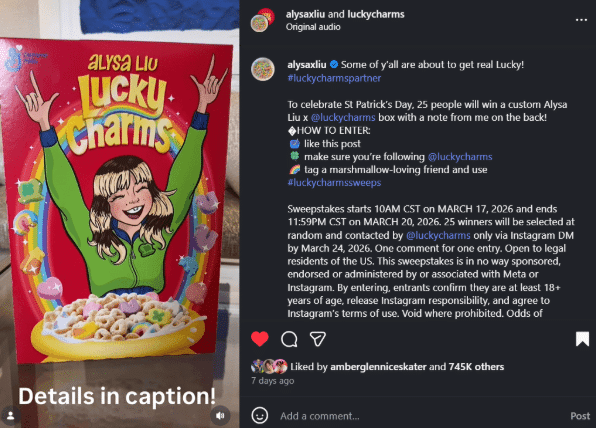
One such brand is Lucky Charms, which collaborated with Olympic gold medalist Alysa Liu on Instagram after she expressed her love for the cereal, engaging with Liu’s social media community to attract 750,000 likes for its campaign.
American Honda
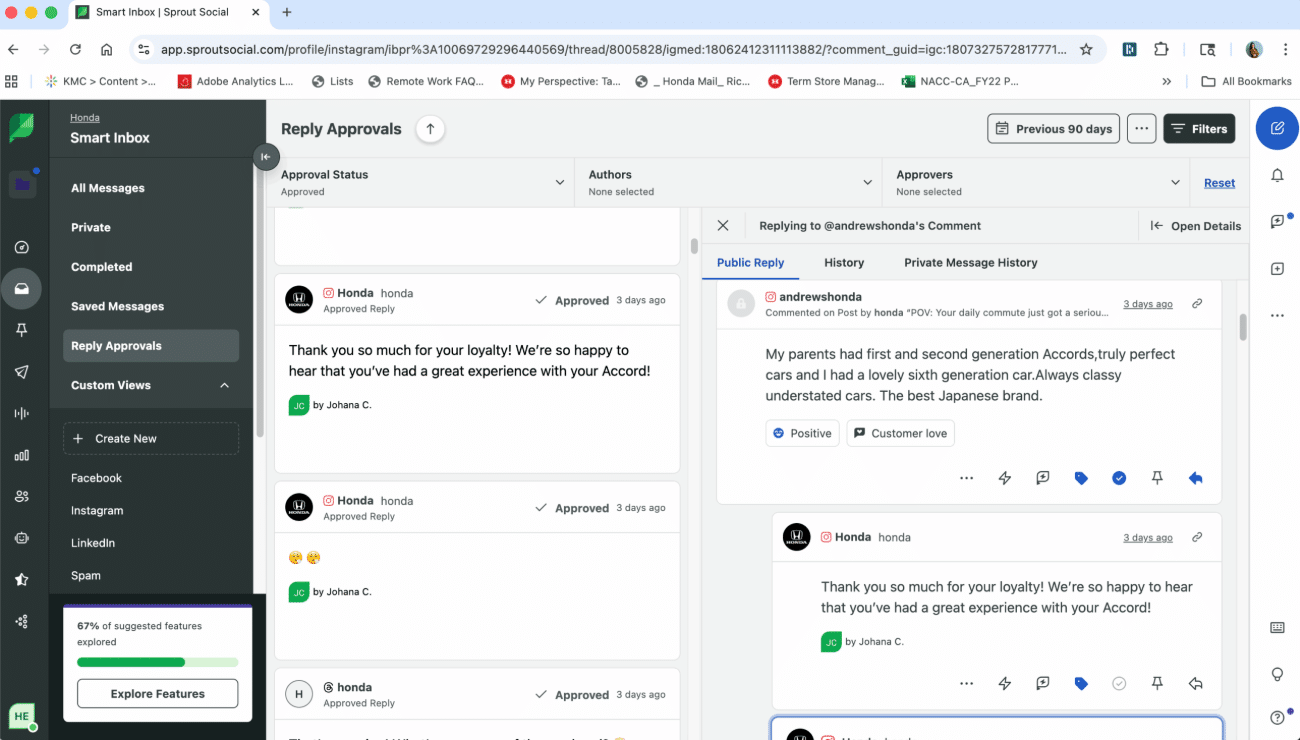
Meanwhile, automaker American Honda used Sprout Social Influencer Marketing to connect with its social media community through more proactive commenting and marketing automations. The end result was a 251% boost in community engagement, 40 hours per month saved, and a 91% high-quality engagement action rate.
Why Social Media Community Management Matters
Community management gives brands access to conversations that conventional performance reports may miss. Comments, messages, reviews, and community discussions can reveal:
- Frequently asked customer questions
- Sources of confusion or friction
- Emerging product or service problems
- Content topics audiences want explained
- Changes in customer sentiment
- Potential leads and purchase objections
- Customer stories and advocacy opportunities
- Reputation risks before they become larger crises
An active community can also create organic amplification. People who receive useful responses are more likely to continue the conversation, share relevant content, recommend the brand, or participate in future campaigns.
The value, however, should not be reduced to likes or follower growth. Effective community management helps the business become more responsive and informed while creating a better experience for the people interacting with it.
6 Key Types of Social Media Community Management : The SPACES Model
The SPACES model was developed by CMX to help organizations identify how a community creates business value. SPACES stands for Support, Product, Acquisition, Contribution, Engagement, and Success.
A community may support more than one of these objectives, but choosing a primary purpose makes it easier to develop the right activities and KPIs.
- Support: Elevate customer satisfaction by fostering a community where members assist one another, reducing support costs, and enhancing overall satisfaction. Picture a brand’s community where users troubleshoot problems collaboratively.
- Product: Cultivate a space where community members contribute ideas and feedback, steering innovation and product enhancements. Platforms like Buffer’s customer-centric Discord channel exemplify the power of product-oriented community management.
- Acquisition and Advocacy: Leverage your community as a network of ambassadors and advocates who amplify brand awareness and fuel business growth.
- Contribution: Assemble a community of contributors who generate valuable content shaping the product or other assets. This type of community adds richness to the brand’s content landscape.
- Engagement: Unite individuals with shared interests related to your brand or product, fostering engagement. The Harlow community centered around a tool for freelancers, and Bamby Collective are stellar examples of effective engagement-driven community management.
- Success: Go beyond addressing queries; actively drive product adoption and customer lifetime value. Success communities operate with a focus on guiding users toward optimal utilization and value realization.
Regardless of the community type, the key lies in maintaining a customer-centric approach. Brands need to consider the purpose of their community, whether it’s for support, marketing, education, or monetization. In the realm of social media community management, success is defined by the value delivered to your customers.
Additionally, when measuring the effectiveness of any social media community management approach, you must be able to attribute traffic and engagement to reputable sources. All influencer campaigns, comments sections, and other areas of a community management strategy can impact the customer journey, making it important to pin down the touchpoints that succeed most at attracting and converting audiences.
Our Expert’s Insight on Social Media Community Management
Take a proactive approach to social media community management by implementing a comprehensive monitoring strategy. Leverage social media marketing tools to streamline communication, actively engage with your audience, and stay ahead of relevant conversations in your industry.
At Ignite Visibility, we’ve used community management on social media to help our clients establish stronger connections with their audiences and drive long-term success. One of our multi-brand franchise clients integrated a video content strategy for social engagement, contributing to a 25% increase in social lead volume with scaled spend and a stable cost-per-lead.
Another client in the legal industry developed and tested user-generated content (UGC) to connect directly with audiences, which helped improve social engagement and conversions, ultimately leading to 1,635 more leads, $137,000 in revenue, and a 30% hook rate.
Campaigns like these give just a glimpse at how community management best practices can elevate your brand on your target platforms.
How to Build a Social Media Community Management Strategy
1. Define the Purpose of the Community
Begin by identifying why the community exists. Are you trying to improve customer support, increase product adoption, collect feedback, strengthen loyalty, generate advocacy, or reach new audiences?
Choose one primary objective and no more than two supporting objectives. Trying to optimize every possible outcome at once usually creates unclear priorities and superficial reporting.
2. Identify Where the Community Already Gathers
Do not assume your brand needs an equally active presence on every social platform. Analyze where customers already ask questions, discuss your industry, review products, contact support, and interact with relevant creators.
Consider:
- Audience demographics and platform behavior
- Existing comment and message volume
- Customer-service demand
- Organic discussion about the brand
- Competitor activity
- Available moderation and reporting features
- Team capacity
- Privacy and regulatory requirements
3. Establish Roles and Ownership
Document who owns each part of the community experience. Marketing may handle general engagement, while customer service manages account-related issues and communications teams oversee reputation risks. Legal, compliance, product, sales, and local teams may also need defined roles.
The operating model should identify:
- Who monitors each channel
- Who can publish responses
- Who approves sensitive responses
- When an issue moves from public to private
- When customer service creates a formal ticket
- When communications or leadership must become involved
- Who reports community insights to the wider business
4. Build a Moderation and Escalation Matrix
Not every negative comment requires the same response. Create severity levels so community managers know what they can resolve independently and what must be escalated.
| Level | Example | Recommended action |
| Routine | General question, minor complaint, constructive criticism | Respond using approved guidance and document the interaction if necessary. |
| Service escalation | Billing problem, failed order, unresolved support issue | Acknowledge publicly, move the conversation to a secure channel, and create or update a support ticket. |
| Reputation risk | Rapidly growing criticism, creator complaint, misleading claim gaining traction | Notify communications and leadership, verify facts, and use an approved holding or corrective response. |
| Legal, safety, or regulatory risk | Threats, discrimination claims, privacy exposure, health or safety concerns, legal allegations | Pause routine handling and escalate immediately to the appropriate legal, security, compliance, or executive team. |
| Policy violation | Spam, hate speech, harassment, doxxing, impersonation, or prohibited content | Apply documented moderation rules, preserve evidence where necessary, and report or remove content according to platform and company policy. |
A moderation policy should clearly explain when content may be hidden, deleted, reported, or left visible. Brands should not remove legitimate criticism simply because it is negative.
5. Create Response Guidelines
A useful playbook includes:
- Brand voice and tone
- Expected response times
- Approved factual sources
- Common-question templates
- Public-to-private handoff language
- Escalation contacts
- Words or claims that require approval
- Prohibited topics for automated responses
- Disclosure requirements
- Rules for handling personal or sensitive information
6. Select KPIs That Match the Objective
Follower count alone does not show whether a community is healthy or valuable. Select operational, engagement, customer, and commercial metrics that correspond to the community’s purpose.
7. Review and Improve the Program
Conduct regular reviews to identify:
- Frequently recurring questions
- Unanswered conversations
- Changes in sentiment
- High-performing response types
- Emerging reputation risks
- Feedback that should reach product or service teams
- Cases where automation failed
- Communities or channels that require more resources
1. Acquisition
The method of acquisition revolves around connecting with the community through forums, FAQs, and community websites to foster engagement and interaction.
Who It’s For:
Brands with diverse product lines seeking community interaction for tips, tricks and issue resolution.
Method Details:
- Craft and implement targeted ad campaigns across platforms like Facebook, X (formally Twitter), and LinkedIn to organically grow an engaged follower base.
- Leverage organic tactics to achieve follower growth through community interaction, supplementing paid ads to connect with audiences at every level.
- Utilize tools like Vanilla Forums to create and customize community forums, FAQs, or site pages, providing a branded and relevant space for users to engage.
How We Measure Results:
- Net new fans
- Average cost per new fan
- % follower growth compared to competitors
2. Customer Care
Use this strategy to prioritize customer care through forums, FAQs, and customer success platforms to enhance the overall customer experience.
Who It’s For:
Brands committed to enhancing customer care experiences on social media.
Method Details:
- Foster a supportive environment within forums, allowing community members to assist each other and engage in conversations.
- Implement customer success platforms or software to create branded websites or landing pages for community members, facilitating communication with teams and accessing resources.
- Proactively address inquiries within the community to ensure swift issue resolution.
How We Measure Results:
- Swift issue resolution
- Increased customer satisfaction metrics
- Reduced support costs as automated social media community engagement tools help streamline customer service and boost satisfaction
- Lower deflection rates result from successful resolution of service inquiries and help tickets, often with the added help of automation
- Self-service benefits as customers can resolve issues without the need for the extensive involvement of customer service reps, potentially getting assistance from other community members, AI chatbots, and other resources
3. Retention
Retention focuses on retaining a valuable social media community through sustained engagement and brand loyalty initiatives. Statistics show how customer retention is cheaper than acquisition, with acquisition potentially costing 5 to 25 times more than retaining existing customers.
Who It’s For:
Brands aiming for lasting relationships with their audience.
Method Details:
- Implement strategies for sustained engagement and satisfaction, going beyond acquisition to focus on retaining a valuable social media community.
- Create brand loyalty programs within the community to encourage ongoing engagement.
How We Measure Results:
- Improved customer retention rates
- Enhanced brand loyalty metrics with community management best practices growing and sustaining brand communities
- Higher customer lifetime value (LTV) from dedicated community members
4. Advocacy
Start turning satisfied customers into vocal brand advocates through structured advocacy programs.
Who It’s For:
Brands looking to transform customers into influential advocates.
Method Details:
- Design and execute advocacy programs to turn satisfied customers into vocal brand advocates.
- Implement acquisition and advocacy programs, such as affiliate initiatives, to leverage enthusiastic community members for brand promotion.
How We Measure Results:
- Increased brand advocacy
- Growth in organic brand endorsements
Social Media Community Management Best Practices
The following are some of the key community management best practices to use for your campaigns:
Plan Ahead
Effective social community management starts with a well-defined plan that outlines clear goals. Identify what you aim to achieve and align your community activities with overarching business objectives. This strategic approach lays the foundation for a purposeful and impactful community presence.
Engage with Your Audience
Actively engage with your community members by initiating conversations, responding promptly to comments, and encouraging user-generated content. Fostering a two-way dialogue creates a dynamic and interactive space that strengthens connections and encourages sustained participation.
Empathize with Your Audience
Show empathy in your interactions. Understand and acknowledge the concerns, feedback, and sentiments of your community. A compassionate and understanding approach builds trust and reinforces your commitment to meeting the needs of your audience.
Curate Your Content
Curate content that resonates with your community’s interests. Share valuable information, industry insights, and user-generated content that aligns with your brand. Thoughtful curation positions your community as a go-to source for relevant and engaging content.
Ask For Feedback
Encourage and value feedback from your community. Actively seek their opinions on products, services, and community initiatives. Constructive feedback not only provides valuable insights but also empowers community members, making them feel heard and appreciated.
Be Proactive
Be proactive in addressing issues and solving problems within your community. Swiftly respond to concerns, provide solutions, and demonstrate your commitment to ensuring a positive experience for your community members. Effective problem-solving enhances community satisfaction and loyalty.
Build Brand Awareness
Use your social community management efforts to boost brand awareness. Share your brand story, values, and achievements. Consistent brand messaging within the community reinforces your identity and contributes to a strong brand presence.
Foster Relationships
Prioritize building genuine and lasting relationships with your community members. Beyond transactions, focus on fostering connections. Respond to inquiries, express gratitude, and celebrate milestones together. Strong customer relations are the cornerstone of a thriving community.
Use a Measurable Framework
To help you guide your social media community management efforts, here is a framework to follow:
- Define Your Goals: Determine the “why” behind your community management strategy, whether success looks like reduced support ticket costs, increased brand loyalty, or more feedback from community members to improve your offerings.
- Set Actionable KPIs: Based on your goals, select the key performance indicators (KPIs) that matter most, such as average response time, engagement metrics, retention rates, and engagement quality.
- Build a Moderation Playbook: Provide team members with the resources needed to handle all critical tasks, with a playbook detailing your brand voice, escalation paths, and community guidelines, along with the best tools for brand advocacy in community management.
- Review and Refine: Conduct regular health checks and monthly community management strategy meetings to continually optimize your campaigns, incorporating current engagement data and adjusting conversation topics based on performance and trends among the community.
How AI Is Changing Social Media and Community Management
The ever-increasing integration of AI into social media is affecting social media community management in the following key ways:
AI-Powered Community Monitoring
One way AI is impacting marketing is through improved community monitoring, enabling brands to track mentions, conversations, and trends in real time.
Some of the best social media community management tools for monitoring include:
- Rallio AI: Designed for franchise and multi-location marketing, Rallio uses AI to monitor customer conversations, reviews, and engagement across all locations from a single platform. By identifying trends, surfacing actionable insights, and helping teams respond faster, Rallio enables brands to stay connected with local communities while maintaining visibility into their overall brand reputation.
- Sprout Social: With the help of Sprout AI, brands can convert real-time signals into meaningful intelligence that equips your teams to make more informed decisions for social media community management.
- Brandwatch: This tool uses advanced Natural Language Processing (NLP) to map consumer intelligence trends and track as many as millions of public discussions.
- Meltwater: Use Meltwater to combine newsroom tracking with your social media data, with the ability to automatically group global media coverage according to industry topics.
- Hootsuite: With the help of both its Talkwalkker engine and OwlyWriter AI tools, Hootsuite can monitor streams, discover relevant keywords to target with your campaigns, and predict the times when communities are most active.
AI-Powered Sentiment Analysis
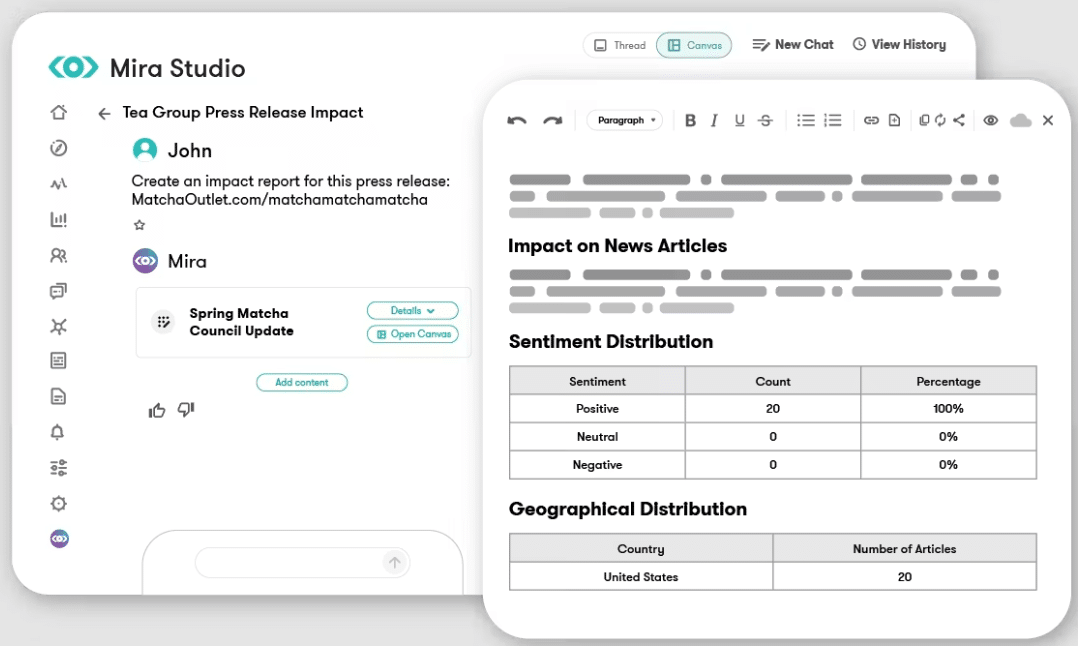
The best tools for brand advocacy in community management will help measure sentiment analysis, gauging how people perceive your brand based on mentions.
Algorithms can identify and analyze intent behind text, with capabilities like contextual labeling to tag all incoming posts, reviews, and direct messages (DMs) based on whether they’re positive, negative, or neutral.
AI can also prioritize the most urgent tickets, moving ones to the top that are in need of immediate help or involve notably angry or frustrated customers.
AI-Powered Moderation
Automated systems can also help with moderating community topics and interactions, ensuring your community stays safe, welcoming, and clean for all users.
For instance, you could automatically filter out spam based on the use of fraudulent comments, duplicate links, or promotional bot accounts.
You can also scan comments for hate speech, harassment, or other violations of community guidelines, which will block out any toxicity in your community.
Some platforms will also temporarily hide sensitive comments until a person can review and either approve or reject them.
AI-Powered Response Assistance
AI functions as an on-demand assistant to respond to high volumes of messages and comments.
The right solutions can automatically adjust the tone of a comment or response based on the user’s tone of voice.
You may also use these tools to automatically translate incoming messages and draft replies in the user’s native language.
Human vs. AI Community Management
One of the most important community management best practices involves blending both AI and people in your efforts.
While AI can process up to thousands or even millions of comments across channels, people should review any responses and provide AI tools with input to keep automations aligned with brand and community guidelines.
Also, AI could adhere to strict rules, but keep in mind that it doesn’t have the same empathy or emotional nuances as human responders on your team.
People are also often better at handling more complex PR crises and customer complaints, where AI might only exacerbate these situations.
The Risks of Over-Automation
AI can be invaluable in optimizing community management on social media, but it is no substitute for a human social media community manager.
If you over-optimize with AI, you risk issues like:
- Brand detachment as your voice feels cold, generic, or purely transactional without proper guidance
- Context blindness if AI misinterprets a comment or message, such as failing to detect humor and deleting a perfectly innocent comment using sarcasm
- Hallucinations resulting from AI stating incorrect facts or making false claims that could hurt your brand reputation
- Backfiring PR, such as when AI sends a happy and cheerful reply to a customer expressing anger and frustration, making you feel out of touch
FAQs
1. What is social media community management?
What is community management in social media, exactly? Put plainly, it’s the practice of developing and nurturing relationships between your brand and your audience on all social platforms, often through engagement in the form of direct messages and comments that go beyond basic social media management.
2. Why is community management important?
It’s important to practice good community management on social media to build more trust among audiences and to ensure they feel truly heard. Stronger relationships developed with social media community management will help maximize retention and keep your customers loyal to maximize their lifetime value.
3. What does a community manager do?
A social media community manager combines marketing with customer service to build strong connections with customers on all relevant platforms. This individual or company will be able to optimize comments and other forms of engagement to increase trust, nurture leads, manage your online reputation, and boost loyalty among existing customers.
4. What KPIs should community managers track?
The types of KPIs that a social media community manager should track will ultimately depend on a brand’s objectives, but they could include:
- Churn rate
- Member growth rate
- Retention rate
- Engagement metrics like daily active users and time on page
- Deflection rates
- Conversion rates
- Lifetime value
- ROI
5. What tools are best for community management?
There are many social media community management tools you can implement to help with every aspect of your strategy, such as Rallio AI for social listening and automated sentiment tracking, Hootsuite for monitoring conversations and tracking KPIs, and plenty of others, often with AI capabilities to streamline daily tasks.
6. How does AI help with community management?
AI can help with social media community management in numerous ways, such as simplifying brand monitoring, sentiment analysis, and responses. However, AI should always have human oversight behind it to keep AI-driven responses and analyses from negatively impacting community interactions.
7. What’s the difference between social media management and community management?
Social media management is about social media content, with a focus on planning, developing, and publishing posts and ads to boost brand awareness and fuel audience growth. Community management, on the other hand, focuses on conversations with brand communities, with an emphasis on replying to comments, resolving customer issues, and maximizing retention.
8. How do you build an online brand community?
Building a brand community on social media involves switching from a focus on developing and promoting content to building meaningful connections with audiences. You can build a flourishing brand community by defining your unique brand purpose, choosing the right platforms for audiences to gather, and encouraging more active participation among audiences and staff.
Discover How Ignite Visibility Can Help You Elevate Your Social Media Community Management
Today’s brands need to do more than just sell products and services. Consumers crave community. When it comes to creating connections, brands need to take this opportunity to step up their game.
Discover how Ignite Visibility can assist you with your social media community management. Our experts are ready to:
- Monitor and address customer feedback on your business page efficiently.
- Effortlessly create and respond to reviews, building a robust online reputation.
- Simplify and automate marketing campaigns to reach a broader audience.
- Maximize your social media impact with tailored strategies across platforms.
Ready to explore the benefits of social community management? Read about our social media management services and their benefits for your brand.