A Complete Guide for Businesses
If you want to excel with a franchise marketing strategy, you need to master the art of the “two-front” approach. To win in a crowded marketplace, you must balance a high-level national brand identity with hyper-local execution that drives foot traffic and repeat business to individual locations.
For consumer-facing brands, like urgent care centers or plumbing franchises, it takes more than just an ad or two to get the word out. You need a comprehensive franchise marketing plan to help set you apart from your competition, while keeping you closely aligned with your overall brand.
In this blog, VP of Franchise Development, Mark Renehan, will focus on franchise consumer marketing by explaining how to effectively market your locations to the end-user, establishing your brand as a household name while boosting the bottom line for every franchisee.
What’s Covered:
Understanding the Basics of Franchise Marketing
To start our business franchise guide to marketing, let’s look at the fundamentals of franchise marketing.
What Is Multi-Location Franchise Marketing?
This type of marketing involves promoting businesses with several locations nationally or across the globe, keeping all branding aligned and consistent while adapting to the needs of franchisees and customers in each location.
There are currently around 845,000 franchise establishments in the U.S. alone, across many industries from quick service restaurants and fitness to automotive and finance. That’s over 10% of all businesses in this country, and those figures continue to grow.
If you’re thinking of franchising as a growth strategy for a service-based business, this is also proving to be a great opportunity, as service-based franchises are growing in popularity over traditional retail and food service franchises. There are multiple reasons for this shift, including increasing demand for convenience, reduced startup costs due to a lack of inventory and physical stores, and higher recurring revenue.
To establish a strong brand identity, multi-location franchise marketing must maintain consistency of visuals and messaging across all locations while adjusting accordingly to speak to different markets.
Importance of Consumer Franchise Marketing
Consumer Franchise Marketing is crucial because it’s what ultimately determines the franchise’s success. The national branding and marketing help to fuel local demand and vice versa.
National marketing helps to build the common KPIs that most businesses are interested in, including brand awareness, website traffic, media coverage, and customer retention.
Consider this: when a new Burger King opens in town, it brings with it the nationally recognized name, logo, brand colors, and products. It doesn’t have to establish itself in the community like a mom-and-pop burger joint would. The brand awareness is already established and continues to build. Each franchise network must strive to create brand awareness at the National and Regional levels.
The same principle applies to any industry. In the healthcare industry, we can look at the rise of urgent care centers. Those with brand names, like Patient First or UPMC, are backed by well-known names and reputations, so patients wouldn’t hesitate to go there in an emergency.
Expert Insights into Developing a Franchise Consumer Marketing Strategy
When it comes to consumer-facing marketing, franchise locations have unique needs. Owners often need to balance multiple locations with a cohesive and consistent franchise marketing plan that connects everyone in the franchise to the end consumer in a holistic solution. From SEO and paid media to content marketing and web design, many elements will contribute to a solid strategy, and none of the aspects should be overlooked.
This is true regardless of industry.
For instance, one of our home service franchise clients benefitted from a customer-targeting marketing strategy for franchise business locations, with an emphasis on scalable local SEO, leading to a 16% year-over-year increase in organic “Book Now” completions and a 38% YoY increase in organic search bookings for various locations.
Action Item: Consider your franchise’s specific marketing needs, including your target audience and industry. Once you are clear on your needs, you can build an unforgettable franchise marketing strategy that will keep customers flocking to your locations ahead of the competition on a national-to-local level.
The Franchise Marketing Ecosystem
There are a few primary components of franchise marketing systems that can help you get the results you want. These include:

1. Target Audience Analysis
The first step in developing your strategy is to conduct a target audience analysis. You need to consider the specific needs of audiences across all of your business’s locations.
In doing so, segment your audiences based on certain demographics and psychographics, and build a persona for each. Also, consider the pain points that are unique to audiences in each area—what features or offerings would be best to promote for each location?
Brands now use AI tools, like Google’s Performance Max and Meta’s Advantage+, to understand consumer actions, predict trends and refine ad targeting using available data.
Based on the insights you gather about your audiences, you can then adapt your marketing while keeping the broader elements of your franchise consistent and uniquely yours.
2. Goal Setting
Just like any other business, you’ll need to come up with a set of goals when marketing a franchise. Keeping these goals in mind will help you understand your success.
There are various goals you can set at different points, including:
- Brand awareness
- Conversions and customer acquisition
- Sales
- Retention
These goals can then dictate which key performance indicators (KPIs) and metrics to monitor to measure success.
3. Budget Allocation
Before implementing your franchise strategy, you’ll need to establish two separate budgets: a national budget and an individualized budget for each location. Start by considering all of your costs, including initial and ongoing costs, along with revenue projections.
Upon review of your budget, you can determine how much to set aside for marketing for individual franchises and the business as a whole. As you optimize your franchise marketing systems and get results, you can expand your budget for even better performance.

4. Brand Consistency
Maintaining a unified brand message across all franchise locations helps build trust. It also builds recognition. By 2025, digital asset management (DAM) platforms, such as Bynder as well as Brandfolder, have turned into a true necessity for many franchises, since they permit marketing teams to efficiently centralize, organize and distribute branded materials.
5. Local Marketing
Localized marketing efforts guarantee franchise locations cater specifically to all of their immediate communities. To reach possible customers, hyper-local marketing now uses geofencing and location-based push notifications to send personalized deals when they get near a franchise.
6. AI Brand Guardrails
Using AI in marketing, you can perform auto-checks of local franchisee social media posts to maintain brand compliance at all times.
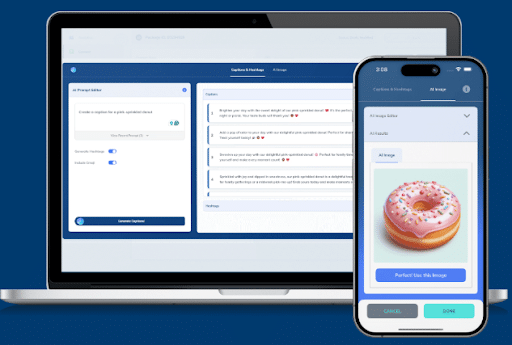
For example, Rallio’s Post Library & Scheduling System provides a repository of pre-approved content, allowing users to tailor and schedule posts effortlessly. This helps maintain consistent brand messaging across various channels, streamlining the content distribution process into one social media management platform and ensuring timely interactions with the audience.
National Marketing Strategies – Franchisor
Here are some essential strategies to incorporate into your marketing strategy at a national level.
Here is a business franchise guide to each component:
SEO for Franchise Businesses
One of the first items to consider is franchise SEO. An overarching national SEO campaign supports every good hyper-local SEO strategy. Search engine optimization, or SEO, involves optimizing content to rank high in search engines. Consider that over 50% of shoppers use Google to discover new brands, including franchises. National SEO is necessary to build overall site authority for key areas of the website, including the homepage, regional pages, services pages, and product pages not controlled at the local/franchisee level.
National SEO will require in-depth keyword research using tools like Google’s Keyword Planner, with other elements to consider, such as:
- Internal and external links
- Backlinks on other websites
- Image alt text
- Title tags and descriptions
A strong SEO strategy makes franchise locations appear in search results. Google’s newest algorithm updates, such as the Search Generative Experience (SGE), strongly emphasize genuinely helpful, firsthand content and extensive real-world expertise.
A well-written national site that uses links, alt text, and keywords will help you rank on search engines. You can also boost your national SEO by incorporating blogs into your marketing strategy, such as this one from Anytime Fitness.

Your franchise marketing strategy should also incorporate “local landers,” or location-specific landing pages on the main website. While you might be tempted to create separate franchisee websites with locally targeted content, you can extend your franchise’s national reach with subdirectories vs. subdomains that help establish you as an industry authority.
For instance, instead of having a site like “illinois.brand.com,” you would have landing pages as subdirectories, e.g., “brand.com/illinois”.
Content Marketing
For national marketing, you’ll need to focus on developing content that resonates with each of your audiences while remaining consistent with your branding and overall messaging.
For example, you might write blogs targeting specific segments of your audience, addressing individual talking points that apply to a particular location. At the same time, you’ll want to use language and visuals that are aligned with the rest of your brand.
Let’s revisit the Anytime Fitness blog example. The national site will focus on providing overarching workout support, rather than blogs written about specific trainers or equipment available only at select locations.
Ultimately, there are many types of content you can use on and off your website, including:
- Service and product pages
- Primary web pages
- Blog posts
- Videos
- Guest posts
- Images
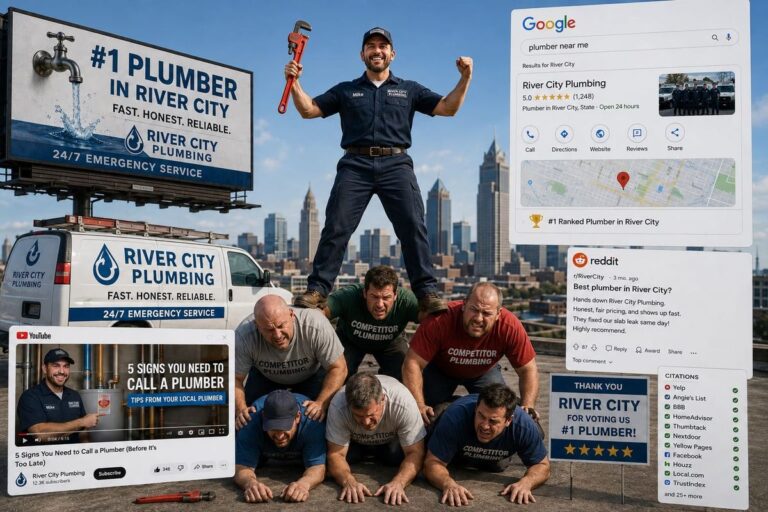
Other content ideas include video testimonials for wellness brands, discussing your services, or creating keyword-optimized case studies featuring happy customers for home service brands, such as plumbing or electrical franchises.
PPC Advertising
Your franchise marketing strategy should also entail franchise pay-per-click (PPC) advertising using different types of paid media.
One critical tool to use for PPC campaigns is Google Ads. Using this platform, you can build Search and Display campaigns that maximize your ads’ reach across the web. Search ads would appear in search engines, often showing up above organic search results. Meanwhile, Display ads include image and video ads that show up on websites that your audience browses, including retargeting ads that can bring people back to your website after an initial visit.
Don’t neglect social media ads, either. Tools like Facebook and Instagram Ads can help you build highly targeted campaigns on these channels.
Like the rest of your content, ads should use a blend of centralized and localized campaigns. People generally interested in your brand could come across broader ads, while people in specific areas might see ads for particular locations.
Video Marketing
Another invaluable asset in a franchise marketing plan is video marketing, which is extremely popular among audiences. According to one survey, 81% of respondents either “Somewhat” or “Very much” enjoy watching brand video content.
Video marketing covers all types of video content, including long-form videos on YouTube and short-form social media posts and ads.
There are plenty of videos you can create across platforms, such as:
- Explainer videos
- Local ads and promotional videos
- Broad franchise ads
- How-to guides
- Live streams
- Tutorials
- Product or service introductions
Testimonial videos about your brand as a whole are particularly helpful to build brand-level authority on your national website.
Local Franchise Marketing Strategies – Franchisee
Any national strategy should be accompanied by a localized franchise marketing strategy led by the franchisee. Here are some ideas for hyper-localized marketing strategies to pair with your national ones.
Local SEO
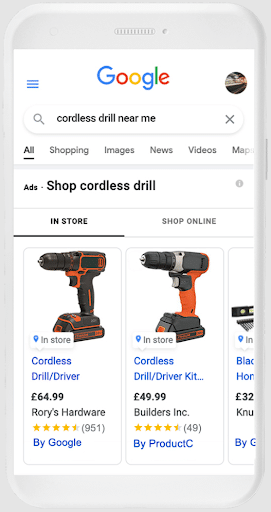
We already discussed how to boost your SEO on a national level, but what about on a local level? There are numerous ways to achieve extreme granularity with your local SEO, including utilizing localized keywords, targeting “near me” searches, and leveraging tools like Google Business Profile to increase visibility in local searches.
Franchises will want to optimize their SEO to rank nationally and locally, using a combination of broad and local SEO. For example, a fitness brand with multiple locations would want to show up for top searches in their industry, such as “best gym membership,” along with hyper-local searches like “best gym in [city].”
You also want to develop high-quality content that’s readable and keeps people engaged, which will further signal to Google that your website is worth ranking.
Additionally, each location should have its own detailed Google Business Profile to enhance your SEO efforts further. Here, each franchisee can post localized content, photos, and updated promotional content. You should also solicit and respond to customer reviews.

Also, consider the importance of Local Inventory Ads (LIAs) for product-based franchises, which indicate product availability for each location with dynamic listings. LIAs will subsequently ensure that people only see the products that they can actually purchase at the franchise near them.
Social Media Strategy
Any franchise marketing plan should also include social media.
First, consider which platforms your target audience uses. For instance, a local gym might have an audience on visual platforms like Instagram and YouTube, where people are often looking for workout videos and guides. Meanwhile, financial institutions may want to connect with professionals on platforms like LinkedIn.
Second, utilize an AI-enabled social media management platform for content distribution at they hyper-local level. We have found the Rallio platform, which was built specifically for the franchise space, to be highly effective.
Social media is considerably relied on for franchise brand awareness. Short-form video content remains popular, and TikTok and Instagram Reels maintain high engagement. For example, Carl’s Jr.’s Super Bowl ad with TikTok influencer Alix Earle shows how well brand storytelling works in current influencer campaigns.
You should use a combination of national-level posts, as well as localized photos and content, to maximize your exposure and reach. All of which can be managed via the Rallio platform.

Bonus: Traditional Marketing Tactics for Franchises
You don’t just have to focus on online franchise marketing. You can also supplement your digital marketing efforts with the following traditional strategies:
Direct Mail and Print Advertising
Print ads and direct mail are still integral to franchise marketing, as they give people something more tangible that helps them remember brands better. After all, in this digitally saturated world, physical media is a good way to stand out.
More and more businesses are using direct mail for these reasons, with one company finding that weekly mail volume increased 39% within a recent three-year period. These pieces can include coupons and brochures to introduce people to your brand on a local level.
Meanwhile, print ads in magazines and other locations could further help differentiate you from your strictly online competitors.
Community Engagement and Sponsorships
You should also get your brand involved in various sponsorships and community events, which will help you align your business with local causes. In turn, audiences near specific franchise locations will come to associate your brand positively with the community.
There are plenty of events you can take part in, including food drives, charity runs, celebrations, seasonal events, and more.
Promotions and Loyalty Programs
Entice your customers with certain promotions and loyalty programs that keep them coming back.
For example, a gym could offer a seasonal promotional discount to become a member, while a fast-food restaurant can allow customers to earn points toward free or discounted menu items.
If people know they’re getting a good deal, they’re far more likely to stay loyal to you in the long term. The stats prove this, with 85% of people saying that loyalty programs make them more inclined to continue shopping with a brand.
Competitive Analysis
See what your competitors are doing to find out how you can outperform them. You might discover that they’re not addressing issues specific to certain locations or that they’re neglecting a certain audience segment.
You can also see what they’re doing right to inform your campaigns for better performance.
Programmatic Out-of-Home (pOOH)
A marketing strategy for franchise business growth can also extend outside of online tactics, taking advantage of physical digital billboard space in public areas to advertise their brand or specific locations in the area.
pOOH can go a long way in connecting with target audiences wherever they are, supplementing other local efforts like geofencing on mobile devices.
Example of pOOH for franchising as a growth strategy.
National-to-Local Strategies
Before you can create an exceptional franchise marketing campaign, you have to understand the importance of a national-to-local strategy. By combining national brand-building efforts with localized marketing tactics, it will drive performance at a local level.
To make this work, you’ll need:
- Localized content that aligns with your national branding
- Ads that cater to local demographics and preferences
- Centralized analytics that will monitor and optimize performance across all locations – not just your national one
This application is particularly useful for franchisors who need to ensure that their content is relevant on a national level, while still resonating with a local audience. When you nail your national-to-local strategy, it can improve local relevance and engagement, boost your return on investment, and streamline operations with certified oversight.
Consumer Journey in Franchise Environments
Another key part of a successful franchise marketing strategy is understanding the consumer journey.
For more franchise customers, there are four journey phases:
- Awareness
- Consideration
- Conversion
- Retention
You need to develop ads and content that reach your target audience at each phase of their journey. Running paid ads is a great way to reach those still in the awareness phase, while keyword-optimized landing pages will connect with those in the consideration phase. Promotions and discounts are effective in connecting with those in the conversion phase, while reviews and excellent customer service will inspire customer retention.
Measurement and KPIs
You can’t effectively manage a franchise marketing campaign without understanding how to measure your success. Some of the most popular KPIs to monitor include:
- Traffic
- Lead volume
- Brand sentiment
- Review scores
- Customer retention
Remember to track these KPIs across both your national and local levels to ensure that you’re doing your absolute best in both areas.
Leverage Technology for a Successful Digital Marketing Strategy
Certain technologies can also help your franchise marketing strategy excel, such as:
- Marketing Automation: Automating franchise marketing systems can streamline nearly every aspect of your campaigns, including emails, social media posts, and content posting.
- Customer Relationship Management (CRM): You’ll also want to use a CRM like Salesforce or HubSpot to track customers across the entire journey from the top of the funnel to the bottom.
- Analytics and Reporting: Tools like Google Analytics 4 (GA4) and Google Search Console can help you monitor key metrics and measure them against your marketing goals. In the process, you should monitor your broad and local franchise marketing strategy.
- Unified Attribution: Looking ahead in 2026 and beyond, franchisors need to use unified attribution to determine which national store drove a local walk-in through privacy-first tracking. Being able to attribute walk-ins to specific franchise marketing strategies will further help measure and optimize performance.
Common Challenges for Franchise Marketing
There are several key challenges that franchises face with marketing. These potential issues include:
1. Maintaining Brand Consistency
On your website and across all marketing materials, your branding must be consistent to build trust, recognition, and loyalty among your audiences. To ensure brand consistency, introduce proper training and onboarding for new franchisees, which will help align branding with local needs.
You must also manage your online reviews and maintain a good reputation. Address negative reviews humbly and show your dedication to addressing certain issues, whether at the national or local level.
Also, issue press releases and other content to address hits to your reputation and willingness to continually improve.
3. Communicating Between Franchisors and Franchisees
To facilitate brand consistency and cohesion across your entire franchise, you need to facilitate good communication from franchisors to franchisees and vice versa. Take steps to maintain regular communication and ensure every branch of your business is on the same page, such as scheduled virtual meetings or calls.
4. Remaining Competitive
Find out what your audience wants from you through market research and competitive analysis. Taking cues from competitors while standing apart with high-quality services that meet each audience segment’s needs will help you maintain a competitive edge.
5. Keeping Up With Changing Consumer Behavior
As customer needs and wants change over time, you need to adapt. See what customers are saying on social media or request feedback through surveys and other content, which will help you determine what to do to stay ahead in your industry.
6. Avoiding Data Silos
One of the biggest challenges among franchises today is getting multiple local franchisees to share their customer data with national franchise CRMs. Franchisees sharing all of their metrics and insights will give franchisors a better idea of each location’s performance, which can help determine how to pivot strategies and better market to areas that are underperforming.
FAQs
1. Who should pay for marketing: Franchisor or franchisee?
Ultimately, both parties should pay for marketing campaigns that help achieve the goals of individual franchises and the overarching business. Franchisors will want to spend on marketing to attract qualified franchisees, while franchisees should develop campaigns that help bring in new, loyal customers.
2. How does AI help with local franchise content?
AI can help build a strong franchise digital marketing strategy in a number of ways: It can analyze customer buying patterns to deliver highly personalized offers, develop templates to simplify content development, produce localized social media content and ads, and help manage local reviews and responses for reputation management, among other aspects of marketing.
3. Why is my “near me” ranking dropping?
There are multiple reasons why you might see dropped rankings for “near me” and other locally targeted queries, such as increased local competition, weakened signals in your Google Business Profile, or a recent Google algorithm update.
4. Is “geofencing” still effective for franchises?
Yes, geofencing is still a valid strategy for local franchises to target people nearby with relevant offers and ads, particularly through in-app notifications and SMS text messaging, allowing you to connect with people within a particular service area or geographic perimeter.
5. What is the most important KPI for a franchise?
The specific KPIs that matter most for a franchise will depend on business goals, but two of the most important tend to be net profit for the overall franchise and gross sales that gauge market penetration. Other KPIs worth tracking might include brand awareness, customer retention, and website traffic, depending on your objectives and whether you’re a franchisor or franchisee.
Develop a Successful Franchise Marketing Strategy With Ignite Visibility
Now that you understand the importance of developing two different franchise marketing strategies (one for franchisees and one for consumers), as well as the importance of both a local and a national plan, it’s time to get to work and design a solid strategy that helps your business thrive. However, you may also benefit from some extra help, especially if you want solutions that allow for long-term growth.
With Ignite Visibility, you’ll get a complete franchise marketing plan that fuels your business’s success. Specifically, you’ll benefit from:
- National-to-local strategies that connect with local audiences while maintaining consistent branding
- High-quality content across multiple relevant marketing channels
- Consistent communications between franchisors and franchisees
- A strong presence on social media, Google, and other platforms
- And more
Want to find out what our experts can do for you? Learn more about our franchise marketing services.