The Critical SEO and GEO Link Between Search, AI, and Omnichannel Marketing
With the addition of AI, the world of search marketing has changed. If you want to win with search engine optimization (SEO) or generative engine optimization (GEO), you must adapt to the evolving landscape.
Increasingly, search and AI professionals need to think outside the confines of SEO and GEO, and work to influence omnichannel marketing to ensure success in both.
As Search and AI evolve and merge, the strategies required for success evolve as well. The days of siloed SEO strategies are long gone. If you need performance in organic search and AI, then you also need to work across all touchpoints that are visible to Search and AI bots. That feeds stronger authority signals to Search and AI algorithms, increasing visibility for SEO and GEO. It’s time to work outside of your box.
Decreasing Traffic from Organic Search
To understand why, let’s talk about traffic trends. Traditional organic search visits have been declining for sites across the internet as AI elements within traditional search answer questions directly that would previously have required a searcher to click to your site. This has been coined the zero-click phenomenon.

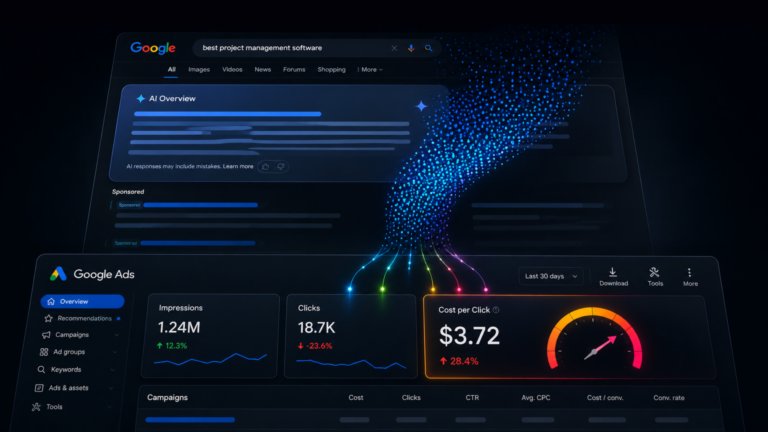
Google is increasingly answering searchers’ questions within Google Search (AI Overviews, People also ask, Things to know, Things to do, Recipes, Knowledge panels, and many more), hoarding visitors for itself to increase ad revenue under the guise of being helpful.
The image below shows the outcome of the third in an annual series of studies by Sparktoro, founded by one of the early SEO stars, Rand Fishkin.
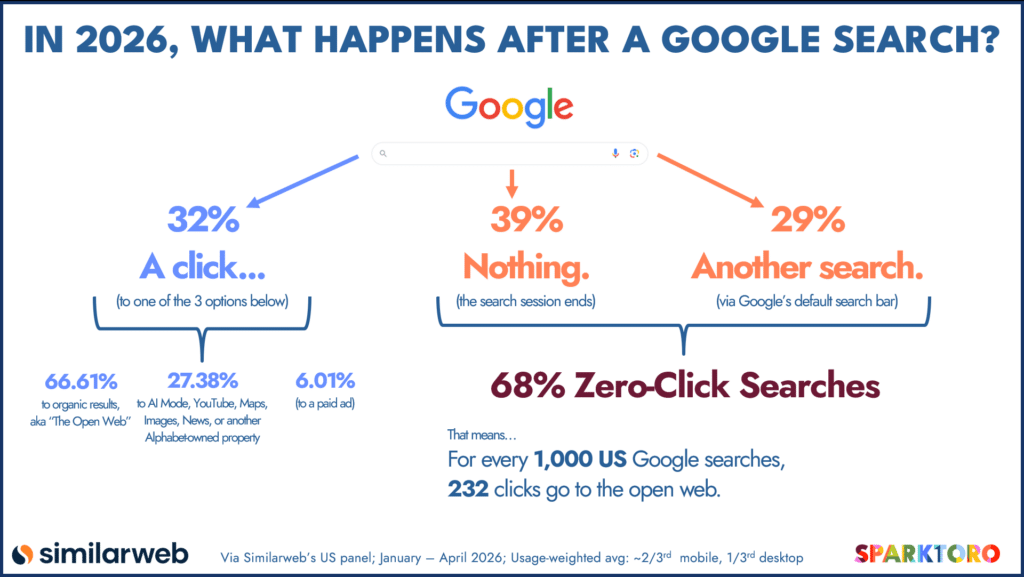
Zero-click means higher impressions and lower click-through rates in Google Search based on the increasing integration of and trust in Google’s AI elements. As a result, after over a decade of focus on transactional measures of success, SEO measurement is swinging back to the importance of impressions as a way to measure search and AI success.
Google’s Innovations Increase the Pace of Change in Search and AI
Google announced a dizzying array of innovations during its annual Google I/O event in May. Most targeted developers, but what developers learn today, Google users will experience soon in Google Search, Gemini, and Android mobile apps. Some of the most interesting for search experiences include:
The Intelligent Search Box
Now more than a search bar, the search box expands dynamically for longer, more conversational text queries and accepts images, videos, files, and Chrome tabs as well, inviting searchers more deeply into an AI-like experience from the beginning of their search. While AI Overviews and ads will continue to top the results for many queries, traditional search results and other search features will continue to be part of the Google Search experience.
AI Overview Update
The line between AI Overviews and AI Mode is blurring further with the ability to answer follow-up questions directly in the AI Overview. This evolution of AI Overviews serves as an enticing gateway to follow the proverbial white rabbit deeper into AI Mode, with Gemini 3.5, Google’s latest iteration, engineering the experience along the way.
Search Agents
Google users can set up personalized “information agents” within Google Search that run in the background 24/7, like Google Alerts (circa 2003) on steroids. These agents send you fresh information via the Google app on any topic desired in a synthesized update package with actionable steps and links to more information. This functionality could arrive as early as “this summer.”
Google Antigravity and Generative Search Experiences
Essentially Google’s ecosystem of products for developers to work with agents to build cool new things more quickly and easily, Google Antigravity harnesses Gemini 3.5. Google is using Antigravity, in combination with Google’s DeepMind team, to build custom Google Search experiences for specific queries or prompts that could include dynamic layouts for the search page, interactive visuals, and persistent project spaces that searchers can revisit over time.
Think of Generative Search Experiences as searchers interacting with a Google-created webpage built from content sourced all over the internet rather than a list of links or answers. Just think how dynamic and engaging this could be… and how many fewer clicks from search as a result. This functionality could arrive as early as “this summer.”
Agentic Shopping and Universal Cart
Building on the shopping-in-search foundation it first introduced in 2002 with Froogle, Google has pieced its open standard for agentic commerce (the Universal Commerce Protocol) and payments infrastructure (Agent Payments Protocol) to develop a Universal Cart.
Because it works across merchants and services, the Universal Cart allows searchers to add items to a common cart as they traverse Google properties. Add something to the cart as you search the web, read your Gmail, watch YouTube, chat with Gemini, etc. The Universal Cart will find deals, give you insights on pricing history, factor in payment methods and loyalty rewards, let you know when something is in stock, and anticipate your needs based on past behavior across Google’s properties. Universal Cart could arrive as early as “this summer” in Search and Gemini, with YouTube and Gmail to follow.
The Impact of Google’s Innovations on SEO and GEO
The speed with which Google is innovating its product ecosystem and bringing developers along for the ride, and the extent to which Google’s AI and Search products are tied into that ecosystem, make two things very clear:
- Google is not just looking to stay ahead of ChatGPT as a company; it’s looking to obliterate it.
- Sites will increasingly lose clicks to Google’s engaging generative Search and AI features, starting with less-transactional sites that offer informational content.
Google’s end goal is clear: Increase the length of interaction with customers across every touchpoint, creating more useful and more engaging experiences that negate the user’s need to leave Google to learn or transact.
That means even fewer clicks to sites across the internet.
The future of success in AI and Search is being part of the conversation rather than being the destination.
As Search and AI keep more and more of the traffic to themselves, the critical measurement of success will be in being a visible part of the conversation, not in the clicks to your site.
In order to be part of that conversation, you need to demonstrate what Search and AI value: positive sentiment and demonstrated authority. In past years, links from other sites meant authority. But today, the currency of authority is brand mentions.
What you say on your own site plus what others say about you on their sites determines how authoritative and relevant your content is in Search and AI. Google characterizes this concept as E-E-A-T (Google’s acronym for experience, expertise, authoritativeness, and trustworthiness). Although they lack spiffy acronyms, the same things are important to other search engines and AI platforms.
Why Omnichannel Marketing Is Critical to SEO and GEO
The Search and AI visibility battle will be won or lost based not just on what a company says on its own site, but also on what people across the internet say about that company (and its experts) in forums, in social media, on YouTube, in the media, in reviews, and everywhere else. It transcends the need for SEO and GEO, touching every marketing channel a company can wield, from PR to advertising to email marketing to reputation management.
As a result, it’s more important today than ever that SEO and GEO are in lockstep with a company’s content creation and reputation strategies across the marketing ecosystem.
At their cores, SEO and GEO share a common need: content with positive, topical authority related to your brand. To drive as many people as possible to your site, you need some of that content to live on your site in formats that can feed the results for both search engines and LLMs.
AI can’t provide great answers without great content.
In some cases, those AI experiences will be Google’s, and in others they will be ChatGPT’s or Copilot’s or some other AI player’s. In many cases, as we look into the future, those people will stay on Google or the other LLMs, but that content is critical to feeding the algorithms that determine what to display within AI.
What to Do Now
So how do you gain visibility in AI and Search as the rules change? SEO (search engine optimization for traditional search results) and GEO (generative engine optimization for LLMs) are the answer to improving visibility and impressions to keep you in the conversation, even as visits decrease. The goals are twofold:
- Ensure your place in the conversation, whether it happens in AI or Search
- Win top positioning and citations to court the click when it happens
The to-do list is deceptively short, but each segment includes the need to drive consistent, authoritative information across as many channels as possible to ensure positive mentions both on and off your site. Specifically, create content that:
- Answers specific needs or questions from the core audience’s perspective in searchers’ words;
- Credits authoritative experts on the pages you need to win visibility for;
- Uses original data, studies, quotes, or other information only you have access to;
- Can be converted into a variety of formats, including text, imagery, charts and diagrams, video, and audio, to publish across a variety of channels;
- Is hosted on a platform that enables discovery for lower-fidelity AI bots, not just Googlebot, with quick load times, crawlable links, and indexable content.
To earn stronger visibility in Search and AI and to be part of the conversation your customers are having in Search and AI, your SEO and GEO strategies need to evolve as quickly as Google’s. Look outside your lane and work with other marketing channels to influence and coordinate the content you’re putting out into the universe.
Ensure that when Google, ChatGPT, Microsoft, and the other Search and AI giants encounter your brand mentions both on and off your site, your content portrays a consistently positive, authoritative position.