Pillar Page Content Strategy for Marketers

A pillar page content strategy is a common and effective way to organize content around a topic and support topical coverage, and it comes with numerous benefits for SEO, including the ability to appear in AI-powered search results when combined with high-quality, helpful content.
In this blog, Jason Carleton, Sr. Director of SEO, will discuss the pillar page definition, how pillar pages can elevate your content, and how to build a strong pillar page strategy to dominate rankings and connect with audiences.
Key Takeaways:
- Pillar pages organize content into topic clusters that improve navigation, SEO, and topical authority.
- Pillar content supports E-E-A-T and entity SEO, helping establish expertise and trust.
- Informational content remains a major driver of AI citations, accounting for 57.1% of AI Overview triggers as of late 2025.
- The best pillar pages balance broad topic coverage with supporting cluster content that explores subtopics in depth.
- Success goes beyond rankings, with metrics like traffic, engagement, AI citations, and conversions revealing true impact.
What You’ll Learn:
What is a Pillar Page?
Pillar pages are part of a strategy called topic clustering, which is a method that uses a central “pillar” as the main content hub for a particular topic.
Typically, those topic clusters represent the broad categories you cover in your blog content. For example, the Ignite blog might include clusters around PPC, social media, email marketing, and SEO.
The pillar page itself is longer than your average blog post but more general. It summarizes key topics and answers common questions, linking to “cluster content,” for more detailed information.
Long SEO pillar content can help ensure you cover a specific topic comprehensively, but it must be valuable to users with plenty of helpful information to appeal to both visitors and search engines. With the right structuring and linking strategy, with branching blog posts and other content stemming from that central pillar, you can build topical authority over time while naturally optimizing for SEO.
As an example, if I’m creating pillar content for the Ignite blog, I might create an SEO guide that introduces the topic, then lays out the “basics” like content marketing, intent, etc.
That page might then link to articles, known as cluster content, that digs into more specialized subtopics.
So, that main page might link out to articles covering keyword research, featured snippets, identifying content gaps, and anything else under that broader SEO umbrella.
Here’s an example that illustrates the basic concept of the pillar page.
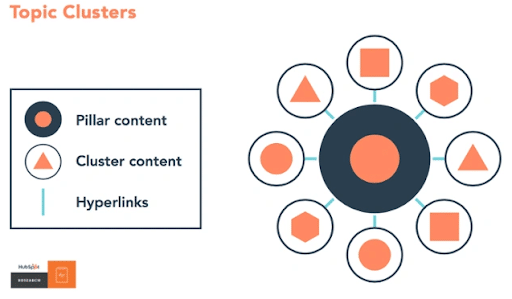
As you can see, the strategy features a single pillar page at its core, with cluster content around it and embedded hyperlinks to each. Specifically, this might look like a gym starting with “The Complete Guide to Workout Routines” as SEO pillar content, with extending blog posts covering particular subtopics, such as strength training and endurance training workouts.
How Do Pillar Pages Impact SEO?
Content pillar pages have been around in various forms for decades, starting with information architecture and hub-and-spoke content models, as brands have sought to become industry authorities on specific topics through blogs and other content.
It’s also important to understand the difference between pillar pages vs. landing pages: The pillar page definition establishes pillar content as comprehensive guides with the purpose of educating visitors toward the top of the funnel, while landing pages are shorter and more precisely focused pages with the objective of driving more bottom-of-funnel conversions.
Today, SEO pillar pages are one of the best ways to build out a content strategy that matches Google’s E-E-A-T guidelines for Experience, Expertise, Authority, and Trustworthiness, can be optimized for featured snippets, and can help users and Googlebots alike to navigate your website.
Additionally, pillar pages allow you to build an information architecture around specific topics with clearly-defined content hierarchies and systematic internal linking that wins serious ranking points with Google.
This strategy helps crawlers understand what your content is about and how your pages connect to one another.
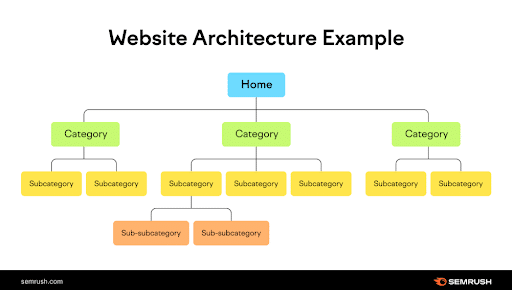
Additionally, organizing content around topic clusters allows you to continue building the authority of pillar pages by linking out to more related blog posts.
A holistic approach to your pillar page content strategy will combine link equity from internal linking with other aspects of your content that can appeal to search engines, including:
- The overall quality of your content
- Expertise signals like original studies and an author bio with credentials
- Local business citations across the web
- User satisfaction, including a low bounce rate and long session duration
- Backlinks, with an emphasis on a large network of high-quality backlinks on authoritative sites
- Entity recognition using entity SEO to help align your pillar pages with people’s specific search intent.
Why Should You Use Pillar Pages?
The most compelling case for pillar pages is that they improve the user experience for your website visitors by allowing you to:
- Organize your content around the most important topics
- Improve internal navigation by linking content together in a systematic way
- Provide a clear direction for your content strategy
- Eliminate content gaps and redundant content
Pillar pages might also be used to drive conversions.
While these resources should always be ungated, you can package the page as a valuable resource users can download in exchange for their email. You can use this as a landing page and send targeted traffic to a resource they’re likely to find valuable.
My Expert Opinion on Pillar Pages
If your goal is to dominate search engine rankings, you must do what you can to build topical authority within your industry.
SEO pillars are a great way to do just that, enabling you to cover a topic exhaustively, followed by extending that knowledge to blog posts and articles covering various subtopics.
SEO pillar content is especially important when trying to maximize your AI visibility when people are seeking information about a given topic. According to Semrush research, informational queries historically accounted for more than 90% of AI Overview results and still represented 57.1% of triggers as of late 2025. This makes comprehensive, helpful content a critical component of any strategy focused on earning visibility in AI-powered search results.
Well-written and carefully curated content pillar pages will appeal to people and search engines alike, as you demonstrate expertise and helpfulness. Writing naturally can also increase the chances of incorporating more conversational queries that people might ask in Google’s AI Mode or other answer engines.
Knowing how to craft SEO pillars the right way will go a long way in boosting your brand’s online visibility and rankings in the long term, particularly as AI changes how people search online.

How Pillar Pages Support Helpful Content
A pillar page strategy can serve as high-value, helpful content that builds a real connection with readers.
This type of content should be user-first, answering common questions that many might have around a specific topic. The main purpose of each pillar is to provide comprehensive topic coverage to put your brand up front as a real, trustworthy expert in your industry.
Consolidating content into pillars will also help reduce potential content cannibalism, with a central page targeting broader queries about a topic while extending content covers more niche long-tail keywords for certain subtopics. In turn, pages won’t wind up competing for the same keywords in search engines, maximizing visibility for all of your content.
In addition, organized pillar content can create a better user journey by providing something of an overview about a topic, while links to relevant content and relevant, well-placed CTAs can keep readers moving down the funnel as they come to know and trust your brand.
Pillar Pages and Entity SEO
With the rise of entity SEO, content pillar pages are more important than ever. Google’s understanding now goes beyond keywords as it learns about particular entities, which are distinctly identifiable people, places, or concepts, providing real-world meaning behind every search query.
Google looks at each entity and determines how it connects with others in the real world, and pillar content both defines the overarching topic and connects it to a wide range of related entities. While the pillar functions as the home for a primary entity, it can link out to other pages discussing secondary ones in more depth, feeding algorithms with plenty of information to help them understand your content and relate it to users’ queries and intent.
Those linked cluster pages reinforce the relationships between entities, subsequently relating back to the main pillar, complete with a link to the pillar.
Developing pillar content also helps you tap into Google’s Knowledge Graph, which maps all of the search engine’s known entities and their relationships with each other, meaning you’ll have a better chance of ranking for these SERP features with rich content that maps industry-relevant entities.
Pillar Pages for AI Search and Answer Engine Optimization
Effective pillar page SEO can help you land more citations on AI answer engines, including ChatGPT, AI Overviews, Google Gemini, Perplexity, and Claude.
Using these platforms, people can engage in detailed conversations with AI agents, which will scour the web for content that matches the person’s specific intent while demonstrating expertise and reputability.
If you want to know how pillar pages help search engine rankings with AI citations, ensure your content meets the following AI preferences:
- Structured Content: Your SEO pillars must have proper structuring to help increase your chances of appearing in AI results, including summary sections that explain your topic more concisely, structured headings, bulleted lists, and other features that break up your content to enhance readability and AI scannability.
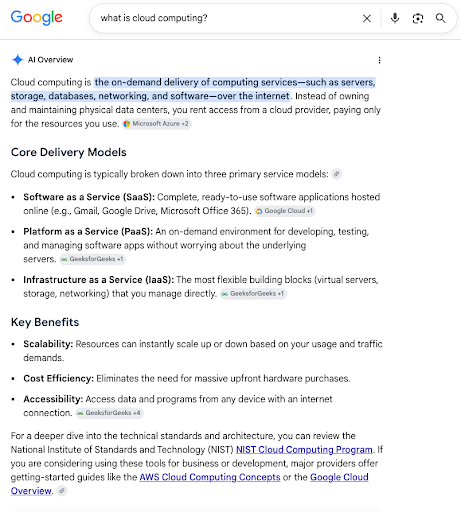
- Clear Definitions: To further help with pillar page SEO, explain any potentially unfamiliar industry terminology or concepts with short, AI-friendly definitions that both readers and AI agents can understand.
- FAQ Sections: Where possible, you may add relevant FAQ sections to your pages that provide short and helpful answers to questions that people often ask, potentially taking cues from Google’s “People Also Ask” section for a certain query.
- Topical Completeness: When covering a particular topic, try to find all of the subtopics related to that topic and include them in your pillar content, but be sure to leave room to explore each subtopic in greater depth with supplemental blog posts or articles, to which you may then link at various points within the pillar.
- Strong Internal Linking: Include relevant links to supporting content on your site for various subtopics, with anchor text around the specific keyword you would like that linked page to rank for in SERPs and AI results.
- Entity Relationships: As you build your pillar content, you’ll be able to cover a wide range of entities that help you connect to Google’s Knowledge Graph and other AI systems, building relationships between concepts, people, and places with interconnecting pages using natural language.
- Author Attribution: A big trust signal for AI comes from proven expertise behind your content, which you can establish with author bios detailing each author’s credentials and experience, along with unique perspectives and research showcasing expertise that sets the author apart.
How to Create a Pillar Page
Before I go over the steps involved with creating a pillar page, it’s worth pointing out that there’s a lot of work involved in the process.
However, it’s worth the effort as it allows you to get more out of your existing content and establish a more efficient process for creating future posts.
Here’s a basic set of steps to help you get started:
1. Decide Which Topics You’d Like to Focus On
The first step in creating pillar page content is to start considering which topics you’d like to target. Think about the broad themes that represent the categories featured on your blog, the purpose of your content, and who you’re writing for.
- Address Audience Pain Points. Here, your best bet is to go back to basics and think about your unique value proposition and what you offer your audience. Next, dig into your buyer personas and come up with a list of pain points you have a solution for.
- Identify the Main Questions Around Main Topics. Pillar pages should answer common questions around your topic, as well as provide an in-depth overview that offers a foundation that users can build on by exploring cluster content. You can use paid tools like BuzzSumo and SEMrush, Q&A forums like Reddit and Quora, or good old-fashioned Google search to identify questions.
- Round Up Related Posts. If you’ve been blogging for a while, you probably have several pieces of content that either relates to your main topic or needs to be consolidated into the main pillar page.
- Dig into Your Analytics to See What’s Working. Create a spreadsheet that includes links to any content containing the “pillar keyword” and related search terms, ranking terms, and basic metrics like traffic, dwell time, shares, and conversions.
Not only will this help you avoid doing double work when it’s time to start writing, it also allows you to make sure you maintain the traffic/domain authority for your top posts.
2. Select Your Target Keywords
Your next move is to identify keywords related to the topics you’ve just identified. The easiest way to do this is to use a dedicated tool.
You can use paid tools like Ahrefs, SEMrush, Moz to see which terms get the most play (a recent article on competitive PPC features some additional keyword research options).
You can decide later whether it makes more sense to incorporate pages into the main pillar, turn it into cluster content, or ditch it all together.
3. Create an Outline for Your Pillar Page
Outlining your blog content is a good best practice for ensuring that you hit all of the right key points and answer all of your audience’s most burning questions.
Still, if you’re writing a 1500-word blog post, you can get away with skipping the outline stage.
Pillar pages are usually longer than standard blog posts, but length should follow topic needs, not a fixed formula, to maintain a focused narrative.
Here’s a general idea of how you might start putting it together.
- Start by creating a table of contents that outlines each chapter or section. As you put together your pillar page content, your “ToC” will serve as the framework fleshing out your content.
- Define the main topic or term featured on this page.
- Create subheadings that include related keywords.
- Develop content that provides a brief overview of your cluster content topics. This can be presented as a summary teasing another blog post or a couple of short paragraphs with a general explanation.
- Remember, you’ll be creating blog posts around these keywords/subtopics, so make sure you have a system for keeping track of these action items.
Once you’ve mapped out the page structure, start plugging in your content, and
ask yourself (and a few volunteers) the following questions:
- Does the table of contents follow a logical progression? Is it in order? Are any sections missing?
- Are there any logical follow-up questions that haven’t been answered?
- Does this page have enough actionable advice, instructions, or examples that help readers understand and implement key strategies?
- Are claims, stats, or other declarative insights backed by original research or a credible external source?
- Do any sections seem redundant or more “cluster” content than pillar section?
Measuring Pillar Page Success
To determine exactly how pillar pages help search engine rankings, you need to measure the right metrics based on your goals.
Some of the main metrics to track in your strategy could include:
- Organic Traffic: Using Google Search Console, you can measure the total number of visitors who land on your pillars from organic search results, typically through traditional SERPs.
- Rankings: Also, measure your pages’ keyword rankings with tools like Ahrefs to see if there are any gradual or sudden changes in position, which could help you identify the best strategies for updating older pillar pages as they struggle to stay afloat.
- AI Citations: With the help of platforms like Semrush’s AI SEO tool, you’ll be able to see the total number of times large language models like Gemini and ChatGPT cite your pillars in their answers.
- Assisted Conversions: See where pillar content helped lead people along their journey toward a conversion using tools like the Conversion Paths report in Google Analytics 4 (GA4).
- Internal Click-Through Rate: Track the number of times people click on a link within your pillars to supporting content, which you can easily measure with the help of solutions like custom event tracking in GA4.
- Engagement: Also using GA4 and other tools like Hotjar’s heatmaps, you can get some insight into how people are engaging with your pillars, including engagement rates, average time on page, and scroll depth, which may help identify areas where people lose interest or fail to convert.
Common Pillar Page Mistakes
To optimize the performance of your pillar content, avoid these critical mistakes:
- Keyword Stuffing: Natural keyword inclusions are likely to appear throughout a pillar page, but don’t purposefully stuff keywords to the point where they feel forced and compromise both readability and SEO trust signals. If you cover a topic in enough depth, many long-tail queries around it should show up in the text without interrupting content flow.
- Thin Cluster Content: Supporting blog posts and other content should cover their respective subtopics in sufficient depth to complement your pillar. If your cluster pages are too thin, they may not do much good when it comes to supporting your pillar or vice versa.
- No Internal Linking: Where appropriate, always link to supporting pages in your pillar, and link back to your pillar from those pages. Doing so will help distribute link equity and create entity relationships, while also keeping people moving along the content journey to increase the chances of conversion.
- Overly Broad Topics: Pillar content should start with a relatively broad topic, but make sure the page explores various subtopics within it. Also, focus on topics specific to your niche, e.g., an SaaS company offering a cloud-based service might write a pillar discussing “What Is Cloud Computing?” vs. “What Is Computing?”
- No Conversion Path: Not developing a conversion path could make it unclear how your pillars contribute to the customer journey and conversions; using GA4, a CRM, and other tools, determine where your pages fall in the journey at various touchpoints, which could help develop the best strategies for updating older pillar pages that fail to move people down the funnel.
- No Author Expertise: The best pillar page examples often demonstrate clear author expertise and experience through individual perspectives, proprietary research, and displayed credentials that lend your content more authority.
Examples of Effective Pillar Pages
Moz’s Beginner’s Guide to SEO
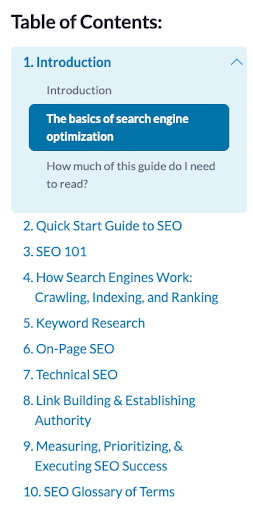
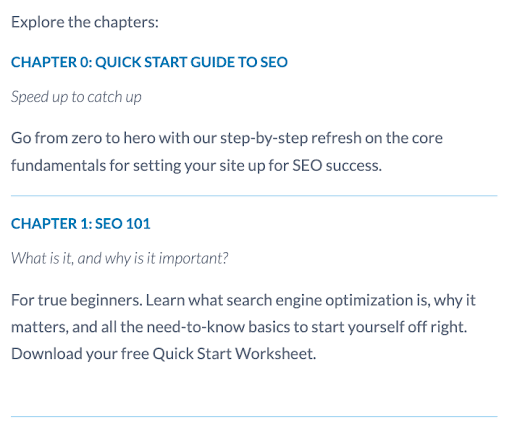
Moz’s pillar page provides an introduction to SEO and an outline that allows you to skip to the chapter that interests you most–which is presented in multiple locations.
In a table of contents section with links on the side:
As links in the main body:
And at the bottom of the page:
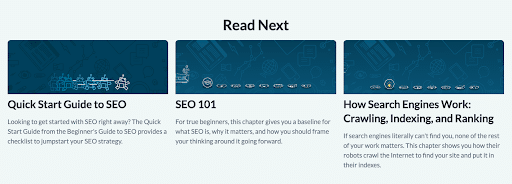
What’s nice about this approach is–on the user side, it’s always easy to look back at the chapters and jump into another area.
From a marketer perspective, the benefit is, you’re creating more opportunities to earn clicks–and by extension, improve your rankings.
Healthline’s Complete Guide to Allergies
This is another of the best pillar page examples out there, as Healthline knows how to optimize pillar page SEO with in-depth topic coverage and a cohesive user experience.
Readers can learn nearly everything about allergies in this article, and it’s well-structured to maximize readability while connecting to supporting articles with hyperlinks sprinkled throughout.
Toward the top of the page, readers can jump to specific subtopics with links above the “Key Takeaways.”

There are also plenty of links to supporting content throughout the article, with natural placements within the text.

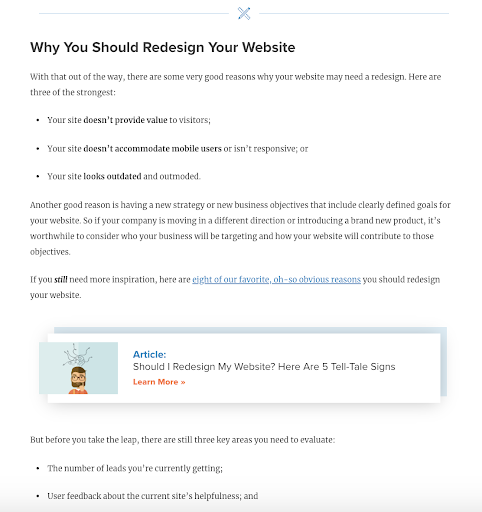
Impact’s Ultimate Guide to Website Redesign for Businesses
This example from Impact is a long-form dive into website re-design. It starts with an intro, then presents the option to download the resource so you don’t have to read it in one go.
It also features a clickable table of content that allows you to skip to a particular section before launching into the main content.

If you do choose to scroll, you’ll find that each section is broken up with graphics and buttons linking out to related pages.
Microsoft’s Cloud Computing Guide
One example of a pillar page that moves readers along the customer journey with lead gen efforts is Microsoft’s guide to cloud computing.
Like previous pillar page examples, this guide features links above the content, but it also starts with a CTA encouraging readers to “get started with Azure.”
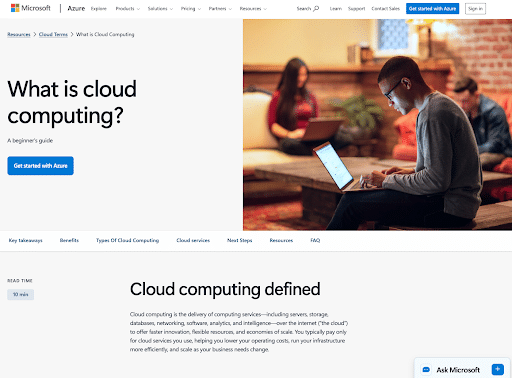
Throughout the page, content is broken up into readable sections with brief paragraphs, with links to other articles within.
Also, as readers scroll, the top table of contents bar moves with them, underlining the section they’re currently reading for even simpler navigation.
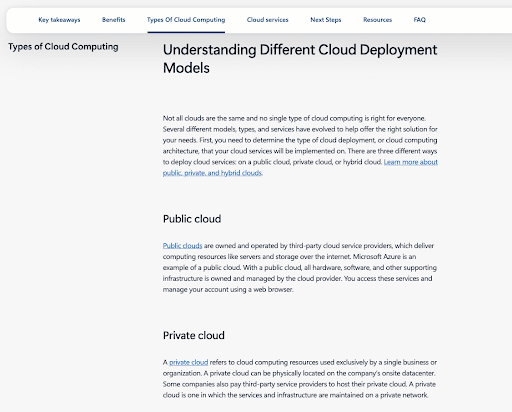
At the end of the page is another CTA promoting Microsoft’s cloud computing services with a “learn more” button to drive conversions.

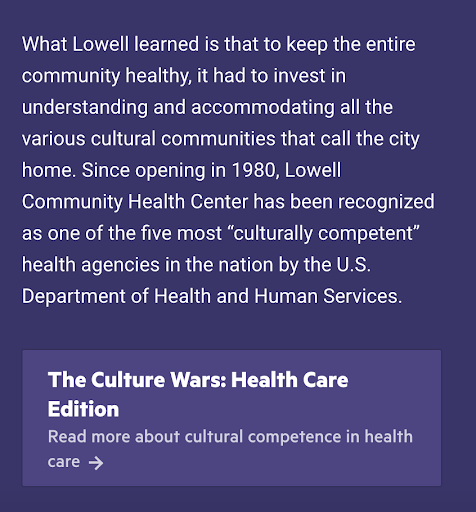
Atlantic’s Population Healthier (Sponsored by Athena Health)
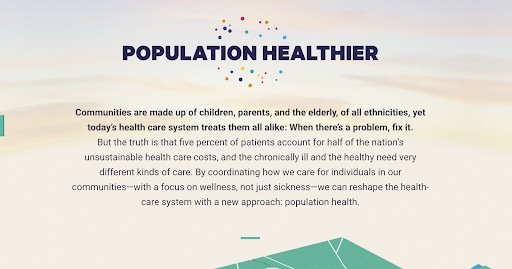
This sponsored content/resource featured on The Atlantic’s website is a visually-engaging, interactive take on the pillar page.
When you land on the page, you’ll see this basic overview that explains the purpose of this content.
As you scroll, you’ll notice that each section features a brief summary, accompanied by graphics and animations to keep users engaged.
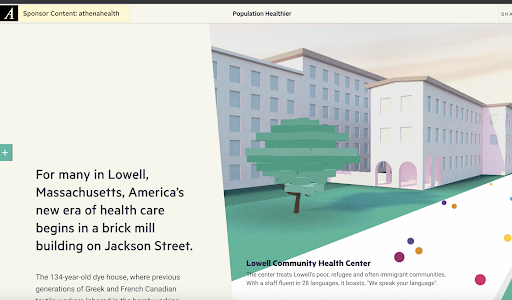
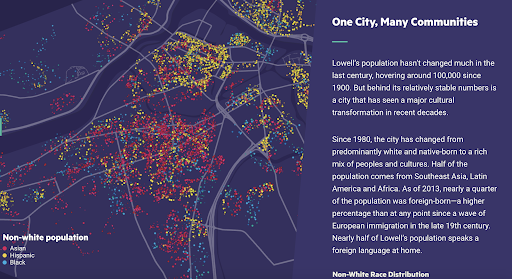
The page separates each section by using contrasting colors, which encourages scrolling, then links out to related articles that send users to the main website.
FAQs
1. What is a pillar page?
A pillar page is a detailed, high-level overview guide exploring a broad topic in depth, serving as the “hub” in a hub-and-spoke content strategy while linking to various “cluster pages” covering specific subtopics. The hub serves as an overview, while cluster pages will expand on subtopics with more detail.
2. How long should a pillar page be?
There isn’t a specific length that you should try to reach with your pillar content, but they usually fall somewhere between 2,000 and 4,000 words. Instead of focusing on wordcount, make sure your page sufficiently covers a broad topic and all related subtopics as an exhaustive overview, and use cluster pages to explore each subtopic.
3. Are pillar pages still important for SEO?
Yes, pillar content is valuable for SEO, including traditional and AI search results. Today’s search engines and AI answer engines look for content showcasing topical authority, which you can more easily build with a pillar strategy.
4. Do pillar pages help AI search engines?
Yes, pillar content can increase the likelihood of appearing in citations in AI Overviews, ChatGPT, and other answer engines. High-quality, helpful pillars will demonstrate topical authority in your industry while naturally building entity relationships that connect with LLMs.
How Ignite Visibility Can Help Build Your Pillar Page Strategy
The right approach to your pillar content strategy can help you dominate search while connecting with target audiences as an industry authority. Ignite Visibility can help you incorporate this content into a complete SEO strategy that helps you get and stay on top of competitors.
With our team backing you, you’ll be able to:
- Identify the best broad topics to cover for each page
- Develop content clusters to cover subtopics
- Implement interlinking strategies that connect pillars and cluster pages
- Produce high-quality content with natural keyword inclusions
- Determine the best strategies for updating older pillar pages
- Measure the success of your pages
- And more!
To start developing your next pillar strategy, learn about our content marketing services and how we can develop a solution tailored to your business needs.