When to Use Each Strategy
Depending on how you want to connect with your audience, you may use inbound or outbound marketing. Both of these can fit into a holistic strategy, but it’s important to understand how they work and the differences between them. Those differences go beyond simply digital versus traditional marketing, extending to specific approaches and models that often blend digital and offline campaigns.
In this blog, Danny Conlon, SVP of Marketing, will look into the difference between inbound and outbound marketing, when to use inbound vs. outbound marketing, examples of each, and when to use both.
What You’ll Learn:
Key Takeaways
- The right approach will depend on marketing initiatives.
- Marketing with inbound and outbound will also depend on user intent.
- Some dual-use channels work for both strategies.
- It’s often best to implement both in integrated customer journeys.
- Track performance effectively with revenue-based measurement.
What Is Inbound Marketing?
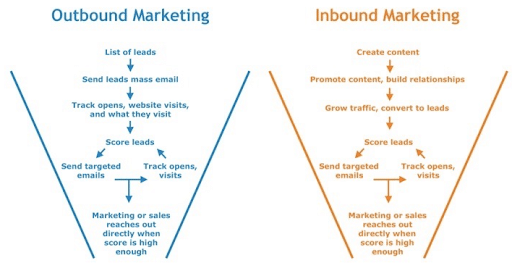
In short, this marketing approach involves appealing to buyer choice, with useful discovery and voluntary engagement appealing to people who are actively seeking your company or offerings.
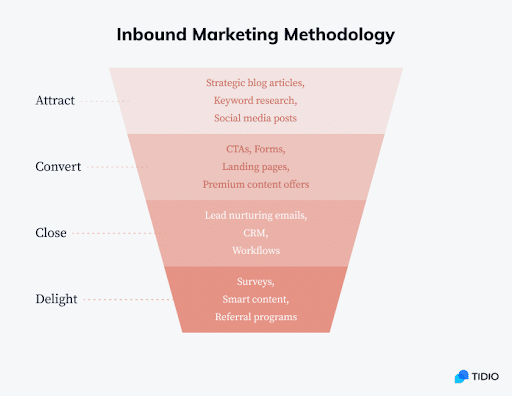
As an example of how it works, HubSpot’s specific inbound methodology uses the “Attract, Engage, Delight” model to explain how inbound works: First, you attract the right audience with high-quality, valuable content and engagement that builds brand trust, followed by engaging audiences with unique insights and helpful solutions that meet their needs, and delighting those audiences with continuous support to help them get the most from their purchase and brand experience.
Inbound Marketing Examples
SEO and People-First Content
Search engine optimization (SEO) can help people find you when looking for a particular keyword or asking a specific question on Google or other search engines.
Helpful, high-quality, and well-optimized content can help boost your rankings for various terms, especially if you appeal to Google’s E-E-A-T guidelines, which emphasize the need to demonstrate “Experience, Expertise, Authority, and Trustworthiness.”
Content like blog posts, lengthy pillar pages, and service pages can naturally incorporate many keyword instances, educating interested users, answering any questions they may have about a particular topic, and addressing specific pain points.
AI Search Visibility
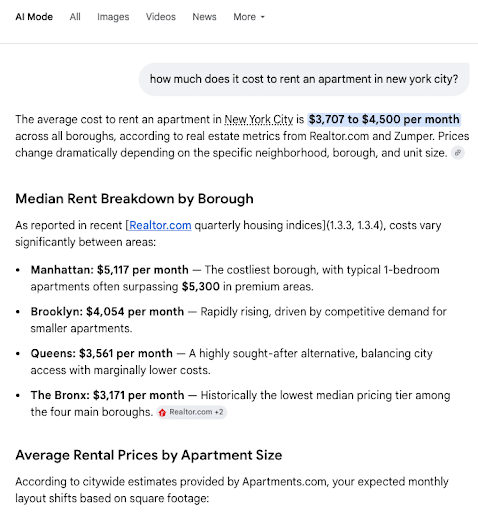
You can also use more conversational and well-structured content to boost your AI visibility, enabling you to get citations and quotes in Google’s AI Overviews, AI Mode chats, ChatGPT results, and other platforms.
Organic Social and Community Marketing
Brands can engage with audiences on social media with organic posts about various topics. For example, companies could share blog posts to encourage audiences to explore a specific topic or relay unique industry insights that build trust.
Additionally, companies could engage in community marketing by interacting with people in active forums or developing their own platforms to create a community among their customers.
Useful Video and Podcast Content
Another channel is video content on platforms like YouTube or social media, which can involve everything from practical video tutorials and repurposing long-form video into short-form clips.
Meanwhile, podcasts can connect with audiences through audio, such as conversations with industry experts.
Opt-In Newsletters
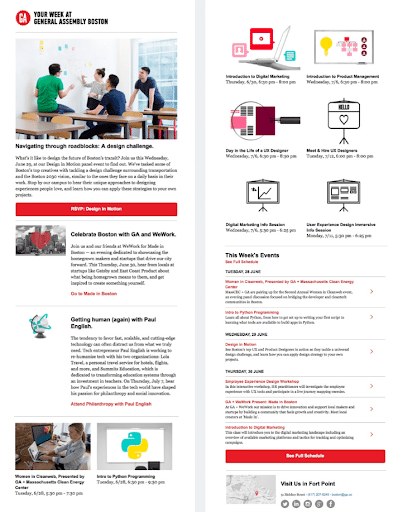
Getting people to voluntarily opt in to email marketing campaigns can sign them up for helpful newsletters. These emails can include weekly insights, industry tips, and other content to nurture leads and ultimately drive conversions.
Webinars
Get people to sign up for webinars that explore certain industry topics in depth, potentially incorporating features like polls and Q&As that encourage audiences to interact throughout.
For example, you could use webinars to stream masterclass sessions, conduct interviews, and pitch solutions to bring real value to viewers.
Tools and Calculators
Industry tools could drive even more engagement and provide helpful content to increase trust.
One example could be a financial institution using a loan calculator to help people determine the best financing options for them, ultimately leading users to schedule a consultation to discuss their options in greater depth.
Certain tools and calculators can also provide sales teams with valuable first-party data that informs their approach to each sale.
Reviews and Referrals
People also trust reviews and recommendations from others, with 93% of consumers reading online reviews before making a buying decision.
Showcase customer reviews on platforms like your Google Business Profile as well as your website, and be sure to respond thoughtfully to bad reviews, which can show how you’re working to improve the customer experience while valuing every customer’s input. A page dedicated to customer testimonials could also get prospects to trust you over competitors.
Referral programs can further encourage conversions by giving incentives for existing customers or partners to become brand advocates.
Conversion-Focused Experiences
Optimizing the customer experience will help with conversion rate optimization in various ways, e.g., streamlining the checkout process, delivering faster page load speeds, and developing personalized offers.
Advantages and Limitations of Inbound Marketing
Inbound marketing, like outbound marketing, comes with certain benefits and disadvantages to keep in mind.
Some of the main advantages of inbound vs. outbound marketing include:
- Compounding Assets: High-value content, SEO, and other assets can bring in more high-intent traffic over time without increasing costs.
- Voluntary Engagement: Customers choose to engage with your content when looking for information or solutions to their problems.
- Discoverability: People can more easily find you on search engines and social media channels when seeking relevant information.
On the other hand, there are some disadvantages, such as:
- Higher Maintenance: You’ll need to consistently refresh outdated content and fix broken links to maintain accuracy and usefulness.
- Slower Ramp-Up: It can take as long as several months to get real results from SEO and other inbound marketing efforts.
- Content Competition: Many other brands might publish the same type of content, making it more challenging to differentiate your content and stand out.
- Changing Search Behavior: AI platforms are changing the way people search, and people may also change their behavior based on factors like trending pain points or seasonality, making it necessary for brands to constantly adapt.
- Indirect Attribution: It can also be difficult to determine which content pieces lead prospects to make a purchase.
What Is Outbound Marketing?
These strategies involve using proactive brand-initiated distribution or outreach to connect with audiences. Outbound marketing tactics can be highly targeted, personalized, digital, and just as useful as inbound tactics.
Outbound Marketing Examples
Paid Search
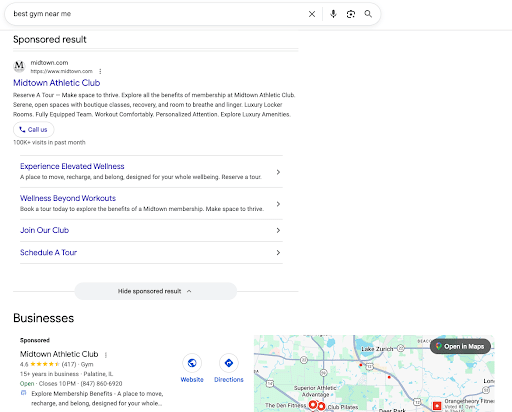
Paid search is a strategy that involves bidding on specific keywords to show text ads as “Sponsored” results on search engines. These ads can supplement traditional and AI search results to maximize your visibility and appeal to users’ search intent.
Display Advertising
Additionally, you may use display ads to advertise your brand or offerings on other websites, such as banners appearing throughout text content. Contextual advertising can help you get placements in content that’s topically relevant to your business.
Paid Social
You can also use paid social ads to promote your brand, products, or services, whether through in-feed, sidebar, or in-stream or interstitial video ads. These ads could complement organic posts and help with retargeting once people visit your site.

CTV and Video Ads
Connected TV (CTV) and over-the-top (OTT) video streaming ads will expose your brand to audiences using YouTube and other video streaming services across devices. This strategy can be great for connecting with audiences who might not find you through other digital platforms or traditional TV ads.
Creator Advertising
With the help of influencer marketing, you can connect with social media influencers or content creators who can pitch your company or products to their audiences. Working with nano- or micro-influencers can be especially cost-effective while helping win over their loyal followers who trust their recommendations.
Account-Based Advertising
B2B outbound marketing strategies could also use account-based marketing to nurture pre-selected leads who are most likely to convert. These strategies are highly targeted and personalized to minimize wasted ad spend and align marketing with sales.
Cold Outreach
You may also engage in cold outreach via targeted emails, social media messages like those on LinkedIn, or calls. Many sales engagement tools can help automate cold outreach efforts, but it’s crucial to avoid coming off as spammy or intrusive and respect users’ privacy.
Direct Mail
Direct mail pieces can add a physical element to your marketing to help you stand apart from competitors, including postcards, catalogs, and dimensional packages that offer a more memorable brand experience.
Trade Shows
By renting booths at trade shows and attending industry-related events, you can pitch your brand or offerings to attendees face-to-face, which can further help you stand out. Trade shows and events are also particularly great for B2B outbound marketing strategies with the goal of connecting with professionals.
Sponsorships
Companies can fund events, sports teams, newsletters, podcasts, and other entities for more prominent brand exposure. Sponsorships can be highly effective if you align your company with another entity that has a positive reputation among its audience.
Billboards
Billboards and other out-of-home OOH ads can get people’s attention in public spaces, whether along the highway or in high-traffic urban areas, potentially exposing you to thousands of people every day.
Print Ads
Supplement your digital ads with print ads in trade journals, newspapers, magazines, or other publications that can really help build brand authority.
Radio Ads
Ads can also show up in radio shows as isolated ads or something like influencer recommendations, with popular radio personalities promoting you on the air.
In addition, you may advertise on audio streaming platforms like Spotify or Soundcloud to reach music and podcast listeners.
Television Ads
Traditional commercials are still relevant, helping you reach audiences who might not engage as much with streaming platforms.
Advantages and Limitations of Outbound Marketing
There are some specific advantages and disadvantages of outbound vs. inbound marketing.
Here are some benefits:
- Better Control Over Targeting and Timing: You choose the exact audience to target and when they get or see your message.
- Rapid Testing: Conduct A/B testing more easily for different ads and see near-immediate, if not immediate, results.
- Reach Beyond Existing Demand: Locate new customers who don’t know your product or brand.
There are also some disadvantages to keep in mind:
- Higher Media and Sales Costs: You may need a bigger budget to buy ad space and placements.
- Interruption Risk: Unsolicited emails and interruptive ads can annoy people if they compromise their user experience or aren’t relevant to recipients’ interests.
- Potential Compliance Issues: You’ll need to adhere to strict privacy policy rules and laws for mailing, calling, and emailing to maintain compliance.
- Campaign Dependency: Once your ads stop, you may see an immediate and significant drop in leads and sales.
- Measurement Differences: Tracking results might be more challenging in some cases, especially when using multiple platforms with different analytics and reporting capabilities.
To help with your inbound and outbound marketing efforts, along with lifecycle and hybrid campaigns, you can implement forms, automation tools, and conversion rate optimization (CRO). Just be sure to perform a comparison of outbound marketing automation software and other tools to find the right solutions for your campaigns.
Inbound vs. Outbound Marketing at a Glance
To further compare outbound vs. inbound marketing, let’s further break down the key differences between inbound and outbound marketing strategies:
| Attribute | Inbound Marketing | Outbound Marketing |
| Who initiates | Prospect | Marketers and brands |
| Audience state | Actively seeking solutions | Unaware or interrupted |
| Reach | Niche and targeted | Broader to reach mass audiences, though potentially highly targeted and personalized |
| Control | Low; relies on search algorithms and user choice | High; full management over messages and placement |
| Speed | Slow; can take months to get results | Fast; immediate visibility and responses |
| Cost structure | Lower in the long term, with high upfront content investment | Continuous payment through bidding and cost-per-click (CPC), with ads stopping once the budget ends |
| Asset lifespan | Long-term compounding value from SEO and other strategies | Short-term campaign duration |
| Measurement | Easy and precise using digital analytics | Harder to track as precisely in traditional channels, particularly offline |
| Brand risk | Low; helpful, permission-based | Higher; can annoy or alienate prospects |
| Common objectives | Trust, authority, and organic lead generation | Quick sales, events, and immediate awareness |
What Has Changed?
As the overall marketing landscape has changed and evolved, the following are some specific items affecting both inbound and outbound strategies:
- Digital Outbound Growth: Traditional outbound channels like direct mail are merging with digital tactics for better personalization and multi-channel marketing capabilities.
- AI Search and Answer Engines: Platforms like ChatGPT and Google AI are changing the way people search, leading to fewer clicks as people get the answers they need from AI agents.
- First-Party Data: Brands will need to rely increasingly on first-party data to appeal to target audiences, capturing it from interactive content, email opt-ins, and community building.
- Signal-Based Outreach: Teams should monitor intent signals to help target outbound outreach more contextually, such as job changes and website visits.
- Privacy: Stricter laws like the GDPR and CCPA will limit tracking and targeting, making it important for brands to balance personalization with privacy protection.
- Automation: A comparison of outbound marketing automation software and other automation tools can help find solutions that streamline operations, content scaling, personalization, and more, often with the help of AI.
- CTV: Programmatic TV advertising will be increasingly crucial as more people subscribe to and regularly engage with video streaming services.
- Creator Advertising: Audiences continue to trust individuals over brands, relying on their favorite influencers and creators to direct them to worthwhile brands.
- Increasing Cross-Channel Measurement Needs: It will be harder and harder to use linear attribution models to gauge the performance of inbound and outbound campaigns, which is why you need to develop multi-touch attribution models to help track all of your channels.
My Expert Opinion on Inbound vs. Outbound Marketing
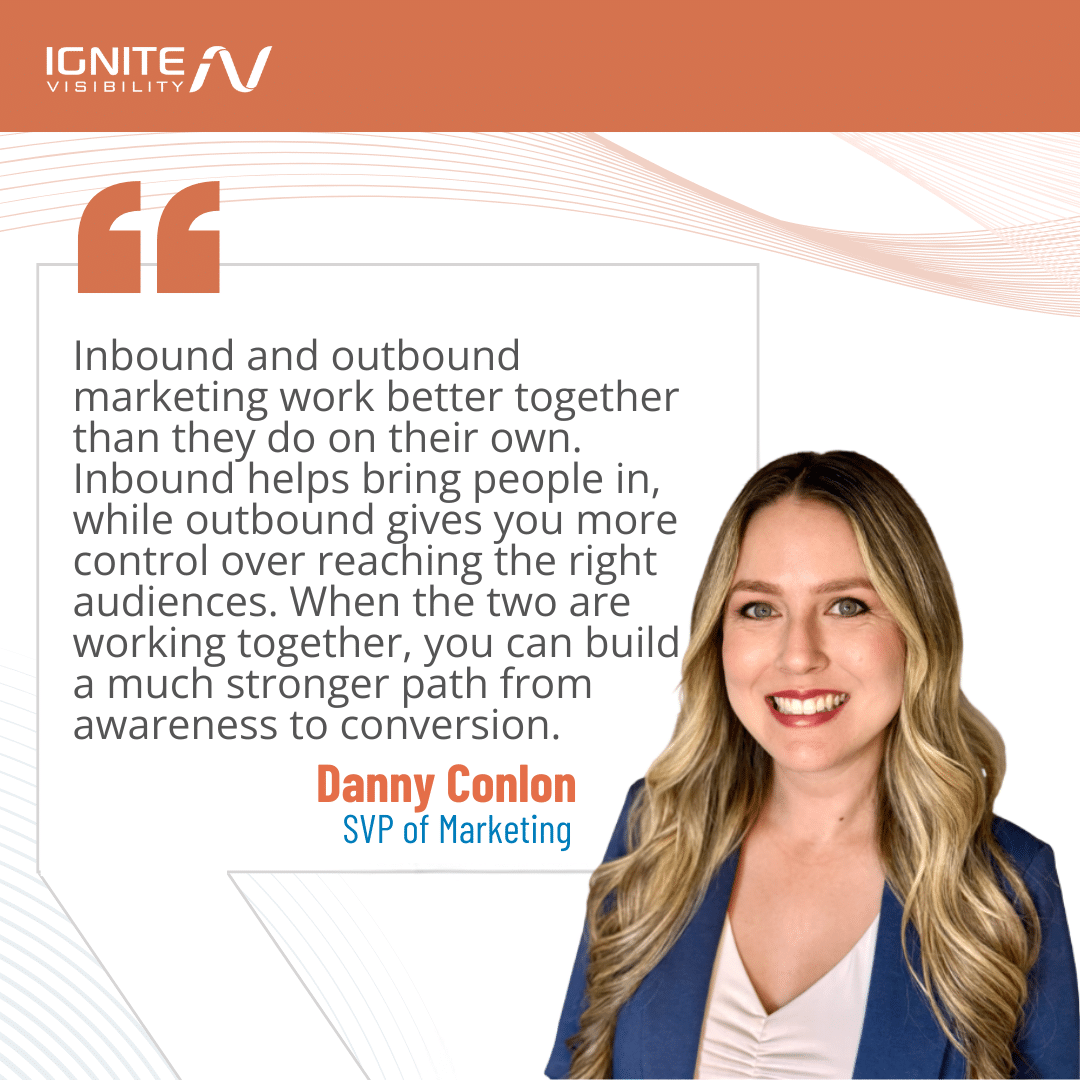
Marketers often wonder whether inbound or outbound marketing tactics are the way to go, but the fact is that both should work together in an integrated strategy.
Each model has its own benefits and downsides, but when using both together, you can develop an approach that maximizes your visibility, reach, engagement, and, ultimately, ROI.
At Ignite Visibility, we’ve implemented a combination of both approaches to get real results for our clients. One multi-location franchise benefited from a campaign using local SEO and strategic PPC optimization to achieve an 80% increase in location rankings on page one of search results, along with a 63% boost in engaged sessions via paid search.
Another healthcare client also blended SEO and PPC strategies to gain a 75% increase in booked appointments, harnessing the power of inbound and outbound.
Using these strategies where appropriate will give you the ability to attract new leads and effectively nurture them to maximize conversions and revenue.
Is Each Marketing Channel Inbound or Outbound?
Here’s some guidance on when to use each marketing channel for inbound or outbound campaigns:
| Channel | Inbound Use | Outbound Use | Deciding Factor |
| Search | Optimizing content for organic rankings in traditional and AI search results | Running targeted paid search ads with keyword bidding | Intent; organic for long-term authority and paid for immediate visibility |
| Content | Publishing blogs or guides to naturally solve user queries | Distributing whitepapers or other gated content through targeted ad campaigns | Audience journey; pulling with helpful content vs. pushing for lead capture |
| Sending newsletters to subscribers who voluntarily opt in | Cold emailing targeted prospects with scraped or bought lists | Consent; opt-in relationship nurturing vs. cold outreach volume | |
| Social | Building organic communities with engaging and helpful posts | Launching hyper-targeted social ads to broader audiences | Budget; gradual organic growth vs. immediate ad spend |
| Video | Creating educational tutorials and other videos answering user questions | Running pre-roll or mid-stream video ads on external platforms | User experience; Delivering opted-in value vs. interruptive content |
| Webinars | Hosting educational panels that users voluntarily sign up for | Sponsoring third-party webinars | Authority; establishing internal thought leadership vs. buying reach |
| Events | Hosting open user conferences or educational community meetups | Attending trade shows or industry-related events to pitch your brand in person, or sponsoring events | Control; creating your own community vs. getting involved in another’s |
| PR | Earning organic media coverage via strong data, unique insights, or a compelling brand story | Blasting syndicated press releases to journalist lists | Relationships; earned organic credibility and authority vs. paid mass distribution |
| Creator Partnerships | Collaborating with creators for authentic product or brand reviews | Paying influencers for scripted or improvised ads and recommendations | Authenticity; organic trust among a creator’s community vs. transactional reach |
| Direct Mail | Sending welcome packages or rewards to existing loyal customers | Sending mass postcard or other mailpiece campaigns to broader audiences | Data quality; CRM-driven retention vs. cold demographic targeting |
| Calling | Providing a phone line for inbound sales or customer support, e.g., a phone number on your Google Business Profile or website | Making cold calls to prospects who might not have heard of you | Prospect readiness; inbound problem-solving vs. outbound interruption |
| Paid Media | Using retargeting ads to re-engage previous website visitors | Running cold awareness display or video ads to broader audiences | Familiarity; nurturing existing interest vs. driving new awareness |
| Automation | Triggering emails based on user actions, e.g., downloading a guide | Scheduling automated cold email drip sequences to prospects | Trigger; internal user behavior and interest vs. external seller scheduling |
When Should You Prioritize Inbound Marketing?
Here are some criteria to help you determine when this approach is best:
- Buyers actively research the problem
- There’s current organic demand for your brand, products, or services
- The company can invest in content over time
- It’s possible to demonstrate unique expertise and insights
- Building trust is a key objective
- You have reusable content assets with strategic value
When Should You Prioritize Outbound Marketing?
Conversely, you might use outbound strategies if you meet the following criteria:
- You have a finite target-account list
- You want to create a new category in your industry
- There are urgent pipeline needs
- You’re working with high-value accounts
- Market-entry testing is needed
- There’s a narrow buyer group
- There’s insufficient search demand
How Should You Divide the Budget?
If you want to determine how best to divide your budget between inbound and outbound strategies, take the following steps:
- Establish a baseline measurement, such as your current customer acquisition cost (CAC) by channel.
- Define a test budget, like devoting the majority of your budget to proven baseline channels and a smaller one to new tactics.
- Develop evaluation windows that are right for each channel, such as reviewing cold calls within 30 to 60 days or evaluating inbound SEO over the course of six to 12 months.
- Track efficiency decay to avoid over-investing in saturated marketing channels.
- Reallocate funds as needed based on qualified revenue, like sales-qualified leads vs. impressions and other vanity metrics.
How to Measure Inbound and Outbound Performance
Now that you know how to divide your budget, here’s some guidance on how to measure your campaigns based on your goals using these essential metrics:
- Awareness: Measure reach via impressions, website traffic, and branded search volume.
- Engagement: Track user engagement through time on page, click-through rates (CTR), and email open rates.
- Demand Capture: Calculate high-intent actions like demo requests or visits to pricing pages.
- Qualified Leads: Categorize leads as either marketing-qualified leads (MQLs) or sales-qualified leads (SQLs).
- Opportunities: Evaluate sales-accepted pipeline deals with specific monetary values.
- Revenue: Quantify the total revenue acquired from each customer according for each source.
- Customer Acquisition Cost (CAC): Measure the total cost of marketing and sales to acquire a new customer.
- Return on Ad Spend (ROAS): Calculate the total revenue earned against the amount spent on paid media and search campaigns.
- Pipeline Velocity: Measure the speed at which deals move from lead creation to close.
- Retention: Track the percentage of active customers retained over a specific timeframe.
- Incrementality: Use incrementality testing to measure true lift via the extra revenue that occurred because of a specific ad campaign.
Also, try to measure assisted conversions based on interactions along the customer journey, such as a conversion starting with a blog view and ending with a retargeting ad.
At the same time, keep in mind there are certain attribution limitations, as privacy rules, cross-device interactions, and offline CRM actions could make it harder to attribute campaigns to conversions.
FAQs
1. What is the main difference between inbound and outbound marketing?
The main difference between these two approaches is that while inbound marketing attracts new customers with helpful, people-centric, and useful content, outbound tactics involve getting a brand’s message out to broader audiences with ads, cold emails, and targeted outreach.
2. Is digital marketing inbound or outbound?
Digital marketing can use either of these strategies to connect with audiences. Inbound digital strategies can incorporate tactics like SEO content, webinars, and podcasts, while outbound digital approaches may use paid search ads, display ads, social media ads, and other online channels.
3. Is SEO inbound marketing?
Yes, SEO is one of the main elements of many inbound marketing strategies. It can use keyword-based and semantic targeting to reach intent-heavy users who are actively searching for a company or specific types of products or services to solve their problems, providing them with helpful content that builds trust.
4. Is PPC inbound or outbound?
While many marketers may see PPC primarily as an outbound strategy, it can also function as an inbound tactic, in a way. Interruptive ads on various platforms can target broader audiences, while campaigns using remarketing ads can attract people who may already be interested in your brand or offerings.
5. Is email marketing inbound or outbound?
Email marketing can be either inbound or outbound, depending on how you use it. Inbound email marketing could entail getting people to opt in to receive relevant marketing emails, in which case recipients will have already expressed interest. Meanwhile, outbound email marketing might use cold emails to connect with users who didn’t necessarily provide their emails.
6. Is social media inbound or outbound?
Social media can also use either inbound or outbound approaches to build a connection with audiences. Organic social media posts from brands could naturally attract audiences who are searching for a particular topic or who are already following a brand, while paid social ads might target a broader audience in users’ feeds or when video content plays.
7. Is remarketing inbound or outbound?
Remarketing is generally defined as an outbound strategy, as it “pushes” a message with an ad instead of “pulling” interested audiences. However, remarketing kind of bridges the gap between both by connecting with people who have already visited a website or otherwise expressed interest in a brand, potentially after an initial interaction with inbound content.
8. Are webinars inbound or outbound?
Webinars themselves tend to fall under the inbound category, as they connect with people using helpful, educational, and informative content that could appeal to people who are interested in a particular topic, but they may also use ads and other outbound strategies to encourage broader audiences to sign up for and attend them.
9. Which approach produces results faster?
Outbound marketing tends to produce faster results with immediate visibility and more predictability, while inbound marketing may take longer to gain traction. On the other hand, that traction you get with inbound marketing can make campaigns worthwhile in the long term with strong SEO and a large library of helpful, evergreen content.
10. Is inbound marketing cheaper than outbound marketing?
Yes, inbound marketing is often more cost-effective than its outbound counterpart, with HubSpot finding inbound leads to cost 62% less on average than outbound leads. There are multiple reasons for these lower costs, including less money spent on campaigns and the ability to connect with audiences who are more likely to convert based on their higher buying intent.
11. How should an inbound vs. outbound marketing budget be divided?
The amount of money to allocate to inbound and outbound strategies will depend on various factors, including your business model, target audiences, and qualified revenue. To help you determine how to divide your budget, develop a test budget and a baseline measurement, and evaluate performance over time to see which performs best.
12. How is AI changing inbound and outbound marketing?
AI is changing both of these approaches in several ways. For example, predictive AI can help project the performance of both inbound and outbound strategies, while AI search is changing the way people engage with brands on search engines and via conversational chatbots.
Use Outbound and Inbound Marketing in an Integrated Strategy With Ignite Visibility
Using both of these strategies together can enable your brand to maximize its reach, conversions, and revenue, but it’s important to know how to properly integrate them into a comprehensive strategy.
Ignite Visibility can help you get the most from these strategies by:
- Developing helpful inbound marketing content optimized for SEO
- Building effective PPC campaigns, from paid search to social media ads
Crafting inbound and outbound email marketing strategies to attract and nurture leads
Integrating both inbound and outbound at strategic points across the customer journey
Continual measurement and optimization for better results over time
And much more!
Want to discover how we can help you incorporate inbound and outbound in a holistic strategy? Learn more about our lifecycle marketing services today!