How to ask customers for reviews: 20+ scripts, templates & examples
The best way to ask customers for reviews is to reach out shortly after a positive experience, personalize the request, and make it as easy as possible to leave a review. Whether you ask in person, through email, by text message, or on social media, customers are more likely to respond when the request is timely, genuine, and includes a direct review link.
Every business has happy customers. Not every business has reviews. And the difference is rarely the quality of the customer experience. A customer can recommend your business to friends, return multiple times, and genuinely appreciate your service, yet never leave a review simply because nobody asked.
Most businesses know reviews matter. The challenge is knowing what to say, when to ask, and which channel works best.
In this guide, you'll learn how to ask customers for reviews with proven scripts, copy-and-paste templates, channel-specific examples, and creative review request ideas that help generate more feedback without sounding pushy.
Flip the review script 
Unhappy customers speak the loudest—but if you make it easy for happy customers to share their experiences, their voices can shine too. Read on for practical tips to get more reviews on
Google Business Profile
and improve your Yelp rating.
Table of contents
- Why do some customers leave reviews while others never do?
- Who should you ask for reviews, and when is the best time to ask?
- How should you ask customers for reviews without sounding pushy? (5 examples of what to do and not do)
- 10 review request scripts and templates you can use to ask customers for reviews across different channels
- What are some clever ways to ask customers for reviews?
- How should you avoid asking for reviews?
- What should you do after receiving a review?
- FAQs about how to ask customers for reviews
- How to ask customers for reviews using Birdeye to maximize results
Why do some customers leave reviews while others never do?
Why does one happy customer leave a glowing five-star review while another says nothing at all?
The reality is that customer satisfaction alone doesn’t generate reviews. It happens when the right experience meets the right moment. That’s why two customers can have the same experience and respond completely differently.
Businesses are also asking for reviews more consistently than ever. In fact, as per Birdeye’s State of Online Reviews 2026 report, review volume grew 30.7% in 2025, the fastest annual growth rate since 2021, as more organizations adopted structured review request strategies.
While every customer is different, most online reviews are driven by a few common triggers.
They had an exceptional experience
Whether it’s exceptional service, a problem resolved quickly, or a team member who went above and beyond, memorable experiences naturally give customers something to share.
Someone asked them directly
Many satisfied customers never think about leaving a review until they’re invited to do so. Often, a simple request is all it takes to turn appreciation into feedback.
They want to help others make decisions
Reviews help people make informed decisions. Many customers leave feedback so others can benefit from their experience.
They want their voice to be heard
Customers appreciate knowing their feedback has an impact. Reviews give them an opportunity to recognize great service or highlight areas for improvement.
They see other customers doing it
Active review profiles encourage participation. When customers see recent reviews, they’re often more inclined to add their own perspective.
Reviews are a behavior, not a task. Customers leave them when emotion, timing, and convenience align. Remove any one of those factors, and even your happiest customers may never leave feedback.
Timing can make the difference between getting a review and getting ignored. The same customer who happily leaves feedback today may never respond if you wait a week to ask.
Who should you ask for reviews, and when is the best time to ask?
The best customers to ask for reviews are those who have recently had a positive experience with your business. The closer the request is to that experience, the more likely they are to respond.
You don’t need to ask every customer immediately. Instead, focus on customers who are most likely to leave meaningful feedback.
Who should you ask for reviews?
Consider reaching out to:
- Repeat customers who regularly choose your business
- Customers who have expressed satisfaction with your product or service
- Customers who have thanked your team or left positive feedback
- Customers who have successfully resolved an issue with your business
- Loyal customers who actively recommend your business to others
When is the best time to ask for a review?
The best time to ask is when the experience is still fresh in the customer’s mind.
Here are a few ideal moments:
| Business type | Best time to ask |
| Healthcare practices | After a successful appointment |
| Dental practices | After treatment or follow-up care |
| Home services | Immediately after the job is completed |
| Automotive businesses | When the customer picks up their vehicle |
| Restaurants | Shortly after the dining experience |
| Retail businesses | After the purchase is delivered or used |
| Real estate agencies | After a successful closing |
| Professional services | Once the desired outcome has been achieved |
If you’re unsure when to ask, use a simple rule: request a review when customer satisfaction is highest. The longer you wait, the more likely customers are to forget details, lose enthusiasm, or move on to other priorities.
Instead of manually tracking the perfect timing for every review request, tools like Birdeye Reviews AI can automate review requests based on customer interactions.
How should you ask customers for reviews without sounding pushy? (5 examples of what to do and not do)
Getting customer reviews isn’t about asking more. It’s about asking better. The most effective review requests feel natural, relevant, and helpful rather than transactional. Customers are far more likely to leave feedback when the request respects their time and simplifies the process.
For example, BlendWorks Digital Marketing partnered with Birdeye to enhance their clients’ online reputations. By automating review requests and responses, they improved customer engagement and saw significant boosts in their clients’ SEO rankings.
Notably, a realtor client moved from the third page of Google search results to the top three positions within six months.
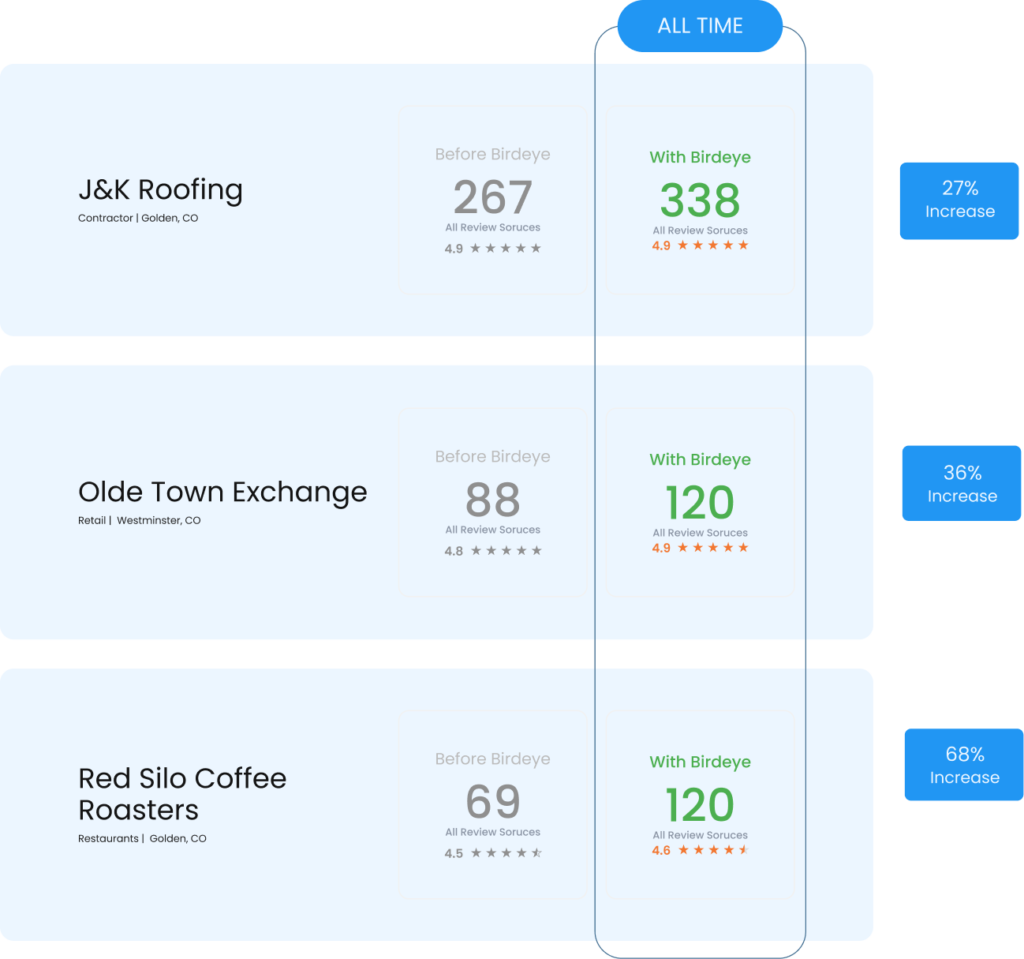
So, as you can see from this success story, here’s the good news: When done right, a customer review request can feel natural and effortless.
Ask for Customer Reviews and Scale Your Business
Want to see the impact of Birdeye on your business? Watch the Free Demo Now.
Here are 5 examples of how to ask for customer reviews with real examples and scripts you can copy and tweak:
1. Focus on the experience first, the review second
Customers respond better when the request feels personal rather than automated. Mentioning their recent purchase, appointment, or interaction shows that you’re interested in their experience, not just their review.
 "Hey [Customer Name], please leave us a review."
 "Hey Sarah, we hope you're loving your new haircut! Emily mentioned how much you enjoyed the layered look. We'd love to hear your feedback if you have a moment. Here's a quick link: [Insert Your Business Review Link]."
This approach adds deep personalization, which makes the request genuine rather than transactional.
2. Give customers multiple ways to leave a review
Not every customer prefers the same platform. Offering multiple options reduces friction and increases the likelihood of receiving feedback.
A customer might see your email and intend to reply, but something else catches their attention, and they forget. That’s why sending a well-crafted follow-up email can make all the difference.
3. Make leaving a review effortless
The easier the process, the higher the response rate. Include direct review links, QR codes, or clear instructions so customers can leave feedback in just a few clicks.
 Pro tip: Pro tip: Review generation Agent capabilities automatically send review requests at the appropriate time based on customer interactions.
4. Show appreciation without offering incentives
Customers appreciate being thanked, but reviews should never feel like a transaction. Offering rewards in exchange for reviews can violate platform policies and undermine trust.
Highlighting great feedback encourages other customers to leave an online review without incentives. This approach keeps your online reputation organic, authentic, and compliant with platform rules.
5. Follow up once, but don’t overwhelm customers
Sometimes customers intend to leave a review but simply forget. A friendly reminder can help, but repeatedly asking for reviews can feel intrusive and may hurt the customer experience.
A single follow-up is often enough to capture customers who were interested but didn’t have time to respond initially. If they choose not to leave a review after that, it’s best to respect their decision.
This approach keeps your online reputation organic, authentic, and compliant with platform rules.
Once you know who to ask, when to ask, and how to ask respectfully, the next step is choosing the right channel. The best review request is the one that reaches customers where they’re most likely to respond.
10 review request scripts and templates you can use to ask customers for reviews across different channels
There’s no one-size-fits-all approach to asking for reviews. Some customers respond better to a quick text message, while others prefer email, social media, or even an in-person conversation.
The good news? You don’t need to reinvent the wheel. Here are 10 proven customer review request scripts and templates you can copy, customize, and use across different channels.
1. The friendly in-person ask
In-person requests work best immediately after a positive interaction when customer satisfaction is at its highest.
Script: "We're so happy you enjoyed your visit! Your feedback matters. Share your experience here: [Insert Your Business Review Link]. It helps other customers discover us."
2. The post-service email request
Email is ideal for service-based businesses, eCommerce brands, and post-purchase follow-ups.
Script: "Thanks for choosing [Business Name]! Your feedback helps other customers make informed decisions. If you have a few minutes, could you leave a review? Click here: [Insert Your Business Review Link]."
Pro tip: According to Birdeye’s State of Online Reviews 2026 report, email still accounts for 45.4% of all review requests sent by businesses, making it one of the most widely used review generation channels.
3. The high-response SMS review request
SMS review requests are short, direct, and highly effective when sent immediately after a service or transaction.
Script: "Hi [Customer’s Name], we appreciate your support! If you had a great experience, could you write us a review? Just click here: [Insert Your Business Review Link]."
No matter which method you use, the secret is simplicity. If you want more Google reviews, there’s no better tool than Reviews AI. With this, you can automate Google reviews quickly and easily.
4. The handwritten thank-you note approach
A handwritten message feels personal and memorable, especially for boutique businesses and high-touch services.
Script: "Thank you for choosing [Business Name]! We appreciate your support and hope you love your [product/service].
If you have a moment, we'd be grateful if you could share your experience. Here's the link: [Insert your Google review link]."
5. The seamless website pop-up request
Display right after checkout, appointment booking, or account creation online. A well-timed pop-up prompts customers to leave a review while the experience is still fresh in their minds.
Script: "Loved your experience? Let others know! Click here to leave a review—it only takes a few minutes."
Once you start collecting reviews, displaying them on your website can help build trust with potential customers. If you're using WordPress or Wix, check out these step-by-step guides to seamlessly embed Google reviews on your website:
How to embed Google reviews on a Wix website
How to embed Google reviews on a WordPress website
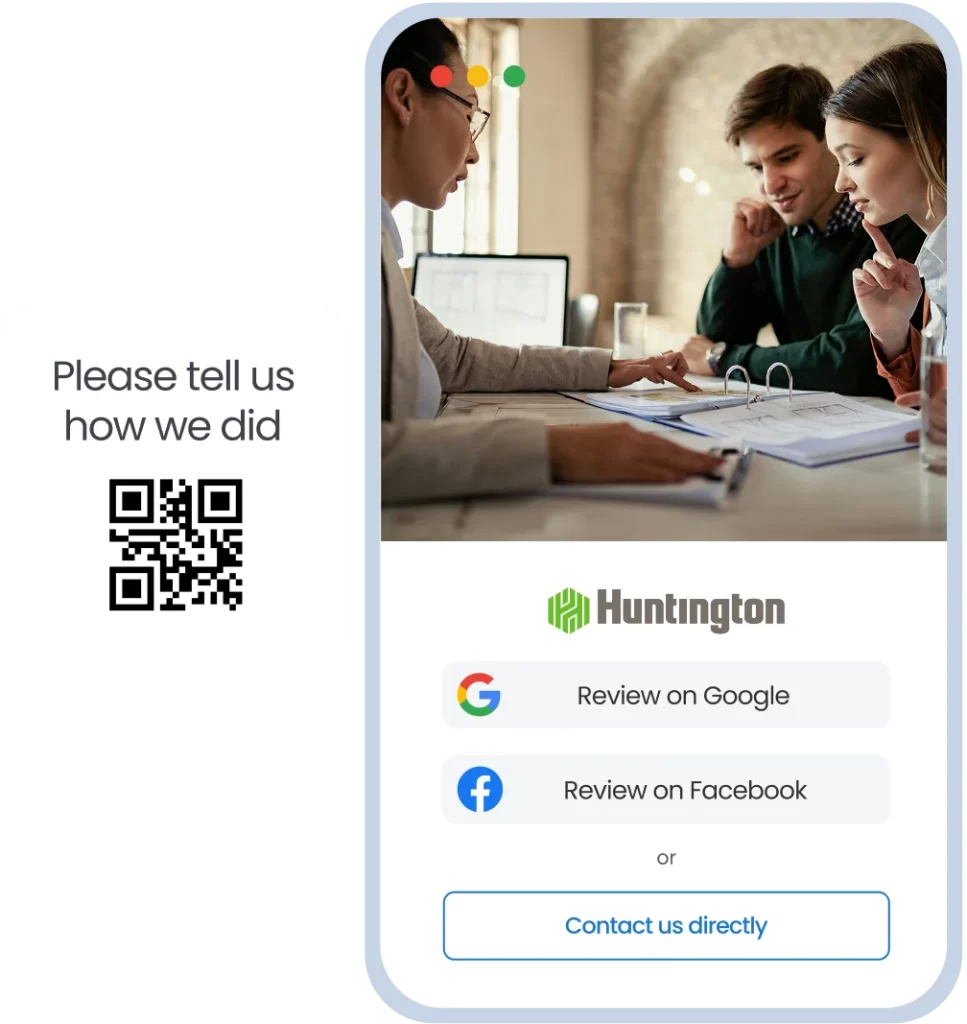
6. Use QR codes
Place it at checkout, on receipts, or on business cards, so customers can instantly scan and leave a review. This is a great way to capture feedback from in-person customers without requiring extra effort from them.
Script: "Scan this QR code to share your experience! Your opinion matters, and it only takes a moment."
Pro tip: Birdeye Reviews AI lets you generate scannable QR codes to instantly collect more reviews.
7. The engaging social media ask
Request reviews after interacting with a happy customer in the comments section, DMs, or as part of a marketing campaign. Social proof is crucial in influencing purchasing decisions and driving social media reviews, making the process feel less like a request and more like a conversation.
Script: "We love hearing from you! If you’ve had a great experience, consider leaving a review—your voice helps other potential customers make informed decisions. [Insert Your Business Review Link]"
8. The printed materials strategy
Use printed materials like receipts, invoices, business cards, or product packaging to request reviews from customers who may not return in person. This is a type of attraction marketing, and this method works particularly well for businesses that rely on repeat customers or eCommerce stores that ship products.
Adding a QR code or a short review link makes it easy for customers to leave feedback at their convenience.
Script: "We value your feedback! Scan the QR code or visit [Insert Your Business Review Link] to share your experience—it only takes a few seconds and helps us improve!"
Review management across platforms can be overwhelming. Businesses using Birdeye Reviews experience higher review response rates, faster response times, and improved reputation scores—all while automating the process effortlessly.
9. The personalized follow-up call
For businesses that build strong client relationships, such as real estate agents, financial advisors, and B2B services, a personalized follow-up is recommended a few days after service completion. This helps reinforce trust and encourages long-term engagement.
Script: "Hi [Customer’s Name], I just wanted to personally check in and see how your experience with [product/service] has been. If you’re happy with everything, would you mind sharing a quick review? It helps others looking for [specific service/product] find the right fit.
Did the customer miss your call? Don’t worry—you can send a voicemail. Check out our 40 business voicemail greeting examples to make sure they respond to your request.
10. The automated chatbot review request
At the end of a customer support chat or online service interaction, chatbots provide a seamless way to request reviews without disrupting the customer experience. This makes them an excellent choice for SaaS companies, online stores, and tech support.
Script: "Glad we could help! If you’re happy with our support, click here to leave a review on Google Maps: [Insert review link]."
Top 3 examples of how not to ask for reviews
"Hey, if you get a chance, could you leave us a review?"
Why it’s bad: Too generic, no clear instructions or review link, and easy to ignore.
"Leave us a review and get 10% off your next order!"
Why it’s bad: Violates Google and Yelp reviews' policies, making your company's reviews seem inauthentic.
"Can you leave us a 5-star review?"
Why it’s bad: Pressures customers, biases feedback, and sounds inauthentic.
Review requests don’t always have to be emails, text messages, or follow-up calls. Sometimes, the most effective review requests are the ones customers don’t expect.
What are some clever ways to ask customers for reviews?
If traditional review requests aren’t generating the results you want, try these creative approaches to encourage more customers to share their feedback.
1. Include review requests in thank-you messages
A simple thank-you message can feel more personal than a formal review request.
For example:
“Thank you for choosing us. We appreciate your support and would love to hear about your experience if you have a moment.”
Because the focus is gratitude rather than the review itself, customers are often more receptive.
2. Create a short video message
A personalized video from the owner, manager, or team member can feel far more authentic than a generic email.
Instead of sending a standard review request, record a quick thank-you video and include a review link underneath. Customers are more likely to respond when they can connect a real person to the request.
3. Add review requests to customer newsletters
If you already send newsletters, include a subtle review request rather than creating a separate campaign.
For example:
“Have we helped your business recently? We’d love to hear about your experience.”
This approach keeps review generation consistent without overwhelming customers with additional emails.
4. Turn positive customer feedback into a review opportunity
When customers compliment your business in person, over the phone, or via email, use that moment as a natural opportunity to ask for a review.
For example:
“We’re glad to hear that. Would you mind sharing those thoughts in a review? It would help other customers learn about our business.”
These requests often generate some of the highest response rates because the positive sentiment already exists.
5. Ask after a customer success milestone
The best review requests happen when customers have achieved a meaningful outcome.
Examples include:
- A real estate client closing on a home
- A patient completing treatment
- A home service project is being finished
- A customer reaching a business goal using your product
At these moments, customers are more emotionally invested in the outcome and more likely to leave detailed feedback, making it a memorable positive review.
After experimenting with different channels and approaches, many businesses discover that the biggest challenge isn’t asking for reviews. It’s finding the right words.
In fact, some review-generation tactics can damage trust, violate platform policies, and hurt your reputation over time. The goal isn’t to collect reviews at any cost. It’s to collect authentic feedback that reflects real customer experiences.
Did the customer miss your call? Don't worry—you can send a voicemail. Check out our 40 business voicemail greeting examples to make sure they respond to your request.
How should you avoid asking for reviews?
Don’t offer incentives in exchange for reviews
Offering discounts, gifts, refunds, or rewards in exchange for reviews can violate the policies of Google, Yelp, and other review platforms.
“Leave us a review and get 10% off your next order.”
“If you’d like to share your experience, we’d truly appreciate your feedback.”
Don’t ask only happy customers for reviews
Some businesses selectively request reviews from customers they believe will leave positive feedback.
Known as review gating, this practice can create a misleading picture of customer sentiment and may violate review platform guidelines.
“Only leave a review if you had a great experience.”
“We’d love to hear your honest feedback about your experience.”
Don’t make the process complicated
Customers are unlikely to leave a review if they have to search for your business profile, create new accounts, or navigate multiple pages.
“Search for our business on Google Maps and leave a review.”
“Here’s a direct link to leave a review on Yelp.”
Don’t pressure customers for a five-star rating
The purpose of a review request is to gather genuine feedback, not influence the outcome.
“Can you leave us a five-star review?”
“We’d appreciate your honest feedback.”
Don’t overwhelm customers with repeated requests
A reminder can be helpful. Multiple reminders can quickly become annoying.
If a customer doesn’t respond after one follow-up, it’s usually best to respect their decision and move on.
What should you do after receiving a review?
Collecting reviews is only half the job. What you do after receiving a review often determines whether customers continue engaging with your business and whether future customers trust your brand.
Respond to every review and personalize it
A review without a response is a missed opportunity to strengthen customer relationships.
Whether the review is positive or negative, a thoughtful response shows customers that their feedback matters and demonstrates that your business is actively listening.
For businesses managing reviews across multiple locations, maintaining consistency can be challenging. Birdeye’s Review Response Agent helps teams generate personalized responses that reflect customer sentiment and align with their brand voice, making it easier to respond at scale without sounding generic.
Avoid generic replies such as “Thank you for your review.” Instead, reference specific details from the customer’s experience whenever possible.
Customers can tell the difference between a templated response and one that genuinely acknowledges their experience.
Showcase positive reviews
Instead of manually searching through hundreds of reviews, Birdeye’s Review Marketing Agent identifies high-impact customer reviews and helps businesses turn them into website content, social media posts, and marketing assets, making it easier to amplify customer advocacy across channels.
This helps prospective customers see authentic experiences from real people before they make a decision.
Learn from customer feedback
Reviews contain valuable insights about customer expectations, operational challenges, and service quality.
Look for recurring themes such as:
- Customer service experiences
- Product quality feedback
- Employee recognition
- Operational issues
- Frequently requested improvements
For multi-location brands, identifying patterns across thousands of reviews can be difficult. Birdeye’s Review Reporting Agent helps surface trends, uncover recurring issues, and provide location-level insights, enabling teams to turn customer feedback into meaningful business improvements.
FAQs about how to ask customers for reviews
The best way to ask customers for reviews is shortly after a positive experience. Personalize the request, explain why their feedback matters, and include a direct review link to make the process as simple as possible.
Ask while the experience is still fresh. A simple request such as, *”We’re glad you enjoyed your visit. If you have a moment, we’d really appreciate a review,”* often feels natural and effective.
The best time to ask is immediately after a positive interaction, a successful purchase, a completed service, or a resolved issue. Customers are more likely to leave feedback when the experience is still top of mind.
Generally, no. Offering discounts, gifts, or rewards in exchange for reviews may violate the policies of platforms such as Google and Yelp. It’s best to request honest feedback without providing incentives.
A single follow-up is usually appropriate if a customer doesn’t respond to the initial request. Repeated requests can feel intrusive and may negatively affect the customer experience.
Yes. Responding to reviews shows customers that their feedback matters. It also demonstrates to prospective customers that your business values engagement and customer service.
Respond professionally, acknowledge the customer’s concerns, and offer to continue the conversation privately if necessary. A thoughtful response can often leave a stronger impression than the review itself.
Multi-location brands often automate review requests, responses, and reporting to maintain consistency across locations. Platforms such as Birdeye Reviews AI help businesses send review requests through multiple channels, respond to feedback efficiently, and monitor review performance across locations.
How to ask customers for reviews using Birdeye to maximize results
Knowing how to ask customers for reviews is one thing. Doing it consistently across hundreds or thousands of locations is another.
Birdeye builds AI agents for multi-location brands. It helps businesses with 100-10,000+ locations generate, manage, and amplify reviews using AI agents that operate across all locations.
- Review Generation Agent requests reviews at the right moment and on the right platform
- Review Response Agent drafts personalized, on-brand responses
- Reporting Agent surfaces trends, explains performance changes, and identifies opportunities for improvement.
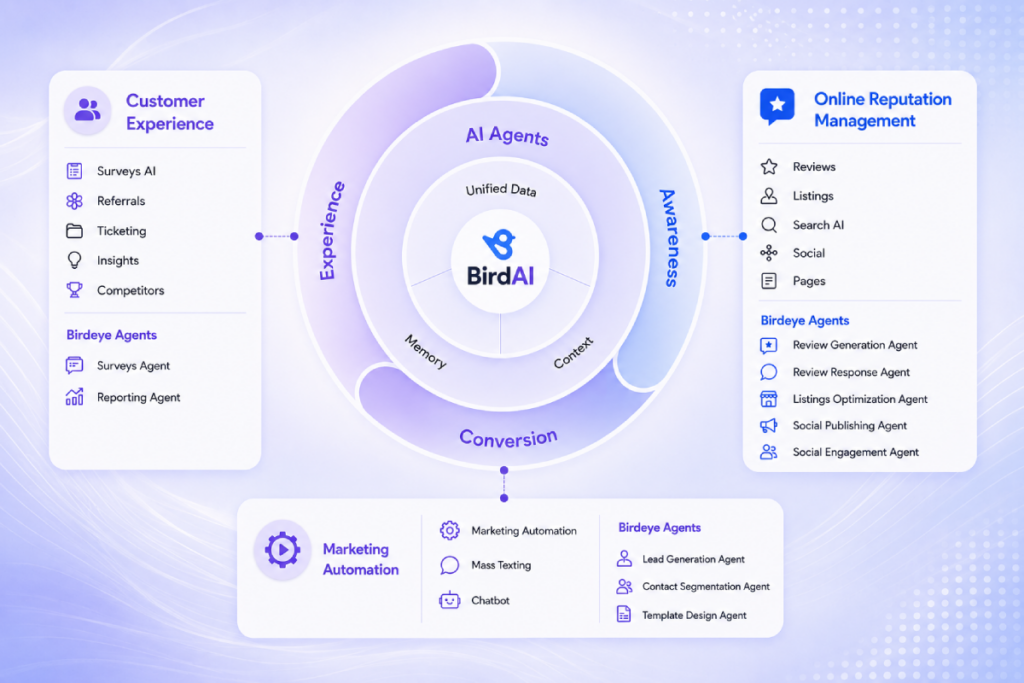
But reviews are only one part of the customer experience.
Birdeye’s AI agents also help businesses manage listings, social media, messaging, surveys, and AI search visibility from a single platform. Powered by AI coworkers for marketing, operations, and customer experience, Birdeye helps multi-location brands maintain trust, consistency, and control across every location.
Whether you’re managing 100 locations or 10,000, Birdeye gives your teams the tools to turn customer feedback into stronger visibility, better experiences, and long-term growth.
The post How to ask customers for reviews: 20+ scripts, templates & examples appeared first on #1 Agentic Marketing Platform for Multi-Location Brands.