Introducing VWO AB Tasty Commerce
Search, recommendations, and merchandising have always been treated as separate problems. That assumption is costing teams more than they realize.
Most eCommerce teams don’t have a discovery problem. They have a fragmentation problem.
Search lives in one tool. Recommendations live in another. Merchandising rules are configured somewhere else entirely.
This is the state of product discovery for most eCommerce teams, and it’s not because better options didn’t exist. It’s because the market has been organized around point solutions for so long, the fragmentation started to feel normal.
With the launch of our new VWO AB Tasty Commerce platform, it no longer has to be.
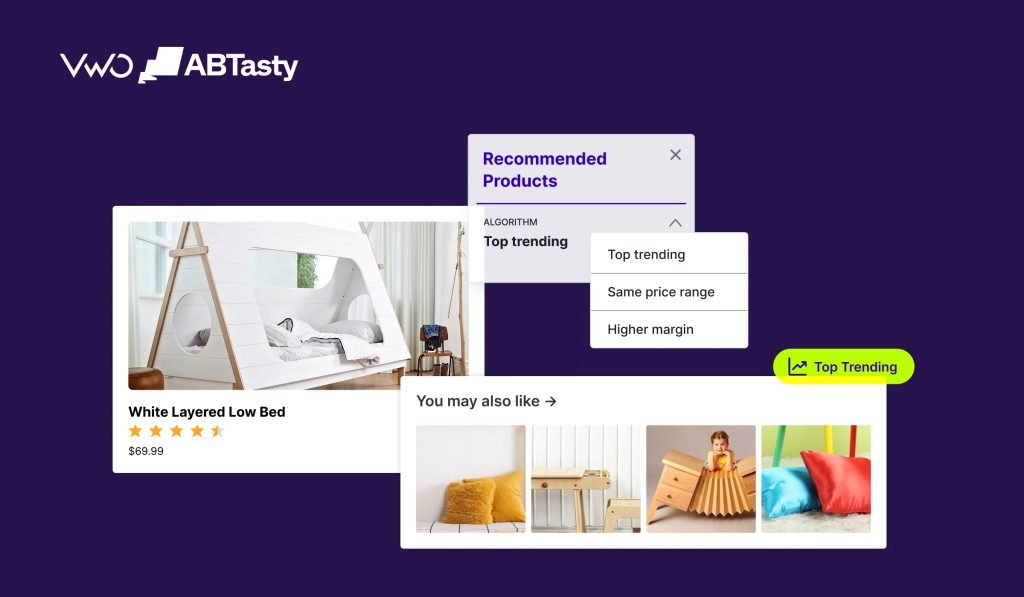
VWO AB Tasty’s new Commerce platform is a ground-up redesign of how Search, Recommendations, and Merchandising work together, unified around a single catalog, a single workspace, and a shared AI layer.
When all three capabilities share the same catalog, a boost rule you set in Merchandising applies to search results automatically. Behavioral signals from search inform recommendation rankings.
Facets and sort logic you configure once carry through to every channel where shoppers discover products. The result is that your store behaves consistently, because it’s operating from one source of truth.
This is architecturally different from what competitors offer.
Some are excellent at search, but search is where it stops; recommendations and merchandising are separate.
Others have deep personalization but limited native search control and rely on catalog integration rather than a unified catalog.
Commerce is purpose-built for product discovery specifically, and built for the teams who run it every day.
The big four: Capabilities that change the game for eCommerce teams
1. AI-powered strategy creation
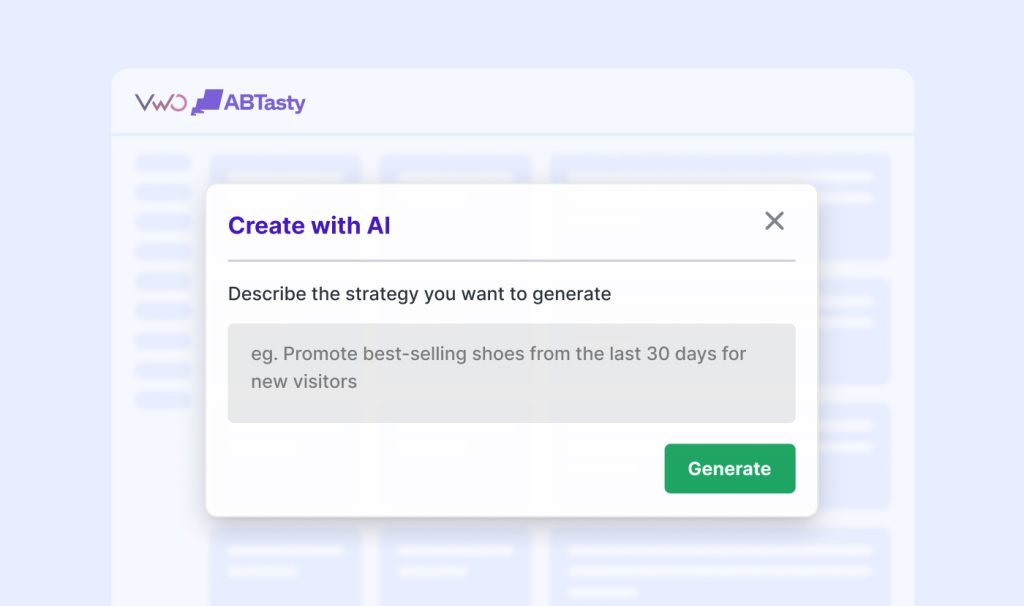
Every merchandising platform has rules. Commerce has something more useful: the ability to describe a strategy in plain language and have AI translate it into something deployable
Instead of manually assembling filter logic, sort conditions, and promotion rules, a merchandiser can type something like “promote best-selling shoes from the last 30 days for new visitors”, and get a ready-to-review strategy back.
Teams that can launch and iterate strategies faster also learn faster, and that compounds directly into revenue.
2. Global boost and bury: Across search and merchandising
In legacy setups, boosting a product meant boosting it separately in each channel it appeared.
A new product launch required updates to category pages, search rankings, and recommendation widgets independently. And this logic was never truly shared.
Commerce’s global Boost & Bury rules apply a single configuration across Search, PLPs, PDPs, and Recommendations simultaneously.
Set it once, and it is consistent across. This removes duplicate work and ensures shoppers get a coherent experience regardless of how they navigate.
3. Unified facet and sort management
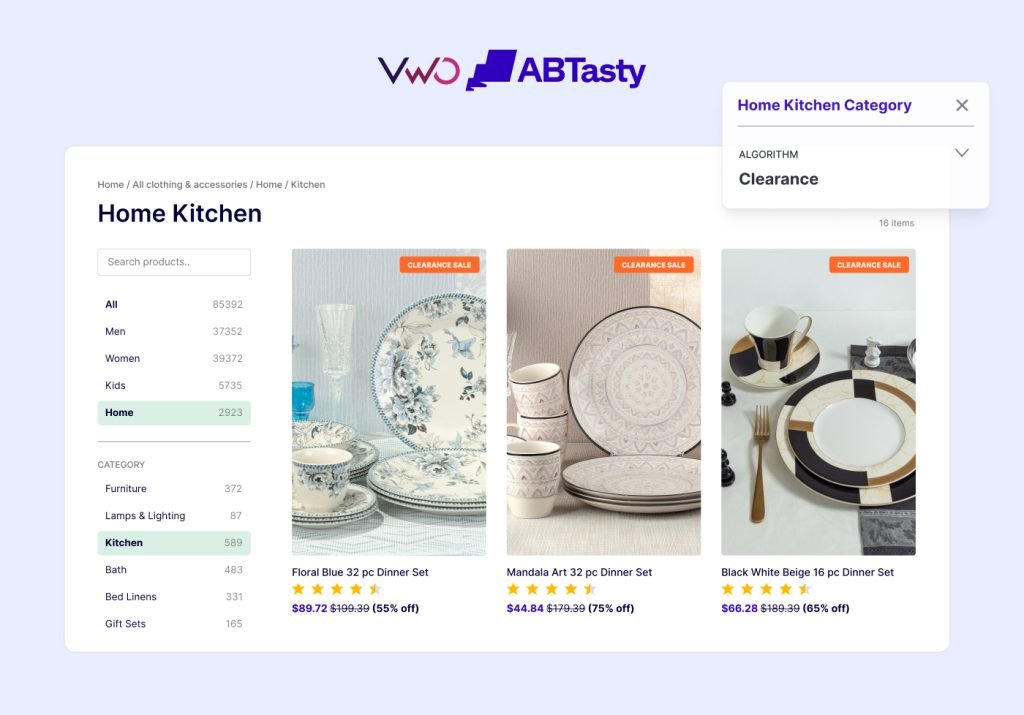
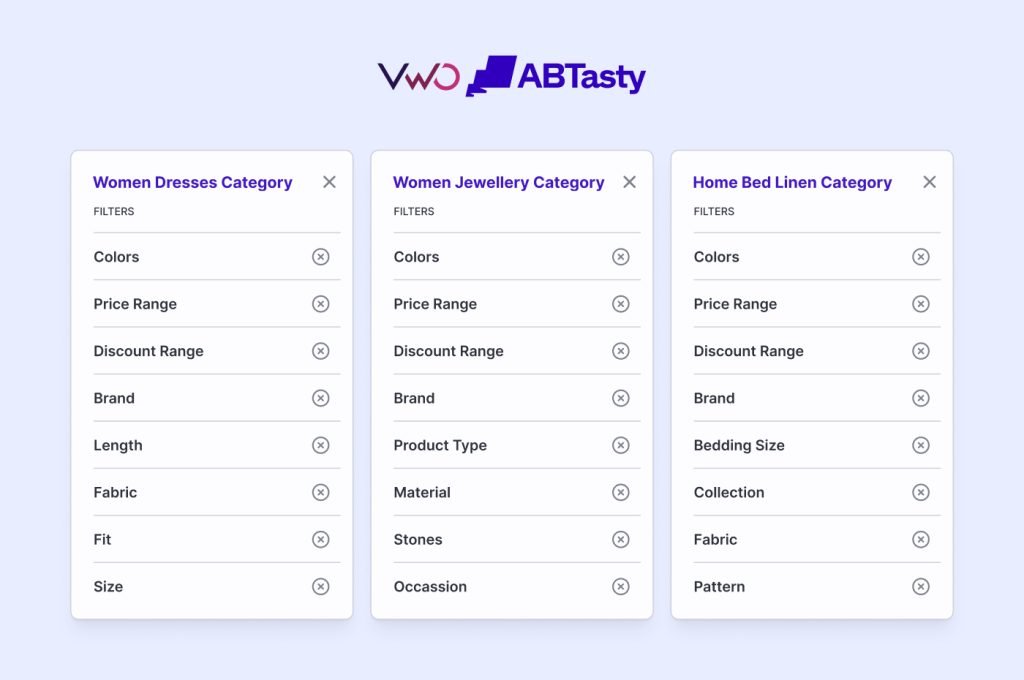
Facets, which are the filters shoppers use to narrow results, are one of the highest-leverage controls in product discovery. Get them wrong, and your conversions dip.
With Commerce, facets and sort logic are managed in one place and applied consistently across both Merchandising and Search contexts.
Separate tools, separate configurations, and the inevitable inconsistencies between them are gone.
4. Revenue-first reporting with AI improvement suggestions
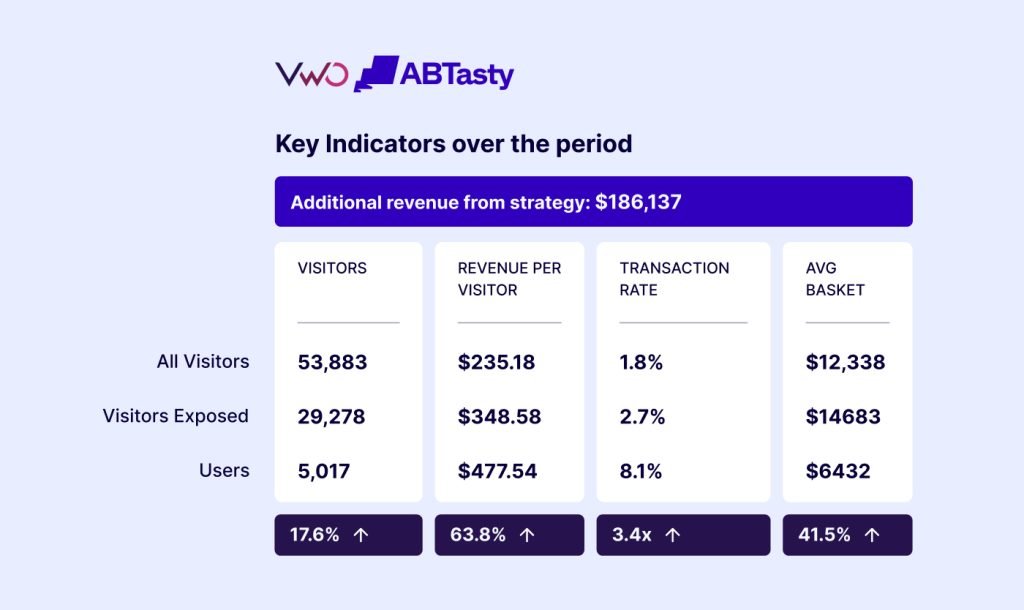
Most commerce platforms report on search metrics: CTR, no-results rate, query volume.
Commerce reports on what actually matters: revenue uplift, assisted revenue, and strategy performance.
More importantly, the reporting dashboard provides AI-generated suggestions for optimization:
E.g., “Update sorting to prioritize recent high-performers.”
The bottom line
Product discovery is how your store presents itself to every shopper across channels. But when that architecture is fragmented across tools, it creates operational overhead, inconsistent experiences, and an incomplete picture of performance.
Commerce solves this with a unified platform: one catalog, one workspace, one AI layer, and controls in the hands of the people who understand your customers best. Ready to simplify your commerce stack? Book a demo and see Commerce in action.