SEO Lead Generation: How Service Businesses Turn Rankings Into Sales Calls
SEO Lead Generation
Most service businesses don’t want “traffic” for the sake of traffic.
They want phone calls. Quote requests. Consultation bookings. Form submissions. Local customers. Real conversations with people who are close to buying.
That’s where SEO lead generation becomes different from ordinary SEO.
A blog post ranking for a broad question may bring visitors. A service page ranking for “emergency plumber near me,” “divorce lawyer consultation,” “roof repair company,” or “commercial cleaning services in Dallas” can bring buyers. Same search engine. Very different business outcome.
For service businesses, SEO should not be treated as a vanity channel. Rankings only matter when they connect with buyer intent, local demand, trust signals, and a clear conversion path. A page that ranks but does not persuade is just digital shelf space. A page that ranks, answers the user’s concern, proves credibility, and makes the next step obvious becomes a lead generation asset.
That’s the real job: turning organic search visibility into qualified sales conversations.
What SEO Lead Generation Really Means
SEO lead generation is the process of attracting potential customers from organic search and converting them into leads through calls, forms, bookings, quote requests, chat interactions, or other measurable actions.
It combines two disciplines:
First, SEO helps the business appear when people search for relevant services, problems, locations, comparisons, and buying questions.
Second, conversion strategy helps those visitors take action once they land on the website.
A service business does not win just because it ranks. It wins when the page matches the searcher’s intent and gives them enough confidence to contact the business.
For example, someone searching “how long does AC installation take” may still be researching. Someone searching “AC installation company near me” is much closer to hiring. Someone searching “best AC installation company in Phoenix with financing” may have both commercial intent and a specific buying constraint.
Good SEO lead generation recognizes those differences.
It does not push every visitor into the same funnel. It builds pages for different levels of intent:
- Educational searches
- Local service searches
- Comparison searches
- Cost and pricing searches
- Emergency searches
- Brand evaluation searches
- Consultation or quote searches
Each search type needs a different page structure, call to action, and proof point.
Why Service Businesses Need a Different SEO Strategy
SEO for service businesses is not the same as SEO for publishers, SaaS brands, ecommerce stores, or affiliate websites.
A service business usually sells trust before it sells the service.
A customer hiring a roofer, attorney, accountant, HVAC contractor, consultant, dentist, cleaning company, or marketing agency is not simply comparing product specs. They are evaluating risk.
They may be thinking:
“Will this company show up?”
“Are they licensed?”
“Do they work in my area?”
“Can they solve my exact problem?”
“Will they overcharge me?”
“Can I trust them inside my home or business?”
“Do they understand my industry?”
“Can I talk to a real person?”
That’s why SEO for service businesses must do more than target keywords. It must reduce uncertainty.
A strong service SEO strategy usually includes:
- Clear service pages
- Location pages where appropriate
- Google Business Profile alignment
- Reviews and testimonials
- Trust badges
- Licensing or certification details
- Photos of real work or team members
- Pricing guidance when possible
- Strong calls to action
- Fast mobile experience
- Accurate contact information
- Local relevance
- Content that explains problems in plain English
Google’s own local business guidance emphasizes accurate business details, business profiles, contact information, and structured information that helps users and search systems understand a business. (Google for Developers)
For service companies, that matters because search visibility and customer trust are closely linked.
The Buyer Journey Behind Organic Leads
Not every organic visitor is ready to call.
That’s fine.
SEO lead generation works best when the site supports the full buyer journey instead of only chasing bottom-funnel keywords.
A basic service buyer journey looks like this:
1. Problem Awareness
The person knows something is wrong but may not know the exact solution.
Examples:
- “Why is my AC leaking water?”
- “Do I need a business attorney for an LLC?”
- “Why is my website not getting leads?”
- “Signs of foundation damage”
- “How to remove mold from bathroom ceiling”
These searches are informational. They may not convert immediately, but they introduce the user to the business.
2. Solution Research
Now the person understands the problem and starts exploring options.
Examples:
- “AC repair vs replacement”
- “SEO vs PPC for local business”
- “Bookkeeper vs accountant”
- “Mediation vs divorce lawyer”
- “Pressure washing vs soft washing”
This stage is perfect for comparison content.
3. Provider Search
Now the person wants a company, consultant, contractor, or professional.
Examples:
- “HVAC repair near me”
- “small business CPA in Austin”
- “local SEO agency for contractors”
- “roof repair company Orlando”
- “commercial cleaning service Chicago”
This is where local SEO leads become highly valuable.
4. Provider Evaluation
The searcher compares options.
Examples:
- “[company name] reviews”
- “best personal injury lawyer near me”
- “top SEO consultants for service businesses”
- “licensed electrician in San Diego”
- “affordable website design for small business”
These visitors are closer to contacting someone but need proof.
5. Action
The person is ready to call, book, request a quote, or schedule a consultation.
Examples:
- “schedule AC repair today”
- “book legal consultation”
- “get roofing estimate”
- “request SEO audit”
- “emergency plumber open now”
This is where conversion design becomes critical.
The mistake many businesses make is building only one type of page. They publish a homepage, a few thin service pages, and then wonder why SEO is slow.
A proper inbound marketing SEO strategy builds content for each stage. That way, the business becomes visible before, during, and after the customer is ready to buy.
How Rankings Turn Into Calls, Forms, and Bookings
Rankings do not automatically become leads.
The path usually looks like this:
Search query → search result → click → landing page → trust evaluation → conversion action
Each step can fail.
A page may rank but have a weak title.
A title may get clicks but attract the wrong audience.
A visitor may land on the page but leave because the content feels generic.
A qualified visitor may trust the company but fail to find the phone number.
A mobile user may want to call but the button is too small or buried.
A commercial buyer may want pricing context but see only vague claims.
SEO lead generation depends on the full chain.
A Ranking Is Only the First Door
Ranking gives you visibility. It does not close the sale.
For service businesses, the page must quickly answer four questions:
- Do you provide the service I need?
- Do you serve my location or type of business?
- Can I trust you?
- What should I do next?
If those questions are not answered above the fold or soon after, many visitors will leave.
The Search Result Must Match Intent
The title tag and meta description influence how users understand the result. Google’s SEO Starter Guide explains the role of titles, snippets, crawlability, and making content understandable for users and search engines. (Google for Developers)
For lead generation, a page title should not be clever at the cost of clarity.
Weak example:
Solutions That Move Your Business Forward
Better example:
Local SEO Services for Home Service Companies
The second title tells the user what the page is about, who it is for, and why it is relevant.
The Page Must Reduce Friction
A lead-generation page should make action easy.
That means:
- Click-to-call buttons on mobile
- Short forms
- Clear appointment options
- Visible service area
- Trust signals near CTAs
- Fast loading
- No distracting popups before the user understands the offer
- No hidden contact information
For many local businesses, the best conversion is still a phone call. For agencies and consultants, it may be a consultation form or audit request. For contractors, it may be a quote form. For medical, legal, or financial services, the CTA may need careful compliance language.
The CTA should match the buying context.
The Core SEO Lead Generation Framework
A strong SEO lead generation system has five major parts:
- Intent mapping
- Page architecture
- Local and service relevance
- Trust-building content
- Conversion tracking
Let’s break each one down.
Search Intent Mapping
Search intent is the reason behind the query.
For service businesses, intent usually falls into several useful categories:
| Intent Type | Example Query | Best Page Type |
|---|---|---|
| Informational | “why is my water heater making noise” | Blog guide |
| Commercial | “best water heater repair company” | Service or comparison page |
| Local | “water heater repair near me” | Local service page |
| Transactional | “book water heater repair” | Booking or service page |
| Pricing | “water heater repair cost” | Cost guide |
| Emergency | “emergency plumber open now” | Emergency service page |
| Comparison | “tank vs tankless water heater” | Comparison article |
| Brand trust | “[company name] reviews” | Reviews/testimonials page |
Intent mapping prevents a common SEO mistake: targeting keywords without understanding what page should rank.
For example, a blog post is usually not the best page for “roof repair near me.” A local service page is more appropriate. But a service page may not be the best page for “how to know if roof damage is serious.” That query needs an educational guide.
The best SEO lead generation websites have both.
Page Architecture
Page architecture means how the website organizes its important pages.
A service business usually needs:
- Homepage
- Core service pages
- Location pages
- Industry pages, if B2B
- Case studies or project examples
- Reviews/testimonials
- About page
- Contact page
- Blog or resource hub
- Pricing or cost pages, where appropriate
- FAQ content
- Internal links between related pages
Internal links matter because they help users navigate and help search engines understand the relationship between pages. Google recommends descriptive anchor text that sets clear expectations for readers and search systems. (Google for Developers)
A weak internal link says: “Click here.”
A stronger internal link says: “See our local SEO services for contractors.”
That second link provides context.
For SEO lead generation, internal links should guide users from lower-intent pages to higher-intent pages.
Example:
A blog post about “why your website gets traffic but no leads” can link to:
- SEO audit service
- Conversion optimization service
- Local SEO service
- Case study
- Contact page
The purpose is not to stuff links. It is to create a natural path from learning to action.
Local and Service Relevance
For local SEO leads, relevance depends on both what you do and where you do it.
A page should make the following clear:
- Main service
- Service area
- Customer type
- Common problems solved
- Local proof
- Contact method
- Availability
- Licensing or qualifications, if relevant
For example, a generic page saying “We provide plumbing services” is weak.
A stronger page says:
“We provide water heater repair, drain cleaning, leak detection, and emergency plumbing services for homeowners and small businesses in Plano, Frisco, Allen, and nearby North Dallas communities.”
That sentence gives search engines and users more context.
It is not keyword stuffing. It is useful specificity.
Trust-Building Content
A lead is a trust event.
Before someone contacts a service business, they usually need confidence. Trust content helps create that confidence.
Examples include:
- Case studies
- Before-and-after project photos
- Client testimonials
- Certifications
- Licensing details
- Process explanations
- Service guarantees, if real
- Insurance information
- Team bios
- Years of experience
- Transparent pricing factors
- FAQs
- Safety standards
- Industry-specific expertise
Google’s people-first content guidance emphasizes creating helpful, reliable information for users rather than content made primarily to manipulate rankings. (Google for Developers)
That principle fits service SEO perfectly. Thin pages do not build trust. Useful pages do.
Conversion-Focused Page Design
SEO gets the visitor to the page. Page design helps convert the visitor.
A good lead-generation page should include:
- A clear headline
- Immediate service relevance
- Location or audience fit
- Primary CTA
- Secondary CTA
- Trust signals
- Short explanation of the service
- Common problems solved
- Process section
- Proof section
- FAQ section
- Internal links
- Contact section
The structure should feel natural, not forced.
A basic service page flow might look like this:
- Hero section with service, location, and CTA
- Short trust statement
- Problems the service solves
- Service details
- Why choose this business
- Process or what to expect
- Reviews or proof
- Pricing factors or estimate guidance
- FAQs
- Final CTA
This layout works because it follows how users make decisions.
They arrive with a problem. They check relevance. They look for proof. They reduce risk. Then they act.
Local SEO Leads: Why Map Visibility Matters
For local service businesses, organic SEO and map visibility often work together.
A user may search on Google and see:
- Local pack results
- Organic results
- Business profile panels
- Reviews
- Map listings
- Service pages
- Directories
- Ads
A business that appears in both map results and organic results can earn more attention.
Google’s local business documentation explains that businesses can claim a Business Profile and provide contact information, business category, photos, and other details that appear in Search and Maps. (Google for Developers)
For lead generation, that means your website and local business presence should agree.
The business name, address, phone number, services, hours, categories, and service area should be consistent.
Local SEO Signals That Support Leads
Important local lead generation assets include:
- Google Business Profile
- Reviews
- Local service pages
- Location-specific content
- Photos
- Accurate phone number
- Business hours
- Service area details
- Local citations
- Embedded map, where useful
- LocalBusiness schema
- Location-specific testimonials
- Local project examples
Google also documents LocalBusiness structured data, which can help provide business details such as hours, departments, and other business information. (Google for Developers)
Structured data is not a magic ranking button. But it helps clarify meaning and may support richer search understanding when used correctly.
Organic Lead Generation vs Paid Ads
Service businesses often compare SEO with paid ads.
The better question is not “Which one is best?” It is “Which one fits the buying stage, budget, timeline, and market?”
Paid Ads
Paid ads can generate visibility quickly. They are useful when:
- The business needs immediate leads
- The offer is already proven
- The landing page converts
- The cost per lead is profitable
- The company can answer calls quickly
- The market has clear commercial keywords
But ads stop when the budget stops. Competitive industries can also become expensive.
Organic Lead Generation
Organic lead generation is slower, but it can compound.
SEO is useful when:
- The business wants durable visibility
- Search demand is stable
- The site can publish helpful pages
- The company has expertise to show
- Local competition is beatable
- The business can invest consistently
- Content can support multiple funnel stages
The strongest businesses often use both.
Paid search captures demand now. SEO builds future demand capture. Retargeting, email follow-up, review generation, and conversion optimization can connect both channels.
What Makes an SEO Visitor Convert?
An SEO visitor converts when intent, relevance, trust, and timing line up.
Intent
The visitor must have a problem that your service solves.
This is why keyword selection matters. High-volume keywords can be useless if they bring the wrong audience.
For example, an SEO agency may be tempted to rank for “what is SEO.” That can bring traffic, but many searchers are beginners, students, or DIY users.
A phrase like “SEO agency for law firms” may have less volume, but stronger commercial intent.
Relevance
The visitor must feel the page was made for their situation.
A generic page feels forgettable. A specific page feels useful.
For example:
“Marketing services for businesses” is broad.
“SEO services for home service contractors who need more booked estimates” is more specific.
Trust
The visitor needs proof.
Trust can come from:
- Reviews
- Case studies
- Clear process
- Credentials
- Photos
- Specific examples
- Helpful explanations
- Real contact details
- Transparent limitations
Overclaiming hurts trust. Saying “guaranteed #1 rankings” can make sophisticated buyers suspicious. A more credible message explains the process, expected timeline, and measurable outcomes.
Timing
Some visitors are ready now. Others need time.
This is why good SEO lead generation includes different conversion options:
- Call now
- Request a quote
- Book a consultation
- Download a checklist
- Read a case study
- Compare services
- Join an email sequence
- Ask a question
Not everyone wants the same next step.
Best Pages for SEO Lead Generation
Not every page has the same lead value.
Here are the pages that usually matter most.
Homepage
The homepage should explain:
- Who the business helps
- What services it provides
- Where it operates
- Why people should trust it
- How to take the next step
For a service business, the homepage is often a brand and trust page. It may rank for the company name, broad local phrases, or category searches.
It should link clearly to core services and important location pages.
Core Service Pages
These are usually the most important SEO lead generation pages.
Examples:
- HVAC repair
- Emergency plumbing
- Personal injury lawyer
- Local SEO services
- Commercial cleaning
- Bookkeeping services
- Web design for small businesses
- Roof replacement
- Pest control
- Business consulting
Each service page should target one main service theme.
Avoid stuffing every service onto one page. Also avoid creating dozens of near-identical pages with only minor keyword changes. Google’s spam policies warn against scaled content made primarily to manipulate rankings rather than help users. (Google for Developers)
A useful service page should provide real detail.
Location Pages
Location pages can work well when the business serves multiple cities or regions.
But they must be genuinely useful.
A weak location page swaps only the city name.
A strong location page includes:
- Services offered in that area
- Local service constraints
- Local testimonials
- Nearby neighborhoods
- Local project examples
- Directions or service area notes
- Local FAQs
- Unique contact details, if applicable
- Relevant internal links
The page should help a local customer decide.
Industry Pages
B2B service businesses can benefit from industry-specific pages.
Examples:
- SEO for law firms
- IT support for dental clinics
- Accounting for construction companies
- Commercial cleaning for medical offices
- HR consulting for startups
Industry pages are powerful because they combine service intent with audience relevance.
A buyer is more likely to trust a provider who understands their specific operating environment.
Cost and Pricing Pages
Many service businesses avoid pricing content because they cannot give exact prices.
That is understandable, but it does not mean pricing pages are useless.
A good pricing page can explain:
- What affects cost
- Typical pricing models
- Why quotes vary
- What is included
- What is not included
- How to compare providers
- How to request an estimate
Pricing content attracts serious buyers. It also filters out poor-fit leads.
Comparison Pages
Comparison content helps buyers evaluate options.
Examples:
- SEO vs PPC for local businesses
- In-house marketing vs agency
- Repair vs replacement
- DIY bookkeeping vs hiring a bookkeeper
- Mediation vs litigation
- WordPress vs custom website for small business
These pages can capture users who are not ready to hire but are moving toward a decision.
Case Studies
Case studies are conversion assets.
They show real-world experience.
A useful case study explains:
- The client’s problem
- The constraints
- The process
- The solution
- The outcome
- What made the project difficult
- What future customers can learn
Avoid vague case studies. “We helped a client grow” is weak. Specific operational detail builds credibility.
Reviews and Testimonials Page
Reviews support trust.
A dedicated testimonials page can help visitors who are evaluating credibility. However, reviews should also appear near CTAs on service pages.
Review markup must be used carefully and accurately. Google provides specific review snippet structured data guidelines, and not every review use case qualifies for rich results. (Google for Developers)
Contact Page
A contact page should not be an afterthought.
It should include:
- Phone number
- Form
- Business hours
- Service area
- Address, if applicable
- Response time expectation
- Emergency instructions, if applicable
- Map, if useful
- Trust note
- Privacy reassurance
For high-intent users, the contact page is the final conversion page.
How to Build Service Pages That Generate Leads
A service page should not read like a brochure.
It should act like a guided sales conversation.
Start With the Problem
The opening should confirm that the visitor is in the right place.
Example:
“If your business is getting website traffic but not enough booked calls, the issue may not be rankings alone. It may be the way your SEO pages match buyer intent, explain your offer, and move visitors toward action.”
That opening is better than:
“We are a leading provider of comprehensive digital solutions.”
The first one speaks to a real problem. The second one says almost nothing.
Define the Service Clearly
Users should not have to guess what you do.
For SEO lead generation, clear service definition might include:
- Keyword research for buyer intent
- Local SEO optimization
- Service page creation
- Google Business Profile optimization
- Technical SEO fixes
- Content strategy
- Conversion tracking
- Call tracking
- Landing page optimization
Clarity helps both users and search engines.
Explain Who It Is For
A service page becomes stronger when it names the audience.
Examples:
- For local contractors
- For law firms
- For dental practices
- For B2B consultants
- For home service companies
- For multi-location businesses
- For agencies managing client SEO
This helps visitors self-identify.
Show the Process
A process section reduces uncertainty.
Example:
- Audit search visibility and lead sources
- Map keywords to buyer intent
- Improve service and location pages
- Fix technical SEO issues
- Strengthen local signals
- Add conversion tracking
- Review calls, forms, and lead quality
- Improve pages based on performance
A process makes the service feel real.
Add Proof Near the CTA
Do not hide proof at the bottom.
Place trust signals near action points.
Examples:
- “Trusted by local service businesses”
- “Licensed and insured”
- “Serving Dallas since 2014”
- “Google Business Profile optimization included”
- “No long-term contract required”
- “Response within one business day”
- “Free initial consultation”
Use only true claims.
Include FAQs
FAQs help answer objections.
For SEO lead generation, FAQs might cover:
- How long does SEO take to generate leads?
- What types of businesses benefit most?
- Is local SEO different from regular SEO?
- How do you track calls from SEO?
- Can SEO work without paid ads?
- What makes a lead qualified?
FAQs can also capture long-tail search demand.
How Blog Content Supports Revenue
Many service businesses publish blog posts that never produce leads.
Usually, the problem is not blogging itself. The problem is disconnected blogging.
A blog post should support a business goal.
That does not mean every post must sell aggressively. It means every post should connect to a relevant service, audience, problem, or decision.
Blog Content That Supports SEO Lead Generation
Useful blog categories include:
Problem-Solving Guides
These attract users with a real pain point.
Example:
“Why Your Local Business Gets Website Traffic but No Leads”
This can naturally link to SEO audit, conversion optimization, and local SEO services.
Cost Guides
These attract commercially aware users.
Example:
“How Much Does Local SEO Cost for a Service Business?”
This can explain pricing models and invite users to request a consultation.
Comparison Guides
These help buyers choose.
Example:
“SEO vs Google Ads for Local Service Businesses”
This can support both SEO and paid search service pages.
Checklist Content
This attracts practical users.
Example:
“Local SEO Checklist for Contractors”
This can lead to an audit offer.
Industry-Specific Guides
These build authority with a niche.
Example:
“SEO Lead Generation for HVAC Companies”
This can link to industry service pages.
Avoid Blog Content That Has No Business Connection
Some topics may bring traffic but not leads.
For example, an SEO agency writing about “history of search engines” may attract readers, but not necessarily buyers.
A roofing company writing about “types of clouds” may get impressions, but it probably will not generate roofing leads.
Traffic without commercial connection can dilute focus.
Technical SEO for Lead Generation
Technical SEO affects whether pages can be crawled, indexed, loaded, understood, and used.
For lead generation, technical issues can directly cost money.
Crawlability and Indexing
Important pages should be crawlable and indexable.
Check:
- Robots.txt
- Noindex tags
- Canonical tags
- XML sitemap
- Internal links
- Redirect chains
- 404 errors
- Duplicate pages
Google’s Search Essentials summarize technical requirements, spam policies, and best practices needed for search eligibility and performance. (Google for Developers)
Page Speed and Mobile Usability
Many local service leads come from mobile users.
If the site loads slowly, the call button is hard to tap, or the form is annoying, leads drop.
Mobile conversion basics:
- Use click-to-call buttons
- Keep forms short
- Make CTA buttons large enough
- Avoid intrusive popups
- Compress images
- Use readable font sizes
- Keep navigation simple
- Show location and service area clearly
Structured Data
Structured data helps search engines understand content.
For service businesses, useful schema opportunities may include:
- LocalBusiness
- Organization
- Service
- FAQPage, where appropriate
- BreadcrumbList
- Review, only when compliant
- WebPage
- Article for educational posts
Google explains that structured data helps Search understand page content and entities. (Google for Developers)
The key is accuracy. Schema should match visible page content. Do not mark up fake reviews, hidden FAQs, or services not actually offered.
Conversion Tracking
Without tracking, SEO becomes guesswork.
A business should track:
- Organic calls
- Form submissions
- Consultation bookings
- Quote requests
- Chat leads
- Direction clicks
- Email clicks
- Lead source
- Landing page
- Keyword theme, where available
- Lead quality
- Closed revenue
For service businesses, the most important metric is not always traffic.
Better metrics include:
- Organic leads
- Qualified organic leads
- Cost per organic lead
- Close rate by landing page
- Revenue from organic search
- Call quality
- Form completion rate
- Booked appointment rate
Tracking SEO Leads Properly
Many businesses undercount SEO leads.
A visitor may discover the business through organic search, return later through direct traffic, and then call. Another user may click a Google Business Profile result instead of a website result. Someone else may visit from mobile and call without submitting a form.
That’s why tracking needs layers.
Use Call Tracking Carefully
Call tracking can show which pages and campaigns produce calls.
For SEO, dynamic number insertion is common. It changes the displayed phone number based on the traffic source while preserving attribution.
However, businesses should implement it carefully to avoid confusing users or creating inconsistent business information across the web.
Track Forms With Source Data
Forms should capture:
- Landing page
- Referrer
- UTM data
- Device
- Service requested
- Location
- Message
- Consent, where required
This helps separate good leads from weak leads.
Connect Leads to Revenue
A lead is not revenue.
To understand SEO performance, service businesses should connect lead data to CRM outcomes.
Track:
- Lead received
- Lead qualified
- Appointment booked
- Estimate sent
- Deal won
- Deal lost
- Revenue
- Reason lost
This is where SEO becomes business intelligence.
A page with fewer leads but higher close rates may be more valuable than a page with more low-quality form submissions.
Common SEO Lead Generation Mistakes
Mistake 1: Chasing Traffic Instead of Buyers
High traffic can look impressive in reports.
But a service business does not need every visitor. It needs the right visitors.
A page ranking for broad informational searches may generate impressions but no sales calls. That does not mean informational content is useless. It means the content must connect to a business-relevant path.
Mistake 2: Building Thin Location Pages
Creating dozens of city pages with nearly identical content is risky and often unhelpful.
Each location page should have genuine local value.
Include real service details, local proof, area-specific FAQs, and useful information. Avoid scaled pages that exist only to manipulate search rankings. Google’s scaled content abuse policy specifically warns against large amounts of unoriginal content created primarily for search manipulation. (Google for Developers)
Mistake 3: Weak Calls to Action
Many service pages end with vague CTAs like:
“Contact us for more information.”
That is not terrible, but it is weak.
Better CTAs are specific:
- “Request a free roof inspection”
- “Book a local SEO consultation”
- “Call now for emergency plumbing”
- “Get a commercial cleaning quote”
- “Schedule a case review”
- “Request an SEO lead generation audit”
Specific CTAs help users understand what happens next.
Mistake 4: Hiding Trust Signals
If reviews, credentials, or case studies exist, they should not be buried.
Put proof near decision points.
A visitor should see trust signals before being asked to act.
Mistake 5: No Lead Quality Review
Not all leads are equal.
Some keywords produce price shoppers. Others produce serious buyers. Some locations may bring poor-fit inquiries. Some service pages may attract people outside the company’s scope.
Reviewing lead quality helps improve SEO strategy.
Mistake 6: Ignoring the Sales Team
SEO does not end when the phone rings.
If calls are missed, forms are answered late, or staff do not know how to handle inquiries, SEO performance suffers.
For service businesses, speed-to-lead matters. A searcher who contacts three companies may hire the first one that responds professionally.
Mistake 7: Publishing Content Without Internal Links
A blog post without internal links is a dead end.
Every supporting article should guide users toward relevant next steps.
That might be a service page, quote page, case study, checklist, or consultation page.
SEO Conversion Strategy for Service Businesses
An SEO conversion strategy is the plan for turning search visitors into business opportunities.
It should answer:
- Which pages should generate leads?
- What action should each page encourage?
- What trust signals are needed?
- What objections must be answered?
- How will conversions be tracked?
- How will lead quality be reviewed?
- How will content be improved?
Match CTA to Intent
A visitor reading an educational guide may not be ready to book a call.
A softer CTA may work better:
- Download a checklist
- Read a related guide
- See common pricing factors
- Request an audit
- Compare service options
A visitor on a high-intent service page needs a direct CTA:
- Call now
- Book consultation
- Request quote
- Schedule service
Do not use the same CTA everywhere.
Use Micro-Conversions
Not every useful action is a final lead.
Micro-conversions include:
- Clicking a phone number
- Viewing pricing
- Reading reviews
- Opening FAQ accordion
- Watching a video
- Downloading a guide
- Visiting the contact page
- Starting a form
- Clicking “get directions”
These actions show engagement.
They help identify where users hesitate.
Strengthen Above-the-Fold Content
The first screen should answer the essentials.
For a service page, include:
- Service name
- Location or audience
- Primary benefit
- Trust cue
- CTA
- Secondary CTA
Example:
SEO Lead Generation for Local Service Businesses
Turn organic search visibility into qualified calls, quote requests, and booked consultations. We build service pages, local SEO systems, and conversion tracking for businesses that need measurable leads, not vanity traffic.
CTA: Request an SEO Lead Audit
Secondary CTA: See How the Process Works
That is clear. It speaks to revenue.
Reduce Form Friction
Forms should ask only what is needed.
A lead form for a service business might include:
- Name
- Phone
- Service needed
- Location
- Message
Long forms can work for high-ticket B2B services, but they should justify the effort.
For example, an agency consultation form may ask about monthly budget, current website, industry, and goals. That helps qualify leads.
A plumber’s emergency form should not ask twenty questions.
Practical Workflow for Building an SEO Lead Engine
Here is a practical workflow a service business or agency can use.
Step 1: Define the Revenue Goal
Start with business outcomes.
Examples:
- More emergency repair calls
- More booked consultations
- More quote requests
- More commercial contracts
- More high-ticket project leads
- More recurring service clients
SEO strategy changes based on the goal.
Step 2: Identify the Best Customer Types
Not every customer is equally valuable.
Define:
- Best service lines
- Best locations
- Best industries
- Average deal value
- Profit margin
- Repeat purchase potential
- Urgency level
- Sales cycle length
This prevents SEO from attracting poor-fit traffic.
Step 3: Map Keywords by Intent
Group keywords by:
- Service
- Location
- Problem
- Audience
- Cost
- Comparison
- Emergency
- Brand
- FAQ
Do not only look at volume. Look at business value.
Step 4: Audit Existing Pages
Review:
- Which pages rank?
- Which pages get traffic?
- Which pages generate leads?
- Which pages have high impressions but low clicks?
- Which pages have clicks but no conversions?
- Which services are missing pages?
- Which locations are underrepresented?
- Which pages are thin or duplicated?
This reveals quick wins.
Step 5: Build or Improve Core Service Pages
Start with money pages.
For each page, define:
- Primary keyword
- Search intent
- Service scope
- Audience
- Location
- CTA
- Trust signals
- FAQs
- Internal links
- Schema type
- Tracking goal
Step 6: Add Supporting Content
Create blog posts, guides, comparisons, and cost pages that support core services.
Each supporting page should link to the relevant service page.
Step 7: Strengthen Local Signals
For local businesses:
- Optimize Google Business Profile
- Add accurate service categories
- Upload real photos
- Encourage genuine reviews
- Keep business details consistent
- Add local proof to pages
- Build relevant citations
- Use LocalBusiness schema where appropriate
Step 8: Improve Conversion Paths
Review each important page from a buyer’s perspective.
Ask:
- Is the CTA visible?
- Is the phone number easy to tap?
- Does the page explain the service quickly?
- Are trust signals visible?
- Is the form too long?
- Does the page answer pricing concerns?
- Does the page show location relevance?
- Does it feel credible?
Step 9: Track Leads and Revenue
Set up:
- Form tracking
- Call tracking
- Booking tracking
- CRM source tracking
- Landing page reports
- Lead quality review
- Revenue attribution
Step 10: Improve Based on Real Data
SEO lead generation is not set-and-forget.
Review:
- Queries
- Rankings
- Calls
- Forms
- Conversion rate
- Lead quality
- Sales feedback
- Page engagement
- Competitor changes
Then update pages.
Add missing FAQs. Improve CTAs. Rewrite weak intros. Add proof. Strengthen internal links. Remove fluff. Expand thin sections. Clarify pricing. Improve page speed.
That is how SEO compounds.
Example: Turning a Service Page Into a Lead Asset
Imagine a local roofing company has a page titled:
Roofing Services
The page says:
“We provide quality roofing services. Contact us today.”
That page is weak.
A better SEO lead generation version might be:
Roof Repair and Replacement in Tampa, FL
The page includes:
- Clear service area
- Storm damage repair section
- Roof leak repair section
- Shingle replacement section
- Insurance claim guidance
- Photos of completed local jobs
- Reviews from Tampa homeowners
- Explanation of inspection process
- Cost factors
- Emergency roof repair CTA
- FAQ section
- Links to related services
- LocalBusiness schema
- Click-to-call button
- Quote form
The improved page does more than rank. It helps the homeowner decide.
That is the difference between SEO content and SEO lead generation content.
Example: SEO Lead Generation for an Agency or Consultant
Now imagine an agency targets local service businesses.
A generic page says:
SEO Services
A stronger page says:
SEO Lead Generation for Local Service Businesses
It explains:
- Why rankings alone are not enough
- How local SEO leads are generated
- How service pages convert
- How Google Business Profile supports calls
- How call tracking works
- How content supports buyer intent
- How the agency reports qualified leads
- Which businesses are a good fit
- What the process looks like
- What outcomes are realistic
That page speaks to a buyer who cares about revenue.
It attracts agencies, consultants, and service business owners who are comparing providers. It also creates better contextual relevance for search engines and advertising systems because the page clearly connects SEO, lead generation, local business, conversion strategy, and revenue.
Advanced Insight: Lead Quality Should Shape SEO Strategy
Many SEO campaigns fail because they optimize for rankings without reviewing sales outcomes.
A keyword can rank well and still produce bad leads.
For example:
- “cheap SEO services” may attract low-budget buyers.
- “free legal advice” may attract users who cannot pay.
- “DIY pest control” may attract people who do not want a service.
- “salary of HVAC technician” may attract job seekers, not customers.
That does not mean these topics are always useless. But they need to be evaluated.
A revenue-focused SEO strategy should classify keywords by likely lead quality:
| Keyword Type | Lead Quality Potential |
|---|---|
| Emergency service keywords | High urgency, often high conversion |
| Local service keywords | Strong lead potential |
| Cost keywords | Strong commercial investigation |
| Comparison keywords | Medium to high |
| DIY keywords | Lower immediate conversion |
| Definition keywords | Usually low direct conversion |
| Career keywords | Usually not customer leads |
| Free template keywords | Depends on business model |
This is where SEO becomes strategic.
The best SEO agencies and consultants do not only ask, “Can we rank for this?”
They ask, “If we rank, will the right people contact us?”
How Inbound Marketing SEO Fits Into the System
Inbound marketing SEO uses helpful content to attract people before they are ready to buy.
For service businesses, inbound content can build trust early.
Examples:
- A family lawyer explains what to expect after receiving court papers.
- An HVAC company explains when AC repair is worth it.
- A marketing consultant explains why website traffic is not converting.
- A CPA explains quarterly tax planning for small businesses.
- A cleaning company explains commercial cleaning standards for medical offices.
This content may not convert every visitor immediately.
But it builds authority, supports internal links, answers objections, and gives the business more entry points into search.
Inbound SEO works best when it connects to service pages.
A guide should not exist in isolation. It should naturally lead to the next useful step.
How Contextual Advertising Relevance Improves
High-quality SEO lead generation content can also support better contextual advertising relevance.
Programmatic advertising systems classify pages based on topics, entities, user intent, and commercial context. A page that clearly discusses service businesses, organic lead generation, local SEO, conversion tracking, CRM workflows, call tracking, sales calls, and revenue attribution gives stronger contextual signals than a vague marketing article.
That does not mean the article should be written for advertisers instead of users.
The best approach is to write genuinely useful content that naturally includes commercial and operational context.
For example, this topic can connect with advertisers in categories like:
- CRM software
- Call tracking platforms
- Marketing automation
- SEO tools
- Local listing management
- Website design services
- Analytics platforms
- Appointment booking software
- Business phone systems
- Agency services
- Reputation management tools
The content remains user-first while still being commercially meaningful.
That is the right balance.
FAQ: SEO Lead Generation
What is SEO lead generation?
SEO lead generation is the process of using organic search visibility to attract potential customers and convert them into leads. For service businesses, those leads may come through phone calls, contact forms, quote requests, consultation bookings, live chat, or appointment scheduling.
How is SEO lead generation different from regular SEO?
Regular SEO often focuses on rankings, traffic, and visibility. SEO lead generation focuses on business outcomes. It asks whether organic visitors are becoming qualified leads and whether those leads are turning into revenue.
Does SEO work for local service businesses?
Yes, SEO can work very well for local service businesses when the strategy targets buyer intent, local relevance, service pages, reviews, and conversion paths. Local businesses also need accurate business details and a strong Google Business Profile presence.
How long does SEO take to generate leads?
SEO timelines vary by competition, website quality, location, authority, and service category. Some businesses see early movement from technical fixes and improved pages. Competitive markets often require several months of consistent work before results become reliable.
What pages generate the most SEO leads?
Core service pages, location pages, cost guides, comparison pages, case studies, and contact pages often generate the most valuable leads. Blog posts can also generate leads when they target relevant problems and link to service pages.
What is a local SEO lead?
A local SEO lead is a potential customer who finds a business through local organic search, map results, location-based service pages, or a Google Business Profile. These leads often have strong intent because they are searching for a provider in a specific area.
Is blogging still useful for lead generation?
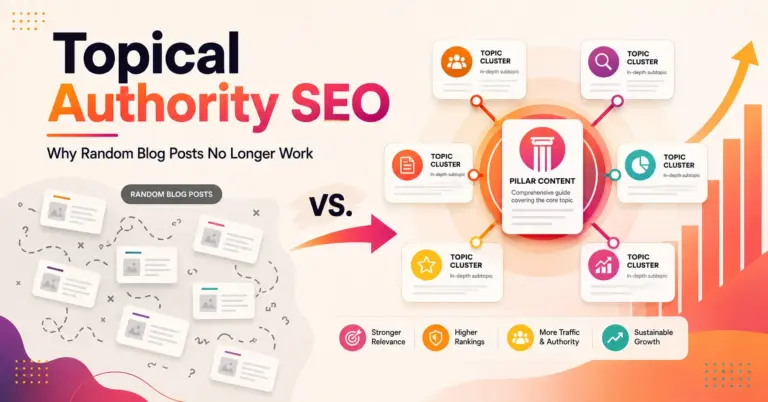
Yes, but only when blog content supports real customer problems and connects to relevant services. Random blog posts may bring traffic without leads. Strategic blog content can attract early-stage buyers and guide them toward service pages.
How do you track SEO leads?
SEO leads can be tracked through form submissions, call tracking, booking tools, CRM source data, landing page reports, analytics events, and revenue attribution. The best systems measure not only lead volume but also lead quality and closed revenue.
What is the best CTA for SEO lead generation?
The best CTA depends on intent. High-intent service pages should use direct CTAs like “Call Now,” “Request a Quote,” or “Book a Consultation.” Educational content may use softer CTAs like “Download the Checklist,” “Read the Case Study,” or “Request an Audit.”
How can agencies sell SEO lead generation services?
Agencies should focus on revenue outcomes, buyer intent, service page quality, local visibility, conversion tracking, and lead quality. Instead of selling rankings alone, they should explain how SEO creates qualified sales opportunities.
Conclusion
SEO lead generation is not about chasing every keyword or publishing endless content.
For service businesses, the goal is sharper: appear when serious buyers search, answer their questions, prove credibility, and make the next step easy.
That requires a strategy that connects SEO with sales reality. Service pages need buyer intent. Local pages need genuine local value. Blog content needs a business purpose. Calls and forms need tracking. CTAs need to match the user’s stage. Trust signals need to appear before hesitation wins.
Rankings open the door.
A strong SEO lead generation system turns that door into sales calls, booked consultations, quote requests, and measurable revenue.