The Complete Franchise Website Audit Checklist for Marketers
A franchise website audit will help you evaluate the performance of your technical SEO, AI search visibility, location-page quality, local search visibility, marketing and development user experience (UX), conversion rate optimization (CRO), analytics, and brand consistency across your business. Despite the benefits of consistent business-wide auditing, nearly half of franchise systems provide little to no oversight of marketing at the local level.
In this blog, Oscar Lutteroth, EVP of Strategic Solutions & Revenue Growth, will give you a complete franchise website audit checklist to help you optimize performance, demonstrating what goes into the best franchise websites.
TL;DR
This blog will go over the following key topics:
Expert Insight into Franchise Website Audit Checklists
The right approach to a franchise marketing strategy, complete with consistent auditing, can get you real, lasting results. With the help of a franchise website audit checklist, you can audit your business at the corporate and local level, giving you complete oversight of your marketing.
I’ve personally witnessed the effectiveness of consistent auditing and optimization of full-scale franchise marketing campaigns. For example, one of our quick-service restaurant clients worked with us to create a cohesive, comprehensive marketing strategy backed by AI-powered SEO, Google Ads, and other strategies to yield a 56% quarter-over-quarter increase in total leads, an 80% average boost in franchise-related keyword rankings, and a 15% decrease in cost per lead (CPL).
This is just one of many franchise success stories here at Ignite Visibility, proving the effectiveness of regular campaign monitoring, benchmarking, and optimization at every level.

The Technical Foundation
Let’s begin with the technical SEO foundation that backs your website, including the following main elements:
Site Architecture
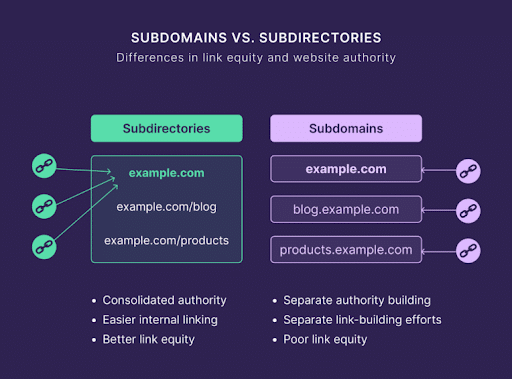
One key consideration is how you structure your franchise website. Although you can use either subfolders or subdomains, subfolders are generally the better choice.
Subfolders are ideal for structuring most content, including location pages, as you can build on your website with subdirectories extending from your main site over time, connecting with new areas’ audiences while helping your site build authority.
While subdomains may be appropriate if an individual franchise location needs a highly customized and distinct website, you run the risk of losing link equity as Google perceives these domains as separate entities.
Instead, relegate subdomains to franchisee-targeted sites with the main intention of generating franchise leads. Meanwhile, specific locations targeting consumers should branch off from your main site.
Core Web Vitals
Another critical factor to consider is Google Core Web Vitals, which is a set of metrics that measure the user-friendliness and accessibility of your website.
The best franchise websites optimize for all three metrics, including:
- Largest Contentful Paint ($LCP$): This metric measures the amount of time it takes for a web page to load for each user; it should be no longer than 2.5 seconds to keep people engaged, which can ultimately improve the user experience and search performance to indirectly help your franchise SEO.
- Interaction to Next Pain ($INP$): This is another essential Core Web Vitals responsiveness metric that gauges the speed with which a page responds to user interactions, including clicks and taps, with an ideal INP coming in at around 200 milliseconds or less.
- Cumulative Layout Shift ($CLS$): To measure visual stability, track CLS, which determines whether and how elements move around a screen as a page loads. This metric should be no more than 0.1 to indicate good performance.
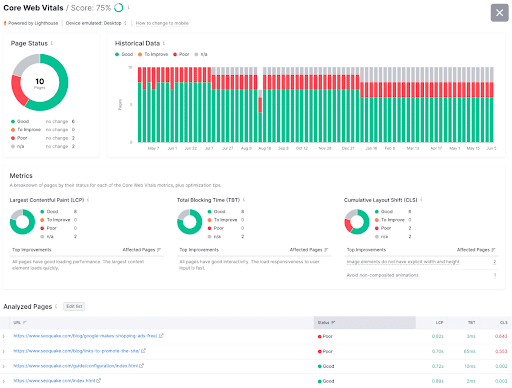
Also, be sure to audit location page templates in addition to your corporate homepage, as franchise templates have the potential to multiply the same performance problem for as many as hundreds of different URLs.
XML Sitemap Health
You must also think about the integrity of your XML sitemap, which is crucial for search engines to find, crawl, and ultimately index your site.
Using Google Search Console and a franchise website technical characteristics analysis, you can determine whether your XML sitemap is healthy based on the following factors:
- Proper canonical URL tags
- Exclusion of blocked pages with robots.txt or “noindex”
- The presence of tags informing search engines of new or changed content in date format
- A high submission/indexing ratio
- No 404 errors or too many 301/302 redirects
- Unexpected non-indexation of pages you need to index, which could be due to issues with robots.txt or “noindex” tags
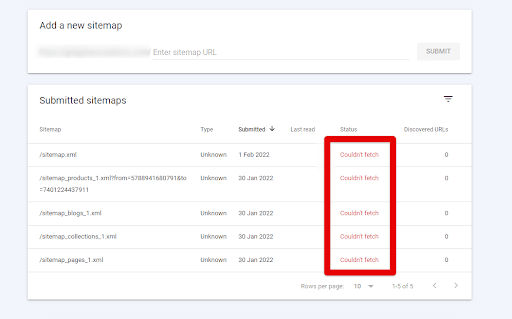
You should also make sure Google can fetch your XML sitemap in the first place, which reports will clearly indicate.
Here’s a little breakdown of how to optimize technical SEO for franchise websites at the corporate and location level for each of these:
| Technical Element | Corporate-Level | Location-Level |
| Site Architecture | Directory structure, URL taxonomy, and template UX | Internal linking and proximity-based navigation |
| Indexation | Sitewide crawl budget and master robots.txt rules | Local page index status and localized search intent |
| Canonicals | Self-referential template rules and cross-domain logic | Duplicate local landing pages and canonical URL parameters |
| Redirects | Legacy migrations, HTTP to HTTPS, and bulk rules | Closed stores and localized promotional redirects |
| Sitemaps | XML size limits and index sitemap configurations | Dedicated local sitemaps |
| Core Web Vitals | Sitewide JavaScript frameworks and global CDN setup | Local images and widgets and localized server response times |
AI Search Visibility
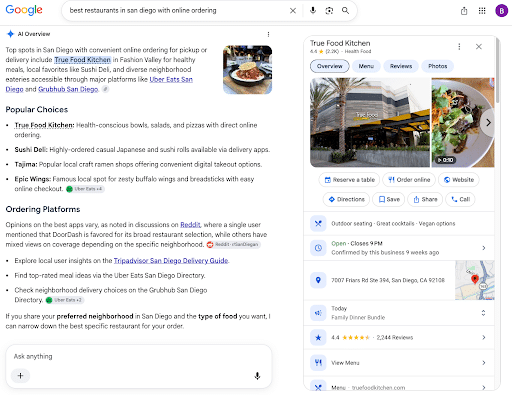
If you’re wondering how AI visibility plays into your SEO strategy, Google has established that the same SEO fundamentals discussed here apply to its AI Overviews and AI Mode features.
Google prioritizes helpful and well-optimized content that brings real value to users, meaning the best franchise websites performing well in AI search results adhere to Google’s E-E-A-T guidelines for content quality while implementing short sections, bullets, and other effective structuring to answer relevant broad, local, and branded queries.
Local SEO and Map Pack Dominance
You also need to audit local SEO for franchise websites to enable your site to reach local leads and consumers.
Some specific items to track and measure include:
Google Business Profile (GBP) Sync
You need to know how to maintain consistent branding across franchise websites, and that extends to each location’s Google Business Profile.
This ranking factor features prominently in local search results when people look up a business, and it should include all relevant details to appear in both main search engine results, along with the Google Map Pack and AI-driven results.
A strong GBP will feature the following items:
- Business name
- Address
- Phone number
- Directions
- Business hours
- Website links
- Description
- Product or service lists
- Service areas
- Images
- Google Posts
- Reviews
Each physical location should have a corresponding GBP, but the core information across all of them should sync for effective brand consistency.
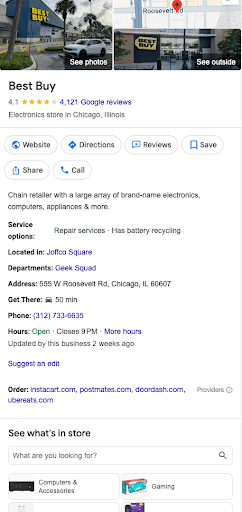
The top franchise websites know how to maintain accuracy across all GBPs, with the appropriate business categories, up-to-date business hours, connected URLs to location pages or main websites, and established ownership for franchisees at each location.
Name, Address, and Phone Number (NAP) Consistency
In your GBPs and across the web in other citations, you also need to know how to maintain consistent branding across franchise websites with the same recognizable name, along with consistent addresses and phone numbers for each location’s listings.
Localized Schema
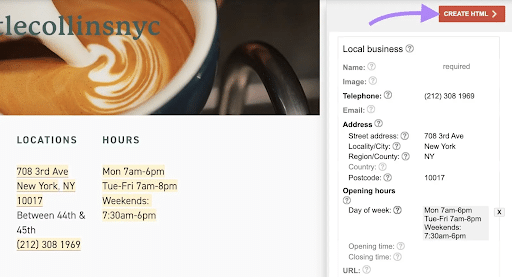
Using schema markup, a type of structured data, you can give search engines a better understanding of what your content is about.
You can use a schema generator like Google’s Structured Data Markup Helper to produce locally targeted schema in the JSON-LD language, which will provide Google with more information about your locations to supplement your GBP and NAP information across the web.
Using schema the right way will ultimately help search engines better understand your business and increase your chances of appearing in certain SERP features like rich snippets and AI Overviews.
This schema just needs to be consistent with all other listings for each location to work properly.
Location Content and Brand Consistency Audit
In learning how to maintain consistent branding across franchise websites and develop strong content that ranks, there are some key steps you’ll need to take.
For one, you should avoid “thin content” on location pages. The top franchise websites include unique, high-quality, and helpful information for every location. Although some of the biggest brands might have little to no content beyond basic contact details and directions, franchises trying to build authority will need to add more information.
Adding content could also answer any questions people might have about your business, complete with locally relevant FAQs for each location.
Additionally, develop localized “About Us” sections for your businesses that add a personal touch to each location. For instance, you could include bios for your local staff, including the franchisee, which will put a face to your brand. These pages could also detail your processes and other aspects that set you apart from competitors.
Finally, build and maintain a brand voice that distinguishes you from competitors to earn more recognition and trust. This voice should be the same across your sites and off-site content, making your content unmistakably yours on every platform.
At the same time, your franchise website audit checklist should mitigate the risk of duplicate content. While duplicate pages won’t necessarily cause a direct penalty in your rankings, they could create issues with indexing, cannibalization, and spam policy compliance.
In addition, the best franchise websites perform regular checks for useful local information about each business, including:
- Unique services offered
- Staff
- Amenities available
- Locally relevant FAQs
- Reviews from local customers
- General local intent, e.g., the business’s location in proximity to other nearby recognizable landmarks
Although each location may have different attributes unique to them, it’s crucial to know how to maintain consistent branding across franchise websites to develop an instantly recognizable and trusted brand.
Franchise Development (FranDev) UX
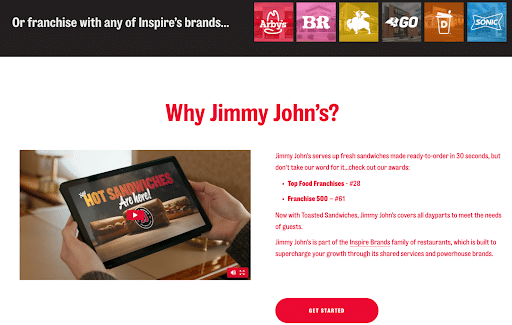
No franchise website audit checklist is complete without considering the user experience on the franchise development end.
Prospective franchisees or investors should benefit from websites that are fast, easy to navigate, and loaded with plenty of organized information to win them over as potential partners.
A clean website that gives prospects all of the details they need, with branding that matches the rest of your content, will go a long way in attracting and converting high-quality leads.
Here are some specific components to include here:
- Lead magnets for investors, including well-timed pop-ups or frequent calls to action (CTAs)
- Separation of consumer and investor paths, ideally through separate domains
- Optimized FranDev form completion speeds, only requesting the information you need from prospects to reduce friction
You really need to make sure that consumer paths are different from investor paths by creating entirely separate journeys for each. As mentioned, it often helps to use different domains for each, with defined steps to guide each down the funnel.
While consumers may have a much shorter journey from discovery to conversion and sale across locations, you will need to approach your franchise development strategy with strong franchise lead gen campaigns, consistent nurturing, and plenty of informational materials to help qualify leads, which will help you find and convert the most viable franchisee prospects.
Conversion Rate Optimization
You also need to consider conversion rate optimization to keep people moving down the sales funnel.
There are plenty of ways to maximize conversion rates, such as:
Sticky “Book Now” Buttons
One means of getting more people to convert is to include “book now” buttons in your content, making it easy for people to instantly book appointments or consultations with a strong CTA.
Trust Signals
Trust is the currency of franchise sales. You should consider trust signals in the form of customer reviews and ratings, especially those on Google Reviews and other off-site platforms.
Even if you get bad reviews from dissatisfied customers, be sure to respond to them thoughtfully and constructively, which could help earn the trust of people who might otherwise find negative reviews deterring.
Also, avoid acquiring incentivized reviews and ratings, as this could negatively affect your performance on Google. Ask for customers’ honest opinion about your offerings, potentially in the form of thank you emails with a convenient link to your GBP or another platform.
To further solidify your status as an industry thought leader, integrate brand awards and accolades. These serve as third-party validation of your excellence and give potential franchisees the confidence that they are joining a winning system.
Mobile-First UI for Local Customers
Not only is mobile responsiveness critical for mobile SEO, but it is also necessary to keep people engaging with your website.
Make sure mobile users on smartphones and tablets benefit from the same UX as desktop users.
After all, 57% of local searches are conducted on mobile devices, often while on the go and looking for something close by.
Sticky CTA Buttons and Forms
Depending on the type of franchise, you can use various sticky buttons or forms to encourage people to take a specific action and help track campaign performance.
Your CTAs could get people to:
- Call your business to schedule an appointment or consultation
- Book appointments online
- Request directions to a particular location
- Complete lead generation forms, such as newsletter signups or submitting emails in exchange for gated content
- Online ordering buttons and forms for restaurants
Using these CTAs, you can then track conversions for each location to determine which franchises are performing or underperforming. In the process, you might uncover everything from checkout friction to technical SEO issues in a franchise website technical characteristics analysis.
Analytics and Performance Optimization
One last item to include on your list is analytics and performance optimization, specifically the tools you should include in your roster.
The following are a few key tools to implement for reporting and analytics:
- Google Analytics 4 (GA4): This tool is essential for measuring data across multiple locations, helping you track location-specific traffic, contact form and phone call conversions, engagement rates for each page, and the total number of users for each site.
- Google Search Console (GSC): You can also use this platform to identify technical SEO and other site issues, as discussed, while simultaneously measuring local landing page performance, brand and city keyword rankings, click-through rate (CTR) by device, impression volume, and query analysis, among other metrics to supplement GA4.
- Call Tracking Integration: Be sure to integrate call tracking into your analytics, potentially using unique phone numbers per location, which will enable you to get a clear picture of conversions to determine which locations, devices, sites, and pages are driving the most (or least).
To get the most from your analytics and reporting efforts, only track the metrics that matter most based on your unique goals. Keep in mind that those goals may differ between individual locations and overarching franchises, but each location’s efforts should contribute to the franchise’s ultimate objectives.
For example, you might measure site traffic for a new location page as you build brand awareness for that particular location, while conversions and sales are the primary focus on the main franchise website or across other, more established locations.
When measuring campaigns, the top franchise websites will perform the following key tasks in a franchise website audit checklist:
- Visibility Measurement: To gauge the performance of SEO for franchise websites, look at visibility in both traditional and AI search results to ensure you’re reaching the right people with the right placements.
- Engagement Tracking: Track engagement metrics on your web pages, including time spent on each page and clicks that indicate how people are moving along their journeys.
- Local Action Tracking: Keep track of all calls, bookings, orders, and other location-specific actions to help measure the performance of individual franchises.
- Lead Tracking: When targeting franchisees or investors, track leads from the moment they enter the sales funnel to the time they convert at the bottom of the funnel.
- Lead Qualification: Evaluate leads based on factors like financial capacity, operational readiness, and geographic alignment before moving them to the sales team.
- Revenue Measurement: Measure revenue at both the location and network level to assess the overall profitability of your marketing efforts.
FAQs
1. How often should a franchise conduct a website audit?
There isn’t a universal frequency for audits of SEO for franchise websites, but in most cases, a quarterly audit is good to perform, although monthly audits may be helpful in some cases, such as when testing SERP volatility after noticing sudden rank changes.
2. Should my franchise use subdomains or subfolders for locations?
In most cases, franchise locations should use subfolders branching from main domains instead of separate domains, allowing those local pages to inherit the main domain’s trust signals, Domain Authority, and link equity.
3. What is the most common mistake in franchise SEO?
One of the most common issues seen with franchise SEO is the use of multiple pages of duplicate content, particularly when developing location-specific landing pages and other content. Every page should consist of unique, high-quality content to achieve high rankings and avoid potential cannibalization in search engines.
4. Does site speed affect franchise lead generation?
Like any other website, page load speed will impact franchise lead generation efforts. The top franchise websites maintain load times of no longer than 2.5 seconds to keep people engaged and improve rankings by appealing to Google’s Core Web Vitals, which will help you target more quality leads who move through to convert.
5. How do you audit websites for multiple franchise locations?
You should have a franchise website audit checklist that allows you to easily measure performance for all locations. Franchisees should consistently evaluate site architecture, eliminate duplicate content, verify name, address, and phone number (NAP) information for each location, and test conversion tracking for each region.
6. How do franchises manage Google Business Profiles for multiple locations?
You can manage multiple GBPs for all of your locations with the help of centralized dashboards, bulk verification for multiple locations, and specialized third-party software like Yext, which will help maintain brand accuracy, update information, and delegate local reviews. SEO services for franchise websites can assist with this process by consistently auditing and optimizing GBPs across locations.
Complete Your Franchise Website Audit Checklist With Ignite Visibility
Want some assistance with your franchise website technical characteristics analysis and other aspects of your audit? It helps to work with experienced professionals who understand the ins and outs of franchise marketing.
Here at Ignite Visibility, we offer our franchise clients the following capabilities:
- Building and maintaining a complete franchise website, complete with a franchise website audit checklist
- A content roadmap to establish topical authority and connect with leads
- Regular audits that measure performance and inform future optimization
- A combination of SEO, PPC, and other marketing strategies that foster franchise growth and consistency
- And more!
If you would like to find out how we can elevate your franchise brand with SEO services for franchise websites and other marketing solutions, check out our franchise marketing services today!