What Is a Content Audit? All You Need to Know

Over time, outdated, inaccurate, inconsistent, and underperforming pages can accumulate, gradually hurting your website’s overall performance. With the help of a comprehensive website content audit, you can mitigate the risks of poor content and improve far more than SEO performance.
So, what is a content audit, and how can you perform one? In this blog, Kimberly Wise, Ignite Visibility’s Content Editor, will review how content audits work, how to perform one, and some tools and templates to help with your next audit.
What You’ll Learn:
What Is a Content Audit?
A content audit is a systematic review of a website’s content to evaluate quality, accuracy, performance, user experience, and alignment with a business’s unique goals.
Performing a content marketing audit can help identify and address issues affecting your main web pages, blog posts, resource pages, and other content across your site.
Why Do a Content Audit?
A content strategy audit can greatly improve a website’s performance in multiple ways.
One big misconception of website content audits is that they’re primarily for optimizing SEO strategies. Although rankings are an important focus, an effective audit will go beyond them to ensure your content benefits from accuracy, brand consistency, usefulness, and alignment with your goals.
In the end, your audit should help you maximize the overall quality of all website content, not just improve rankings.
Signs Your Website Needs a Content Audit
There are many issues that can affect your content. Even seemingly small ones can add up over time and have a major impact on performance, making regular audits essential for any content strategy.
The following are some of the key signs you need to audit your content:
- Declining Traffic: One big indicator of low-performance content is a gradual or sudden decline in traffic, which might be a sign that content is dropping in rankings, no longer relevant, experiencing technical or UX issues, or outdated.
- Rising Bounce Rates: You may also notice a growing number of people leaving your website as soon as they land on a page, which might also indicate various UX or relevancy issues.
- Outdated Information: Data and general information could no longer be accurate or relevant, which could make people lose interest and trust in your content.
- Duplicate Topics: Two or more blog posts or web pages covering the same or very similar topics can lead to competition and cannibalization in search results, especially if they target the same keywords.
- Inconsistent Messaging: Your site might also contain content with an inconsistent brand voice or message, contradicting the messaging on the pages that led people there or failing to establish a unique brand identity.
- Stagnant Conversions: If you notice your conversion rates are dropping, it could be due to anything from irrelevant content to technical issues that keep people from completing calls to action.
- Large Content Libraries: The more content you have, the more likely your site is to encounter issues ranging from minor to complex, which regular audits can identify and address before they become sitewide problems.
My Expert Opinion on Content Audits
One thing I’ve learned after reviewing thousands of pages across dozens of industries is that content problems rarely exist in isolation.
A page with outdated statistics often has weak internal links, inconsistent messaging and missed conversion opportunities, too. That’s why I approach every content audit as both a quality assurance process and a strategic opportunity.
Instead of asking, ‘Does this page rank?’ I ask, ‘Would I trust this page if I landed on it today?’ That mindset almost always uncovers improvements that benefit both users and the business.
Why Most Businesses Wait Too Long to Audit Content
When businesses take too long to audit their content, they risk serious setbacks as content underperforms, with small issues developing into larger ones over time.
Conducting regular audits will help resolve common issues in the following ways:
- Content Sprawl: As your content expands to as many as thousands or even millions of pages, an audit can map out the site, enabling you to identify low- or no-value pages and eliminate them from your content library.
- Outdated Statistics: Old articles might contain statistics that are no longer accurate, in which case an audit can help you find outdated statistics and update them as needed, ensuring your content stays relevant and continues to build brand trust among audiences.
- Old Screenshots: You may be able to update images of software, infographics, visual guides, and other types of visuals that might otherwise inadvertently mislead audiences or confuse them as they try to follow along.
- Inconsistent Messaging: Reviewing content against brand guidelines could identify instances of inconsistent tone or voice, allowing you to determine how to rewrite pages for a more cohesive message.
- Broken Links: Tools like Screaming Frog and Semrush can scan your pages for any broken links bringing back 404 errors, so you can either replace or remove them from content.
- Falling Rankings: Reviewing search impressions on platforms like Google Search Console will help find pages with declining rankings, identifying opportunities to optimize on-page SEO to restore them.
- Duplicate Topics: Locate pages with similar or identical topics, which you can then merge into singular pillar pages that prevent cannibalism in search results.
- Changing User Expectations: Compare your pages with top-ranking competitors and ensure your content aligns with the latest search intent among users.
How Often Should You Conduct a Content Audit?
When determining the frequency of an audit, it really depends on the scope of your content and what all your audit needs to cover.
Typically, a quarterly review is ideal for auditing high-priority content, while annual reviews are best for full-site audits.
Factors that could influence when you audit your site could include the size of your site, publishing frequency, and industry volatility. For example, you may need more frequent reviews if your industry sees fluctuations in user expectations and search intent, while smaller sites with evergreen content that won’t become stale might only need an annual review.
What You Should Review During a Content Audit: A Complete Content Audit Checklist
Here is a content audit checklist to help you determine what to cover in your next review:
- Content Accuracy: Check to see if all dates, facts, and prices are still accurate across your content.
- Traffic Performance: Use Google Analytics to measure traffic to your website, which can help gauge SEO performance.
- Rankings: You can also track page rankings to measure SEO performance, looking for any sudden or gradual drops.
- Conversions: See whether your pages are guiding and encouraging users to take a desired action, whether that looks like collecting emails, completing a purchase, or another specific conversion event.
- Engagement Metrics: Measure user behavior metrics like the amount of time people spend on a page and bounce rates, which could indicate that your content is difficult to read, uninteresting, or unhelpful.
- Internal Links: Review your interlinking strategy to make sure the right pages link to each other for strong link equity and that there are no 404s.
- External Links: Also look at all external links to ensure they go to reputable, authoritative sites and that those linked pages still exist.
- CTAs: All call-to-action buttons and links should be clear, with a specific action that people can take, e.g., “Buy Now” instead of “Click Here.”
- Brand Alignment: Content should have a distinct tone and message that best express your brand, with language that aligns with your values and offerings.
- Accessibility: Implement accessibility features such as image alt text, which can boost your SEO while enabling vision-impaired visitors to understand images with text readers.
- Duplicate Content: Find pages with duplicate text or topics and either consolidate them or delete them.
- Search Intent Alignment: Make sure your pages also align with people’s specific search intent, whether they’re seeking information, comparing brands or offerings, or engaging with your content for another reason.
5 Key Benefits of Content Audits
What is a content audit really good for? Here are some of the main benefits of conducting quarterly or annual audits:
1. Improve Content Accuracy and Trust
Most businesses don’t intentionally neglect their content, as they focus on launching new pages, products, and campaigns. As a result of this focus, existing content will naturally fall behind as information changes, user expectations shift, and brand messaging evolves.
Inaccurate content can make your brand appear less credible as visitors believe you’re failing to keep up with the latest trends or trying to mislead them.
Regular audits will prevent gradual declines from becoming more impactful issues. As needed, you should update products, pricing, services, regulations, statistics, screenshots, and industry changes.
2. Create a Better User Experience
Audits also help create a better overall user experience by addressing the following:
- Outdated resources
- Broken links
- Poor readability
- Duplicate content
- Inconsistent formatting
- Accessibility issues
- Content that doesn’t match current search intent
3. Strengthen Brand Consistency
Content with multiple authors, varying publication years, and changing brand guidelines can lead to inconsistent branding. These issues are particularly prevalent when many authors have varying tones and language that might dilute the brand experience.
To mitigate this risk, your audit must update any misaligned tone, messaging, positioning, terminology, offers, and CTAs.
4. Increase Conversion Opportunities
A content marketing audit can reveal missing CTAs, outdated offers, weak internal linking, poor lead paths, and content that attracts visitors without moving them along the customer journey.
Find out where people are dropping off and take steps to streamline lead conversion.
5. Improve SEO Performance
In addition to other aspects of your content, a content strategy audit can boost your SEO efforts.
Audits will identify and address problems such as dropped rankings, keyword cannibalization, outdated content, missing internal links, search-intent mismatches, content gaps, and refresh opportunities, all of which can create a stronger experience for both users and search engines.
4 Decisions Every Content Audit Should Produce
4 main decisions should come from an audit, including:
- Keep pages that bring in consistent traffic, connect with users, and have high engagement and conversion metrics.
- Update pages when topics are still relevant but the data is outdated, such as incorporating new stats into a blog post with informational intent.
- Consolidate multiple pages into a single resource if topics or content are the same or too similar.
- Remove pages that no longer offer real value to your users and have little to no traffic or engagement.
Content Audit Tools and Templates to Make Auditing Easier
The right tools make content audits faster, more consistent, and easier to prioritize. Here are some solutions to help with your audits:
- Google Analytics 4 (GA4): Tracks conversions, engagement metrics, and traffic to help measure overall performance.
- Google Search Console: Measures rankings, keywords people use to find your pages, and search engine traffic.
- Screaming Frog: Scans websites to identify pages with duplicate content, lists all pages with internal links, and flags issues like missing alt text and broken links.
- Ahrefs: Shows which websites link back to your pages in your backlink profile, measures keyword positions, and flags inaccurate content.
- Semrush: Labels keyword intent, checks content alignment and CTAs with the “SEO Writing Assistant” tool, and also estimates page traffic performance.
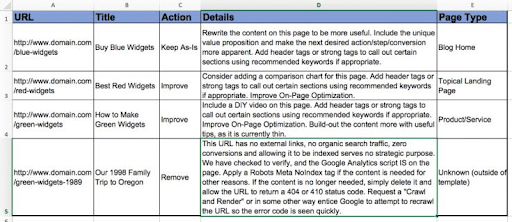
Additionally, here are some content audit templates to help you develop spreadsheets that track your audits:
This one from Moz organizes audits by URL, title, required action, how to approach the action, and page type.
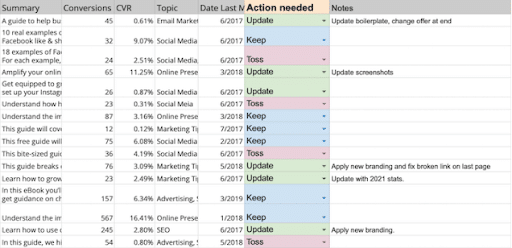
Another template from WordStream includes categories for content summary, conversion rate, topic, date last modified, action needed, and additional notes.
In the “Action Needed” column, the sheet uses color coding to indicate whether to keep, update, or remove pages.
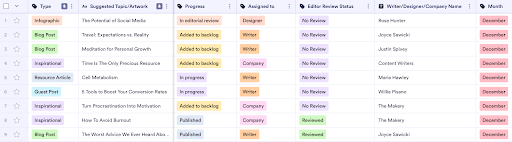
If you want to go further with color coding, Jotform has another template you can use that includes sections for content type, suggested topic, progress, assignee, editor review status, assignee name, and month to be done.
FAQs
1. What is a content audit?
A B2C or B2B content audit is a process that involves reviewing website content to assess its accuracy, overall quality, user experience, and alignment with business goals.
2. Why is a content audit important?
A web content audit can help identify any issues that might be holding your content back, from generally low quality to mismatches between content and overarching campaign objectives. Proactively addressing these problems can optimize performance and keep you from falling behind competitors.
3. How often should you perform a content audit?
Generally, it’s best to conduct a quarterly content strategy audit for your most important content pieces, with an annual full-site audit to assess content performance across your website.
4. What metrics should you review during a content audit?
The metrics you track in a content marketing audit should apply to your specific objectives. Depending on your goals, key metrics could include organic traffic, keyword rankings, click-through rate, conversions, bounce rate, page load speed, average engagement time, and others.
5. What is the difference between a content audit and an SEO audit?
While a web content audit evaluates the value, quality, and relevance of written and visual content, an SEO audit assesses a website’s technical infrastructure and settings to identify areas for improved optimization to appear higher in search engine results.
6. How do content audits improve conversions?
Auditing your content can help determine if any issues with a page’s user experience are causing friction among visitors, such as slow loading times and poor structure, which you can address to eliminate bottlenecks and keep people moving down the sales funnel toward conversion.
7. How long does a website content audit take?
The length of time it takes to audit content will depend on factors like the size of the website and the amount of content, the depth of your content review, and the efficiency of the content audit tools you use. As a result, audits could take anywhere from hours to weeks to complete.
8. What should you do after completing a content audit?
Following an audit, you need to sort and prioritize all URLs, update and refresh content as needed, consolidate content, and plan ahead for future audits based on current performance and goals. You must also regularly track performance to gauge how your actions impact performance.
Let Ignite Visibility Help With Your Next Web Content Audit
A content audit does more than improve rankings. It helps ensure every page on your website is accurate, easy to navigate, aligned with your brand, and designed to support your business goals. By regularly reviewing your content, you can identify opportunities to strengthen the user experience, build trust, and improve conversions before small issues become larger problems.
If you’re ready to take a closer look at your website, Ignite Visibility can help. Our team performs comprehensive website content audits to identify outdated content, uncover optimization opportunities, and develop a clear action plan for improving your site’s performance.
When you partner with Ignite Visibility, we can help you:
- Evaluate content quality, user experience, and SEO performance across your website
- Identify which pages to keep, update, consolidate, or remove
- Strengthen internal linking, calls to action, and content organization
- Develop a strategy for ongoing content optimization and future growth
Learn more about our content marketing services and discover how a strategic content audit can help your website perform at its best.